The Lord’s Curse Lifted: Inside the 54-Year Blueprint That Rewrote Women’s Cricket History
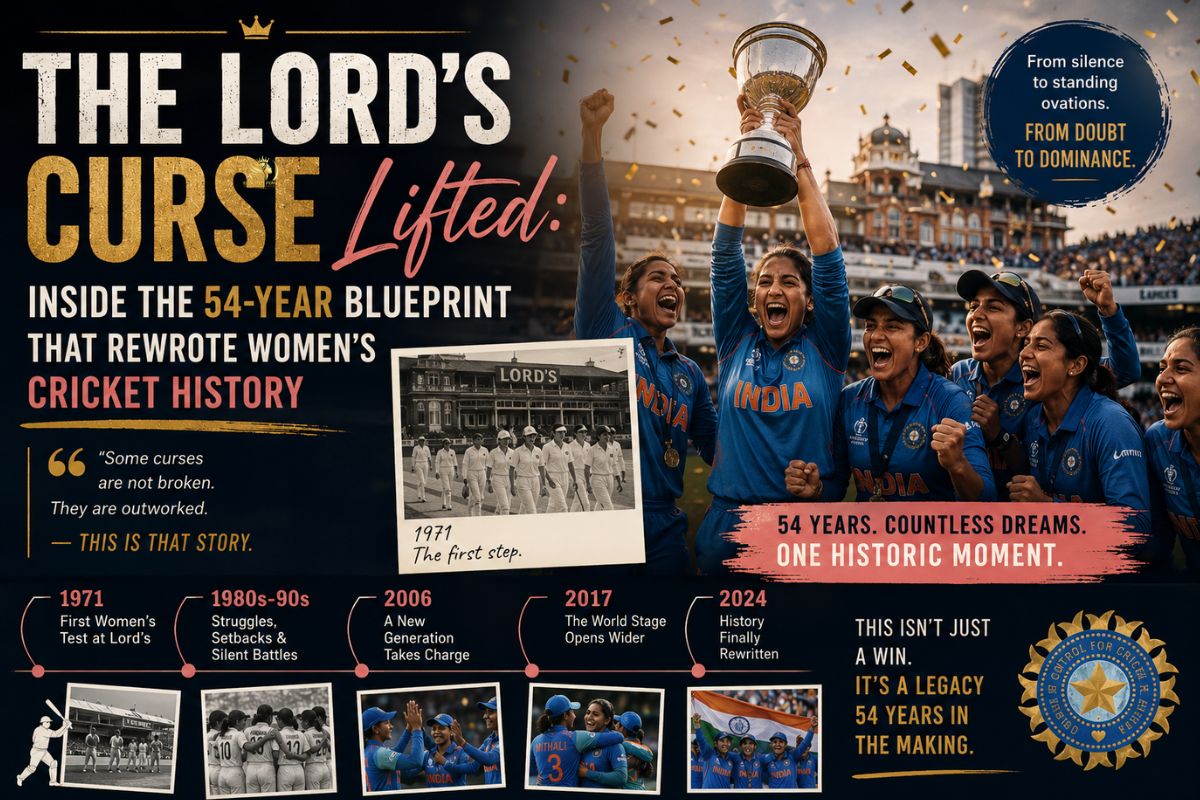
For more than half a century, a statistical ghost haunted Indian cricket. When the men’s national team first walked onto the hallowed turf of Lord’s Cricket Ground in 1932, it took them generations, heartbreak, and exactly 54 years of trying before Kapil Dev finally led India to its first Test victory at the “Home of Cricket” in 1986.
On July 13, 2026, the Indian Women’s Cricket Team didn’t just break that historical timeline—they vaporized it.
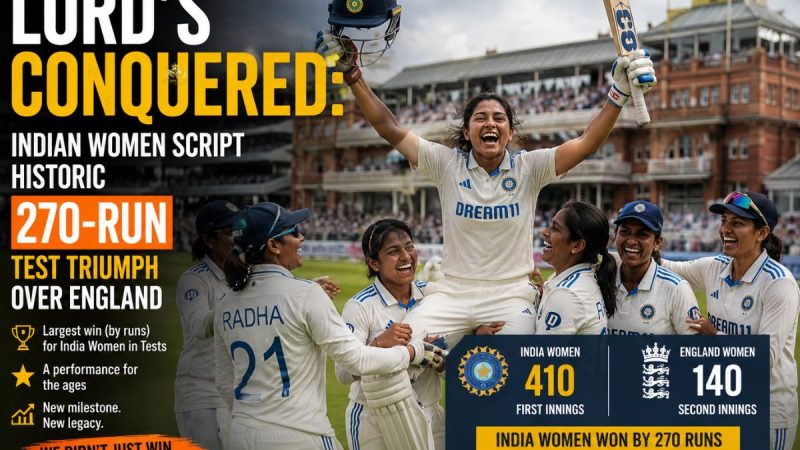
Playing in the first-ever Women’s Test match hosted at Lord’s, Harmanpreet Kaur’s squad dismantled England by a staggering 270 runs. They didn’t need 54 years. They didn’t even need five days. They achieved the ultimate red-ball glory on their very first attempt, wrapping up the match before lunch on Day 4.
The victory represents a massive paradigm shift in how the women’s game is viewed, financed, and played globally.
The Masterclass: How the Match Was Won
While the final scoreline suggests total dominance, the victory was the result of a calculated tactical blueprint that began long before the first ball was bowled.
Mandhana & Kaur steady India to 285 first innings.
Debut seamer takes 5-37 to collapse England.
Bhatia scores historic 113 to set 457 target.
Rana tears through tail; England all out for 186.
1. Embracing the Slope
Lord’s is famous for its unique, asymmetric 8-foot slope running across the field, a quirk that has famously unsettled the world’s best cricketers for over a century. India’s veteran top order, anchored by vice-captain Smriti Mandhana (83) and skipper Harmanpreet Kaur (58), intentionally played late, letting the ball travel under their eyes to neutralize the natural deviation.
2. The Rise of Kranti Gaud
When India took the field, all eyes were on England’s seasoned batters. Instead, it was an uncapped, 22-year-old Indian seamer who stole the show. Kranti Gaud delivered a masterclass in swing bowling, exploitively targeting the cracks on the surface. Her historic 5 for 37 in the first innings marks the first time a female cricketer has ever claimed a five-wicket haul in a Test match at Lord’s.
3. Bhatia’s Date with Destiny
Holding a modest 115-run lead in the second innings, India needed someone to anchor the game safely out of England’s reach. Wicketkeeper-batter Yastika Bhatia answered the call, carving out a magnificent 113 off 158 balls. By the time India declared at 341/7, Bhatia had become the first woman in history to score a Test century at Lord’s, effectively shutting the door on the hosts.
The Strategic Shift: Investment Meets Intent
This wasn’t an accidental miracle. The roots of this triumph trace directly back to structural changes implemented by the Board of Control for Cricket in India (BCCI) over the past three years.
As BCCI Honorary Secretary Devajit Saikia noted in the aftermath, this win is the direct result of a “sustained investment and belief in women’s cricket.” The board’s focus shifted away from treating the women’s team as a secondary entity, instead introducing:
- Red-Ball Integration: Reintroducing multi-day cricket back into the domestic calendar to build endurance.
- Equalized Ecosystems: Giving the women’s team identical access to elite training facilities, data analytics, and high-performance support staff as the men’s team.
- The WPL Effect: The Women’s Premier League has fundamentally altered the mental makeup of the squad, stripping away the intimidation factor of playing on massive global stages.
“A New Era Begins”
The emotional weight of the victory echoed far beyond the boundaries of London. In India, political leaders, corporate heads, and former sporting icons flooded networks with celebratory tributes. Union Home Minister Amit Shah hailed it as the symbol of the “unstoppable rise of Indian women’s cricket.”
Conversely, for England, the defeat marked a poignant, bittersweet changing of the guard. The match served as the final international appearance for English legends Tammy Beaumont and Heather Knight, who officially announced their retirements from all formats.
As the Indian team hoisted the trophy under the clear afternoon sky, the narrative surrounding the women’s game changed forever. They are no longer just participating in history; they are dictating it.