The Breaking Point: Viral Independence Claims and UN Appeals Push Balochistan to the Edge
A long-simmering geopolitical fault line has erupted into a high-stakes digital and military confrontation. In mid-July 2026, the volatile province of Balochistan pushed Pakistan into a profound security crisis following a series of highly coordinated militant offenses, a massive state counter-operation, and a viral declaration of independence that has thrust the region into the global spotlight.
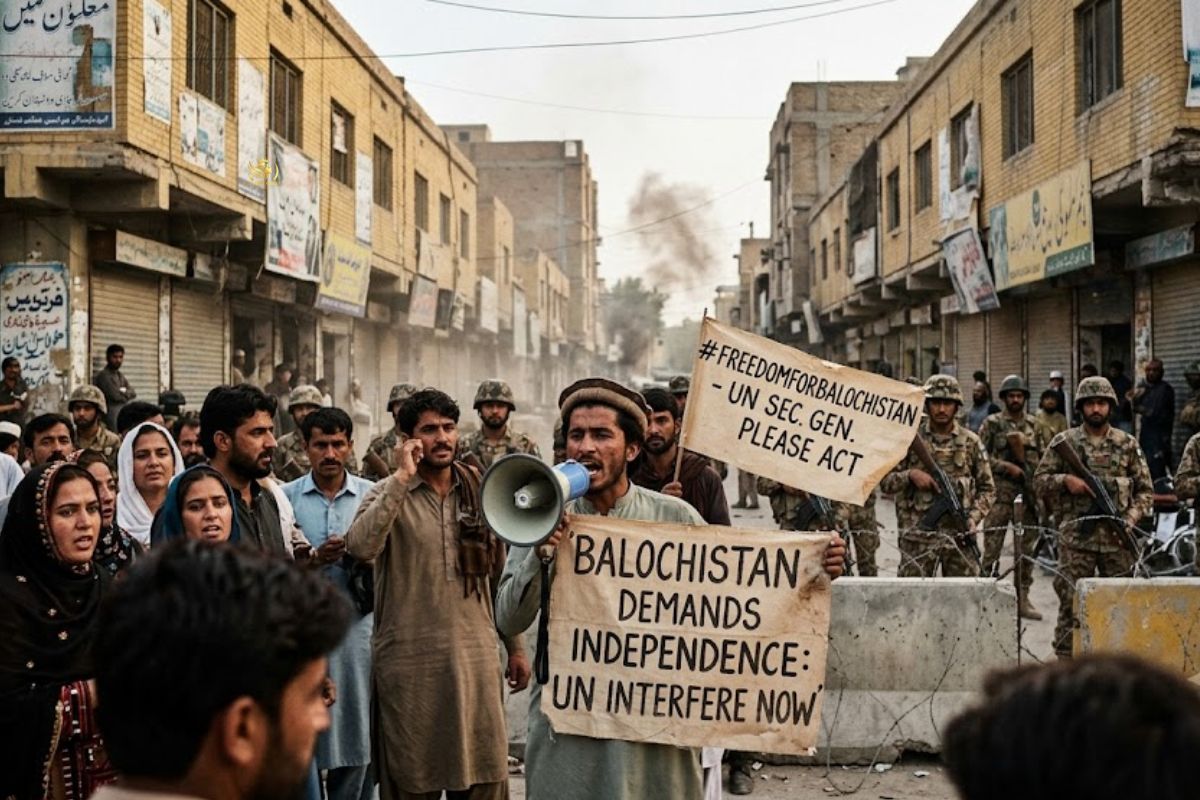
The escalation has forced Baloch separatist leaders and human rights advocates to aggressively urge the United Nations and the international community to intervene, citing severe state crackdowns and a rapidly worsening humanitarian crisis.
The Coordinated Offensive and “Operation Shaban”
The current flashpoint ignited between July 4 and July 8, 2026, when a wave of highly coordinated insurgent assaults swept across multiple districts in Balochistan.
- The Standoff: In separate incidents—including a deadly assault in the Hanna Urak Valley, a violent raid on a police checkpoint in Ziarat, and a highway ambush targeting a military convoy in Lasbela—militants killed at least 38 Pakistani security personnel and 4 civilians. The Pakistani military attributed the wave of violence to a joint operational campaign between the Balochistan Liberation Army (BLA) and the Pakistani Taliban (TTP).
- The State’s Response: In immediate retaliation, the Pakistan Armed Forces launched “Operation Shaban“. Deploying ground troops, intelligence-based operations, and heavy aerial support via helicopter gunships, the military flooded the mountainous hideouts of the province. Government reports claim that over 125 militants have been killed in the ensuing sweeps.
The Viral Independence Manifesto
As fighting raged on the ground, the conflict took an unprecedented turn on social media. A manifesto dated July 13, 2026, circulated extensively online, claiming the birth of the “Republic of Balochistan”.
Manifesto declares a “Republic of Balochistan”
Separatists claim defensive forces hold vast territory.
Goal is complete removal of Pakistani state presence.
The viral statement claimed that Baloch defense and security forces had secured operational control over roughly 85% of the province’s territory. While independent verification of such vast territorial dominance remains impossible due to severe state-imposed media blackouts and internet restrictions in the region, the manifesto outlined a defiant long-term strategy: to systematically eject Pakistani state infrastructure and security networks by the end of 2026.
Urging the United Nations to Interfere
Amid the heavy military counter-offensive, Baloch political activists, civil society organizations, and diaspora groups are making an urgent, unified appeal to the United Nations Security Council (UNSC) and international human rights bodies to intervene.
The core arguments behind the push for global intervention focus on three key areas:
1. The Crisis of Enforced Disappearances
For years, local groups like the Baloch Yakjehti Committee (BYC) have documented thousands of cases of “enforced disappearances”—a systematic state practice where student activists, intellectuals, and suspected sympathizers are allegedly abducted by security agencies without legal trial. Activists argue that the ongoing military operations are being used as a cover to escalate these unlawful detentions.
2. Exploitation of Natural Resources
Balochistan is geographically Pakistan’s largest province and naitively its richest, boasting massive reserves of natural gas, copper, and gold (such as the globally renowned Reko Diq and Saindak mines). However, it remains the country’s most impoverished and least developed region. Local populations argue that billions of dollars in foreign investments—particularly through China’s Belt and Road Initiative (BRI) and the Gwadar Port development—primarily benefit the central government in Islamabad while leaving local Baloch communities marginalized.
3. Immediate Humanitarian Intervention
With helicopter gunships operating in civilian-populated mountainous corridors, human rights groups are calling on the UN to establish independent oversight committees to investigate war crimes, protect civilian lives, and halt what they describe as collective punishment against the Baloch populace.
The Global Dilemma
The United Nations faces a delicate diplomatic tightrope. While the UN Security Council has previously issued strong statements condemning specific militant suicide attacks in the region as acts of terrorism, international human rights bodies have simultaneously voiced deep concerns over Pakistan’s internal counter-insurgency tactics and the erosion of local civil liberties.
As Islamabad vows to press forward until all insurgent networks are completely dismantled, the viral declaration of independence has ensured that Balochistan is no longer just a domestic security problem. It has evolved into an international flashpoint that the global community can no longer easily ignore.