
Crimes Against Women in India: A Grim Weekly Snapshot (July 3–10, 2026)
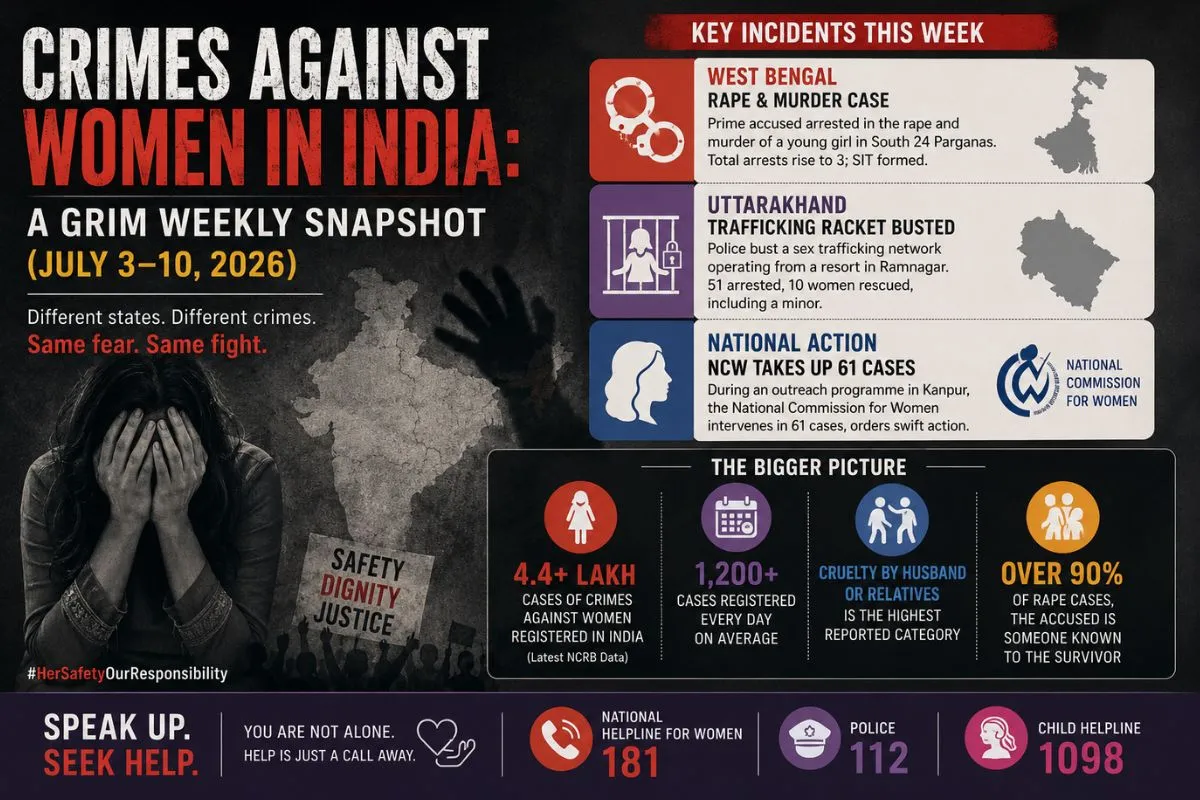
The past week has once again laid bare the persistent vulnerabilities faced by women and girls across India, particularly in incidents involving sexual violence and murder. While comprehensive national statistics for this exact period are not yet aggregated, high-profile cases reported in major cities and states highlight ongoing challenges in prevention, rapid response, and accountability. These events demand urgent reflection on systemic gaps in policing, community vigilance, and justice delivery.
The Baruipur Horror: Gang-Rape and Murder of a Child in West Bengal
One of the most shocking incidents occurred in Baruipur, South 24 Parganas district, West Bengal. An 11- or 12-year-old schoolgirl went missing on July 4, 2026, after leaving home to buy a birthday gift for a friend. Her body was recovered the next day from a pond in the Surjyapur area, stuffed in a sack.
Autopsy findings revealed she was gang-raped, brutally assaulted (with severe injuries including head trauma), and thrown into the water while still alive, leading to death by a combination of blood loss, injuries, and drowning (antemortem drowning confirmed by water in lungs). CCTV footage captured her last moments walking behind one of the accused.
Police arrested three key suspects—Ananda Sardar (prime accused), Dibakar Sardar, and Prabhas Mondal—on charges including gang-rape, murder, destruction of evidence, criminal conspiracy, and relevant POCSO Act sections. A fourth suspect was reportedly lynched by a mob amid public outrage. A Special Investigation Team (SIT) was formed, and the case has drawn high-level attention, including from the National Commission for Women and state leadership promising swift justice. Protests, road blockades, and clashes with police followed, underscoring deep public frustration over perceived initial delays.
This case stands out for its brutality and the involvement of a minor, echoing patterns seen in past high-profile incidents and raising questions about child safety in semi-rural areas.
Other Notable Incidents
- Bengaluru Party Rape (Reported ~July 4): A woman was allegedly raped after being invited to a belated birthday celebration by an acquaintance. She was taken to a house, given a drink that made her drowsy, and assaulted while semi-conscious. Five men were arrested in connection with the case.
- Uttar Pradesh and Delhi Reports: Various cases surfaced in news roundups, including allegations of rape on false marriage pretexts, domestic help exploitation, and assaults. A rape survivor in Delhi reportedly died days after self-immolation at a police station in a related UP incident (timing near the period). Specific fresh filings in early July included kidnapping and rape of a 17-year-old in Delhi.
These align with broader patterns where many crimes against women involve known acquaintances or occur in domestic/party settings.
Context and Opinion on the Pattern
Facts from recent weeks and official trends show crimes against women remain a critical issue. NCRB data from prior years (e.g., 2024 figures around 4.4 lakh cases) consistently highlight cruelty by husbands/relatives as the largest category, followed by assault, kidnapping, and rape. While some states report fluctuations, underreporting, low conviction rates (often 25-30% for rape), and delays in justice persist as structural problems.
The Baruipur case, with its extreme violence against a child and subsequent mob reaction, illustrates a dangerous cycle: horrific crimes fuel vigilante responses when trust in institutions erodes. Swift arrests and SIT formation are positive steps, but they must translate into fast-track trials and convictions to deter future acts. Broader prevention requires consistent community policing, better street lighting/CCTV coverage in vulnerable areas, stringent enforcement of POCSO and rape laws, and societal shifts addressing impunity—especially where power or familiarity is involved.
India cannot afford complacency. Each unreported or poorly handled case compounds fear and normalizes risk for half the population. These incidents are not isolated tragedies but signals for stronger, proactive governance on women’s safety. Accountability, transparency in investigations, and victim support must remain non-negotiable priorities. Only consistent action across states can begin to shift the reality behind the headlines.
Related Reading on RealShePower
- The Cost Of Being A Woman In India: Crime Cases, Data & Justice In 2026 — A month-by-month look at dowry deaths and sexual violence cases, backed by NCRB data.
- India’s Persistent Rape Crisis: A Call For Deeper Societal And Systemic Reform — The structural failures behind why cases keep repeating with the same pattern.
- Will India’s Laws Ever Protect Its Girls? A Teen’s Rape Case Demands Change — On the POCSO backlog and what real legal reform would actually require.
- What Has Gone Wrong With Delhi? From Ranga Billa To An Epidemic Of Fear — Five decades of the capital’s crime rate against women, traced back to a single case.
- This Is Not Paranoia. This Is Digital Survival In India. — Practical tools for cyber blackmail, harassment, and non-consensual image threats.






)