
The Real Science Of Déjà Vu, And Why It Is Not A Glitch In The Universe
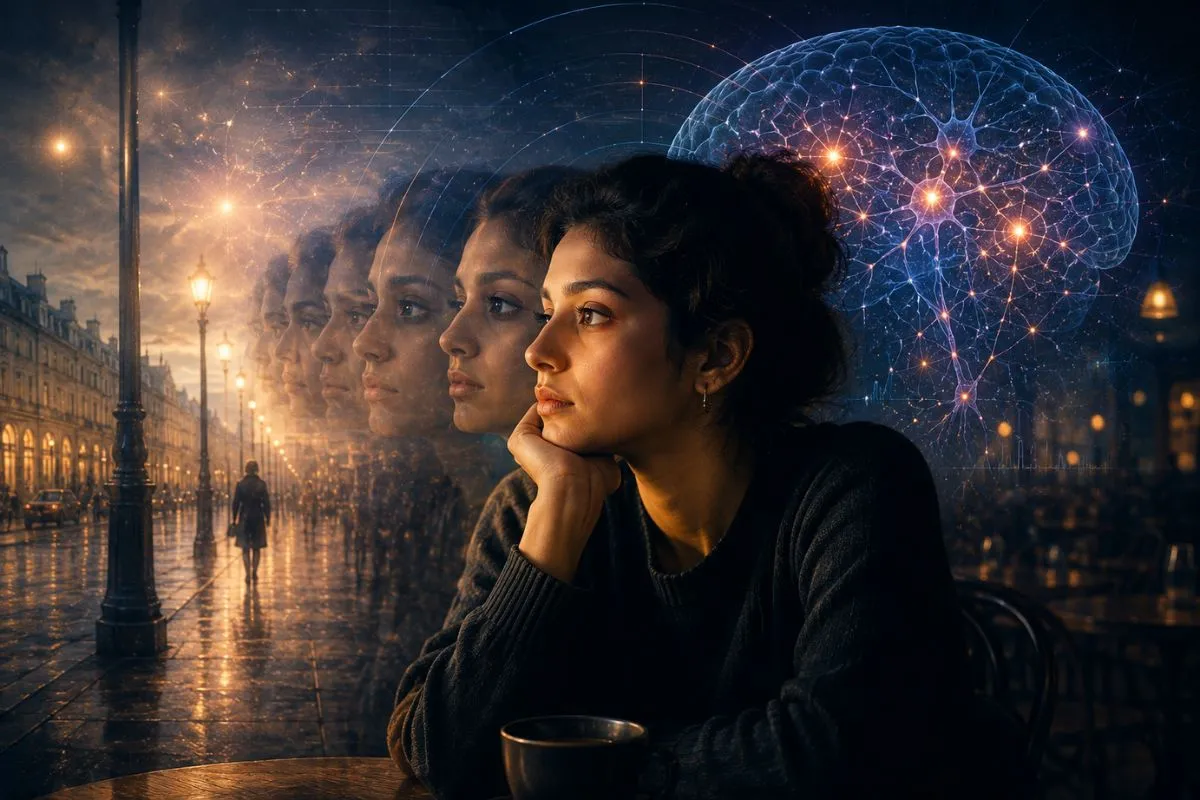
You are standing somewhere entirely new, a friend’s apartment you have never visited, a restaurant in a city you just landed in, and a wave hits you, unmistakable and slightly unsettling, the certainty that you have lived this exact moment before. Between 60 and 97 percent of people report experiencing this at least once in their life, and for decades the only explanations on offer ranged from past lives to simulation theory to a small, worrying seizure in the brain. Actual cognitive science has spent the last twenty years building a considerably more grounded, and honestly more interesting, answer.
Real Shee Power has spent real time exploring how the brain actually works rather than how it feels like it works, from the mental habits that separate sharp thinkers from the rest inhow to think like a genius, to treating cognitive capacity as a genuine long-term asset inthe 2026 brain wealth trend, to the specific statistical and psychological reasons behind wild real-world coincidences in8 true small world stories so strange they sound made up. Déjà vu belongs squarely in that same conversation, a genuinely strange mental experience with a real, testable explanation sitting underneath it, once you know where researchers have actually looked.
Where The Name, And The First Real Theories, Came From
The term itself, French for “already seen,” is generally credited to philosopher Émile Boirac, who used it in a letter published in 1876, speculating that the sensation might be caused by residues of long forgotten perceptions resurfacing without full conscious recall. That early guess turned out to be closer to the modern scientific consensus than most explanations that followed it over the next century, past life regression, dream premonition, and glitch-in-reality theories among them, none of which held up once researchers actually started testing the phenomenon directly rather than simply speculating about it.
The Theory With The Strongest Evidence Behind It
The most well supported current explanation comes from Anne Cleary, a cognitive psychologist at Colorado State University who has spent much of her career studying déjà vu directly in the lab, an achievement in itself, given how briefly and unpredictably the sensation normally strikes. Cleary’s Gestalt familiarity hypothesis proposes that déjà vu happens when the spatial layout or overall configuration of a new scene closely resembles a scene you have genuinely encountered before, even when you cannot consciously recall that earlier scene at all. The brain’s pattern recognition system, in other words, notices the resemblance, a similar furniture arrangement relative to a doorway, a comparable layout of counters and shelves, and generates a strong feeling of familiarity, while the part of your memory responsible for actually retrieving where and when you saw something similar comes up empty.
Cleary demonstrated this directly using virtual environments built inside video game engines, showing participants scenes that shared an underlying spatial structure, a garden and a junkyard arranged identically, for instance, even though the content looked nothing alike. Participants who had unknowingly seen the structurally similar earlier scene reported déjà vu at meaningfully higher rates than those who had not, real experimental evidence for a phenomenon long dismissed as impossible to study scientifically at all.
Why It Also Feels Like You Can Predict What Happens Next
One of the stranger features of déjà vu is how often it arrives bundled with a fleeting, false sense of being able to predict what happens next, as though the moment is not just familiar but somehow already scripted. Cleary tested this directly too, and the finding is genuinely worth knowing, people experiencing déjà vu were no more accurate at actually predicting what came next in a scene than people simply guessing at random. The premonition is real as a feeling. It carries no actual predictive information whatsoever, a distinction that matters, since this specific, eerie sub-feeling is often the exact detail that pushes people toward supernatural explanations for what is otherwise a fairly well understood memory quirk.
The Brain Region Actually Doing The Work
Neurologically, the leading explanation converges on the parahippocampal gyrus, a brain region tucked into the temporal lobe that plays a central role in processing spatial layout and contextual detail. Researchers including Chris Moulin, a cognitive neuropsychologist who has studied déjà vu extensively, have proposed what is sometimes called a decoupled familiarity hypothesis, the idea that déjà vu results from a false, momentary signal of familiarity generated by this region, one that fires without matching, current, conscious memory retrieval, essentially a brief miscommunication between the part of the brain flagging “I know this” and the part responsible for actually confirming where that knowledge came from.
This connects to a much older, genuinely important clinical thread in déjà vu research. The sensation has long been documented as a symptom in temporal lobe epilepsy, where electrical stimulation of this exact brain region during seizure activity or direct experimental stimulation, as in a notable 1959 study, reliably produces the sensation in patients. This is precisely why déjà vu unsettled early researchers enough to associate it with something pathological, and it is worth being clear about the actual distinction here, occasional déjà vu in a healthy brain and seizure-related déjà vu in epilepsy appear to involve the same general brain region but are considered functionally distinct experiences, the former a normal, harmless quirk of memory processing, the latter a specific neurological symptom worth medical attention only when it comes bundled with other seizure indicators or occurs with unusual frequency and intensity.
Who Experiences It More, And Why That Makes Sense
Déjà vu is not evenly distributed across the population, and the pattern of who experiences it more often lines up neatly with the memory-based explanation rather than undermining it. Studies have found the experience correlates with younger age, higher educational attainment, higher socioeconomic status, and frequent travel, all factors that plausibly increase the sheer number of environments a person’s brain has to draw comparisons against, more novel spaces encountered, more raw material for an accidental structural match to occur. Frequent film watching and strong dream recall also correlate with more frequent déjà vu, both activities that flood the brain with a large volume of visually detailed scenes it may later, unconsciously, draw a partial resemblance from. Frequency also appears to decline with age, a pattern researchers link partly to the frontal cortex, the brain’s internal fact-checker, becoming somewhat less efficient at quickly resolving the mismatch between false familiarity and actual memory as people get older, ironically making the sensation less common even as the underlying memory system it draws from becomes, in other respects, less reliable overall.
What This Actually Tells Us About Memory Itself
The most genuinely interesting part of this research is not the déjà vu phenomenon in isolation. It is what the sensation reveals about how memory actually works beneath conscious awareness. The dual-process model of memory, well established in cognitive psychology independent of déjà vu research entirely, distinguishes between recollection, the vivid, detailed retrieval of a specific past event, and familiarity, a vaguer, faster sense that something has been encountered before without any specific details attached. Déjà vu appears to be one of the clearest, most vivid real-world demonstrations of familiarity firing on its own, disconnected from recollection, a glimpse into a genuine split inside your own memory system that normally operates so smoothly you never notice the two processes are actually separate at all.
The Honest Bottom Line
Déjà vu remains, even with decades of dedicated research behind it, not fully solved down to the last mechanistic detail, and legitimate open questions persist about exactly how the parahippocampal gyrus and the frontal cortex interact to produce the sensation. What is no longer genuinely in question is whether the phenomenon requires a supernatural or paranormal explanation. It does not. It is, by the best current evidence, your own memory system briefly, harmlessly tripping over its own pattern recognition, mistaking a structurally similar new scene for one it has genuinely, if only partially, seen before. The next time it happens, standing somewhere new with that unmistakable, uncanny certainty, it is worth knowing exactly what your brain is actually telling you, not that you have lived this moment before, but that some quiet corner of it is confidently, if mistakenly, convinced that you have.
Suggested Reading
- How To Think Like A Genius: The Cognitive Method Behind Every High-IQ Mind
- Brain Wealth: The 2026 Wellness Trend That’s Treating Your Mind Like A Retirement Fund
- 8 True “Small World” Coincidences So Strange They Sound Made Up
- The Real Science Of Imposter Syndrome, And Why “Just Be Confident” Was Never The Answer