
Why Does Everyone Suddenly Need A “Skincare Fridge”? We Investigated
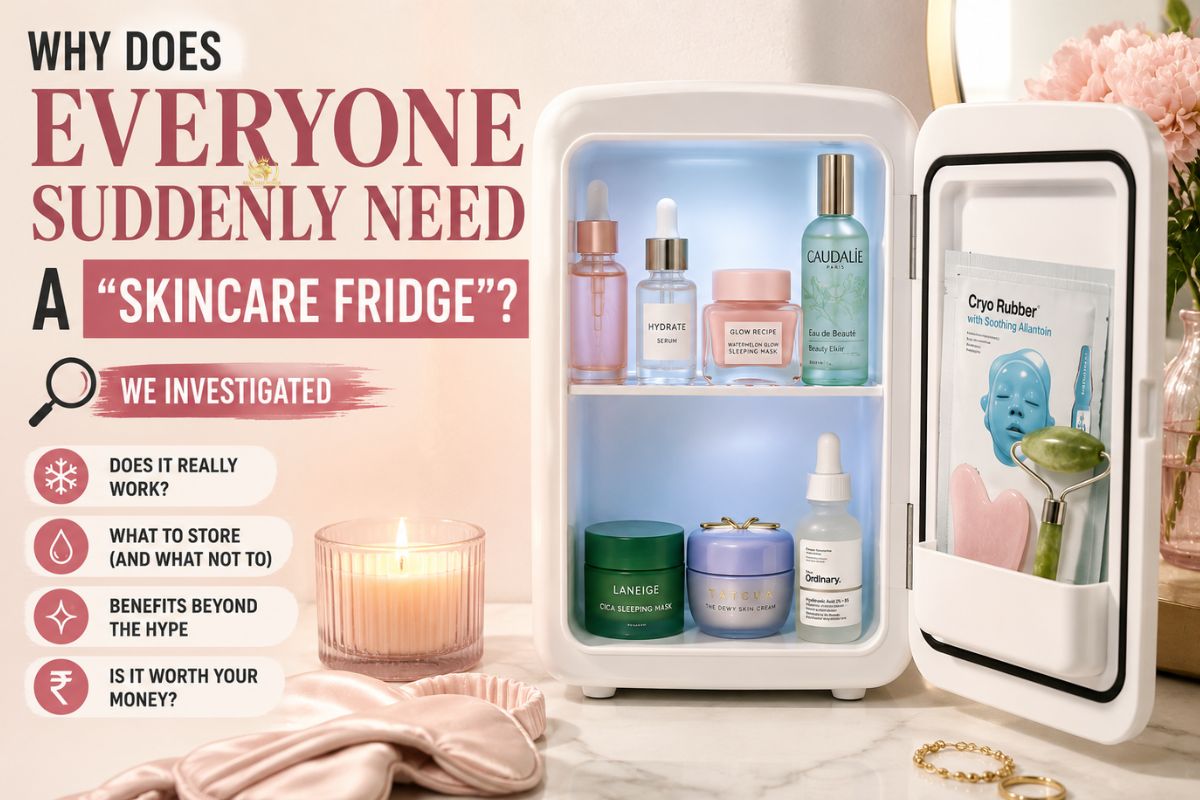
Somewhere between TikTok and your local home decor store, a genuinely strange object appeared on everyone’s vanity: a tiny, pastel colored fridge, sitting right next to the actual kitchen fridge, doing absolutely nothing but keeping serums cold. Millions of “get ready with me” videos later, the skincare fridge has become one of those trends you either already own or have very strong opinions about. So we did what we do best. We investigated whether this adorable little appliance is a genuine skincare upgrade or just a very cute way to spend seventy dollars.
What Even Is This Thing
A skincare fridge, sometimes called a beauty fridge, is a small, dedicated refrigerator, usually a few liters in size, built specifically to store cosmetics and skincare rather than food. The key detail that separates it from your kitchen fridge is temperature: a skincare fridge typically sits somewhere between five and fifteen degrees Celsius, considerably warmer than your kitchen fridge’s standard one to three degrees. That difference matters more than it sounds, because some skincare ingredients can actually be damaged by genuinely cold temperatures, essential oils and certain plant extracts can thicken or crystallize in a proper kitchen fridge, which is exactly the problem this oddly specific little appliance was built to solve.
Is There Actually Science Here, Or Is This Just Cute Packaging
Here’s where it gets interesting, because the answer is a genuine, satisfying “kind of both.” Certain ingredients really do benefit from consistent, cool storage. Antioxidant heavy formulas, particularly vitamin C and retinol, are notoriously prone to degrading when exposed to heat, light, and temperature swings, and our own guide to keeping vitamin C serum from oxidizing flagged exactly this problem: a serum that turns from pale yellow to deep orange or brown has lost much of its effectiveness, and heat is one of the biggest accelerants of that process. A skincare fridge genuinely does slow this down, particularly useful in a country where “room temperature” during an Indian summer can swing wildly between a cool morning and a blazing hot afternoon.
There’s also a real, if more sensory, benefit to the chill itself. Cold temperatures have a documented soothing effect on skin, reducing the appearance of inflammation and puffiness, the same principle behind ice facials and cold jade rollers. Storing your eye cream or a soothing gel in a skincare fridge means it arrives on your face already primed to de-puff, rather than needing your skin to do the cooling work itself.
But Here’s What The Dermatologists Actually Say
Before you add one to your cart, it’s worth hearing from someone who didn’t discover this trend on a For You page. Cleveland Clinic dermatologist Dr. Melissa Piliang has been refreshingly blunt about the whole category, calling it plainly: a frosty fad, not a dermatological must-have.” Her point isn’t that skincare fridges are useless. It’s that skincare products are formulated and tested to be stable and safe at ordinary room temperature, which means the fridge is solving a problem that, for most products, was never really a problem in the first place.
So What’s Actually Worth Refrigerating
If you’re going to get one anyway, because let’s be honest, they are extremely cute, here’s where the actual evidence points. Vitamin C and retinol serums genuinely benefit from cool, consistent storage, since both are prone to breaking down with heat and light exposure. Eye creams and de-puffing gels get a real, immediate sensory boost from being chilled, since the cold itself does part of the work. Natural, preservative light formulas, the kind with minimal chemical stabilizers, are more prone to bacterial growth in warm conditions and benefit genuinely from refrigeration. And any facial tools, jade rollers, gua sha stones, cooling roller balls, are simply better at their job cold, no scientific debate required there.
What’s genuinely not worth the fridge space: your everyday cleanser, your regular moisturizer, sunscreen, and most well formulated, properly preserved products, all of which are specifically engineered to hold up fine on your bathroom shelf. If your entire fridge is filled with a cleanser you use twice a day anyway, you’ve mostly built yourself a very stylish, very small snack fridge.
The Real Reason This Trend Took Off
Strip away the marketing and the real explanation is refreshingly simple: skincare fridges look genuinely delightful, they turn a mundane bathroom shelf into a small, satisfying ritual, and the “getting ready” experience of pulling a chilled serum out of a pastel pink mini fridge is, undeniably, a nicer few seconds of your morning than reaching into a cluttered drawer. That is not nothing. A skincare routine you genuinely enjoy is a routine you actually stick with, and there is real, if unmeasurable, value in a habit that feels a little more like a treat and a little less like a chore.
The Verdict
A skincare fridge is not, contrary to what your feed might suggest, a dermatological necessity, and nobody’s skin is secretly failing because they’ve been storing their moisturizer in a bathroom cabinet like every generation before this one. But it isn’t pure gimmick either. If you use vitamin C or retinol regularly, live somewhere genuinely hot, or just want your eye cream to feel like a small spa moment every morning, a skincare fridge earns its counter space. If your routine is mostly cleanser, sunscreen, and a basic moisturizer, save the money, and maybe just buy the cute mini fridge for your drinks instead.

This article is for general informational purposes and reflects publicly available dermatological guidance as of 2026. Always check individual product labels for specific storage instructions.