
Retinol for Indian Skin: The Complete, Honest Guide (Yes, Even in the Exosome Era)
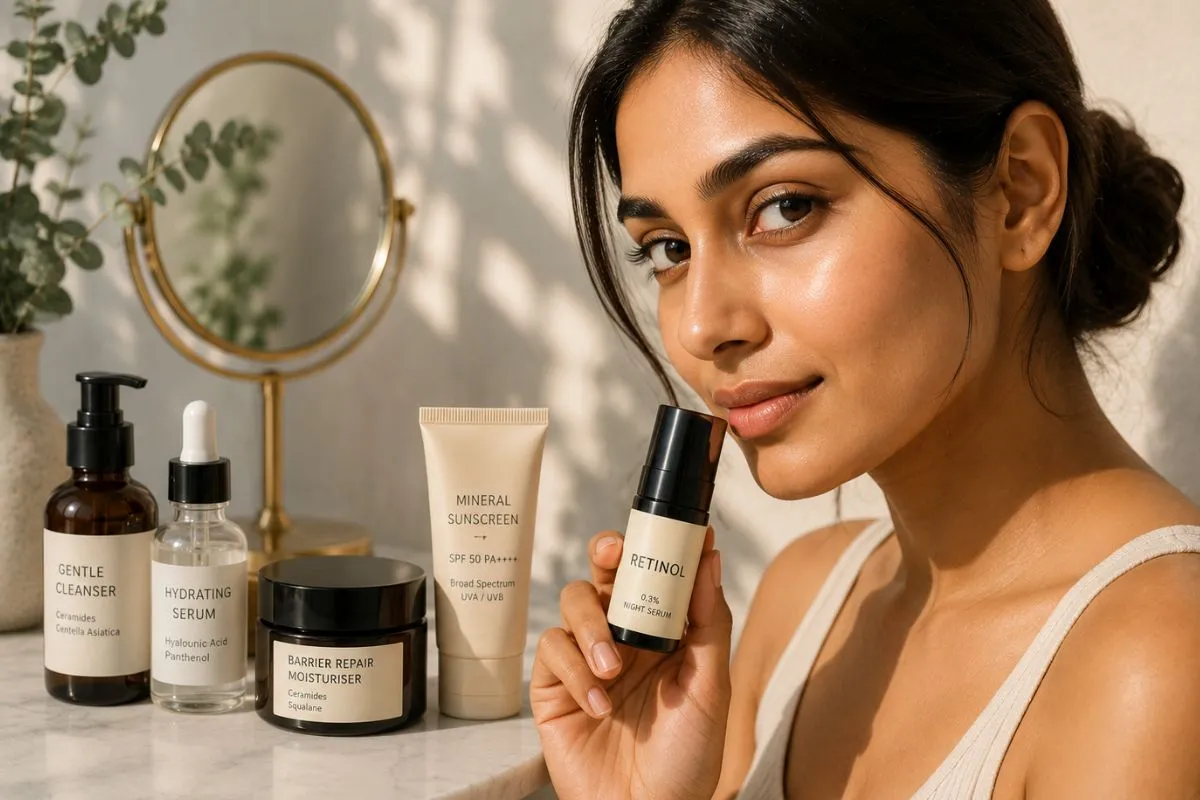
Retinol for Indian Skin
Every year or two, something new arrives promising to make retinol look outdated. Our own coverage of The Exosome Effect pointed out that some 2026 exosome serums are showing results in days that used to take months with traditional retinol. That is a genuinely exciting development. It is also not the full story, because retinol has spent close to five decades earning its place as the most studied, most consistently effective anti aging ingredient in skincare, and that track record does not disappear just because something newer and shinier showed up.
This guide is the one we should have written before all the exosome coverage: a straight, practical answer to what retinol actually does, how to introduce it without wrecking your skin barrier, and why Indian skin specifically needs a slightly different approach than the American or European skincare content most retinol advice is written for.
What Retinol Actually Does
Retinol is a form of vitamin A that, once converted by the skin into its active form, retinoic acid, speeds up cell turnover and stimulates collagen production. In practical terms, this means faster shedding of dull, dead surface skin, gradually smoother texture, reduced appearance of fine lines, and over time, some improvement in the kind of pigmentation and post acne marks we covered in our piece on melasma and pigmentation in Indian women.
The important word throughout that description is gradually. Retinol is not a quick fix, and it is one of the few genuinely proven actives in skincare precisely because its effects come from a slow, biological process rather than an immediate cosmetic trick.
The Retinoid Family, Explained Without the Marketing Confusion
Skincare brands have made this more confusing than it needs to be. Here is the actual hierarchy, from mildest to strongest.
Retinyl esters (retinyl palmitate, retinyl acetate) sit at the gentlest end, requiring the most conversion steps before becoming active retinoic acid, which also means the weakest results. Common in very beginner focused or sensitive skin marketed products.
Retinol is the most widely used over the counter form, requiring two conversion steps in the skin. It offers a solid balance of effectiveness and tolerability, which is why it remains the default recommendation for most people starting out.
Retinaldehyde (retinal) requires only one conversion step, making it noticeably more potent than standard retinol while still being available without a prescription. It has become increasingly popular in newer formulations for exactly this reason: faster results than retinol, generally still more tolerable than prescription strength options.
Granactive retinoid (hydroxypinacolone retinoate) works slightly differently, binding more directly to skin receptors without needing the same conversion process. It tends to be gentler and less irritating, though evidence on its long term potency compared to retinol is still less extensive.
Tretinoin and other prescription retinoids are already in their active acid form, requiring no conversion at all. This is the strongest, fastest acting, and most irritating category, generally recommended only under dermatological guidance, particularly for treating diagnosed acne or more advanced signs of aging.
For most people starting out, a well formulated over the counter retinol or retinaldehyde is the right starting point, with prescription tretinoin reserved for specific concerns discussed with a dermatologist.
Why Indian Skin and Climate Change the Approach
Most retinol guidance available online was written for cooler, drier climates and, often, fairer skin types less prone to pigmentation. Neither of those assumptions holds up well across most of India, and both change how retinol should actually be used here.
Heat and humidity increase the odds of irritation feeling worse. Retinol already thins the outer skin layer temporarily as part of how it works, and combining that with sweat, humidity, and heat can intensify stinging, redness, and sensitivity compared to how the same product might feel in a cooler, drier climate. This does not mean retinol does not work in India. It means the introduction period deserves more patience and a gentler starting pace than a lot of generic advice suggests.
Retinol induced irritation can trigger new pigmentation on medium to deep skin tones. This is the single most important, most commonly overlooked point for Indian skin specifically. Any inflammation, including irritation from introducing an active too aggressively, can trigger post inflammatory hyperpigmentation on melanin rich skin, the exact problem we detailed in our pigmentation guide. Rushing retinol, using it too often too soon, or combining it with other strong actives before your skin has adjusted, can genuinely leave you with more visible pigmentation than you started with.
Sun sensitivity is non negotiable here, not optional. Retinol increases photosensitivity, making skin more vulnerable to UV damage during the hours and days after application. In a country with UV index readings regularly in the high to extreme range for much of the year, as covered in our pillar sunscreen guide, skipping sunscreen while using retinol is close to actively working against the ingredient’s benefits, since the sun damage you are exposing yourself to can outweigh the repair retinol is trying to do.
How to Actually Introduce Retinol Without Wrecking Your Skin
The most common reason people give up on retinol, concluding it “doesn’t work for their skin,” is introducing it too fast. A slower, more deliberate approach works better for almost everyone, and especially for Indian skin given the points above.
Weeks one and two: Apply a pea sized amount for the entire face, once every third night, always at night, always followed by a proper moisturizer. Some initial dryness, mild flaking, or slight tingling is normal. Anything beyond mild is a signal to slow down further, not push through.
Weeks three and four: If skin has tolerated the twice weekly pace comfortably, move to every other night, continuing to follow with moisturizer every time.
Month two onward: If skin remains comfortable, nightly use becomes reasonable for most people, though plenty of people do perfectly well settling permanently at three to four nights a week rather than pushing to daily use, particularly during India’s hotter, more humid months.
The moisturizer sandwich technique helps considerably for sensitive skin: apply a thin layer of moisturizer first, let it absorb for a few minutes, then apply retinol on top, followed by another layer of moisturizer once the retinol has been on for a few minutes. This buffers the retinol slightly, reducing irritation without meaningfully reducing effectiveness, and is a genuinely useful trick for anyone finding straight retinol application too harsh.
The Purging Question
Skin purging, a temporary increase in breakouts as cell turnover speeds up and pushes existing congestion to the surface faster, is real but frequently used as an excuse for products that are simply causing irritation rather than purging. Genuine purging tends to show up in areas you already broke out in before, resolves within four to six weeks, and does not come with unusual burning, swelling, or breakouts in entirely new areas. If new breakouts appear in places you never had them before, or the reaction feels disproportionate and does not improve within a few weeks, that is irritation or an incompatible product, not purging, and it is worth stopping rather than pushing through.
What Not to Mix Retinol With
Layering too many strong actives at once is one of the fastest ways to compromise your skin barrier, and it deserves specific mention here since it connects directly to the layering caution we raised in Skin Minimalism.
Avoid combining retinol with strong exfoliating acids (AHAs and BHAs) on the same night, since both increase cell turnover and sensitivity, and stacking them significantly raises irritation risk without proportionally improving results. Benzoyl peroxide can also destabilize retinol’s effectiveness when used simultaneously and is generally better used at a different time of day or on alternating nights. Vitamin C and retinol can coexist in a routine, but are best separated, vitamin C in the morning alongside sunscreen, retinol at night, rather than layered together in the same application.
Retinol Versus Exosomes: Do You Need to Choose?
Given how much attention exosome serums have received recently, including in our own coverage of the Exosome & Tallow Revolution and our comparison of Dr. Su versus Medicube exosome serums, it is a fair question whether retinol is still worth the effort.
The honest answer is that these are not really competing solutions to the same problem. Retinol has decades of consistent, replicated research behind its ability to improve texture, fine lines, and pigmentation over time, at a fraction of the cost of most exosome serums. Exosome technology is genuinely promising and newer research is compelling, but it remains a considerably more expensive, less exhaustively studied category by comparison. For most people building a sustainable, evidence backed routine, retinol remains the more accessible, proven foundation, with exosome serums functioning better as an addition for those who want to invest further, rather than a wholesale replacement for what retinol already does reliably.
Who Should Be Cautious or Avoid Retinol Entirely
Pregnant or breastfeeding women should avoid retinoids entirely, given established risks to fetal development, and should discuss safe alternatives like bakuchiol with a dermatologist or gynecologist. Anyone with active eczema, rosacea, or a significantly compromised skin barrier should address that underlying issue first, since retinol will likely worsen an already irritated barrier rather than help it. Very sensitive skin does not need to avoid retinol altogether but should start with the gentlest available form, retinyl ester or a low percentage granactive retinoid, rather than jumping straight to standard retinol.
A Realistic Retinol Routine for Indian Skin
Morning: Gentle cleanser, antioxidant serum such as vitamin C, moisturizer, then a broad spectrum sunscreen with SPF 30 to 50 and PA+++ or higher, non negotiable while using retinol.
Night, retinol nights: Cleanser, a thin layer of moisturizer, a pea sized amount of retinol, followed by another layer of moisturizer once absorbed.
Night, non retinol nights: Cleanser, your other targeted actives if any (niacinamide, azelaic acid), moisturizer.
Building up frequency slowly, respecting the moisturizer sandwich technique when needed, and never skipping sunscreen the following morning will get most people to visible, sustainable results within eight to twelve weeks, which lines up with how the ingredient actually works biologically rather than how instant gratification marketing tends to frame it.
Retinol was never going to be exciting in the way a new Korean exosome serum is exciting. It is quieter, slower, and considerably cheaper, and it has simply kept working, consistently, for nearly fifty years. In a beauty landscape that moves as fast as this one, that kind of reliability is worth far more than it gets credit for.
Frequently Asked Questions
Can I use retinol every day once my skin adjusts? Yes, for many people, though plenty of others do perfectly well at three to four nights a week indefinitely. Daily use is not required for results, particularly in hot, humid climates where less frequent use may feel more comfortable long term.
How long until I see results from retinol? Meaningful, visible changes in texture and fine lines generally take eight to twelve weeks of consistent use. Some initial dryness or flaking in the first few weeks is normal and is not a sign the product is working faster.
Do I need a separate retinol product for day and night? No. Retinol should only be used at night regardless of the product, since it increases sun sensitivity and can also degrade with UV exposure.
Is retinol safe for acne prone skin? Yes, and it is often specifically recommended for acne, since it helps prevent clogged pores and can improve the post acne marks that follow breakouts. Introduce it slowly, since acne prone skin is not automatically more tolerant of irritation.
Can I use retinol and niacinamide together? Yes, this combination is generally well tolerated and can be layered in the same routine, unlike the stronger acid and retinol combinations that are best kept on separate nights.
This article is for informational and educational purposes only and does not constitute medical or dermatological advice. Consult a qualified dermatologist before starting retinol if you are pregnant, breastfeeding, or managing an existing skin condition.







)