Sunscreen for Oily vs. Dry Indian Skin: Which Texture Actually Works
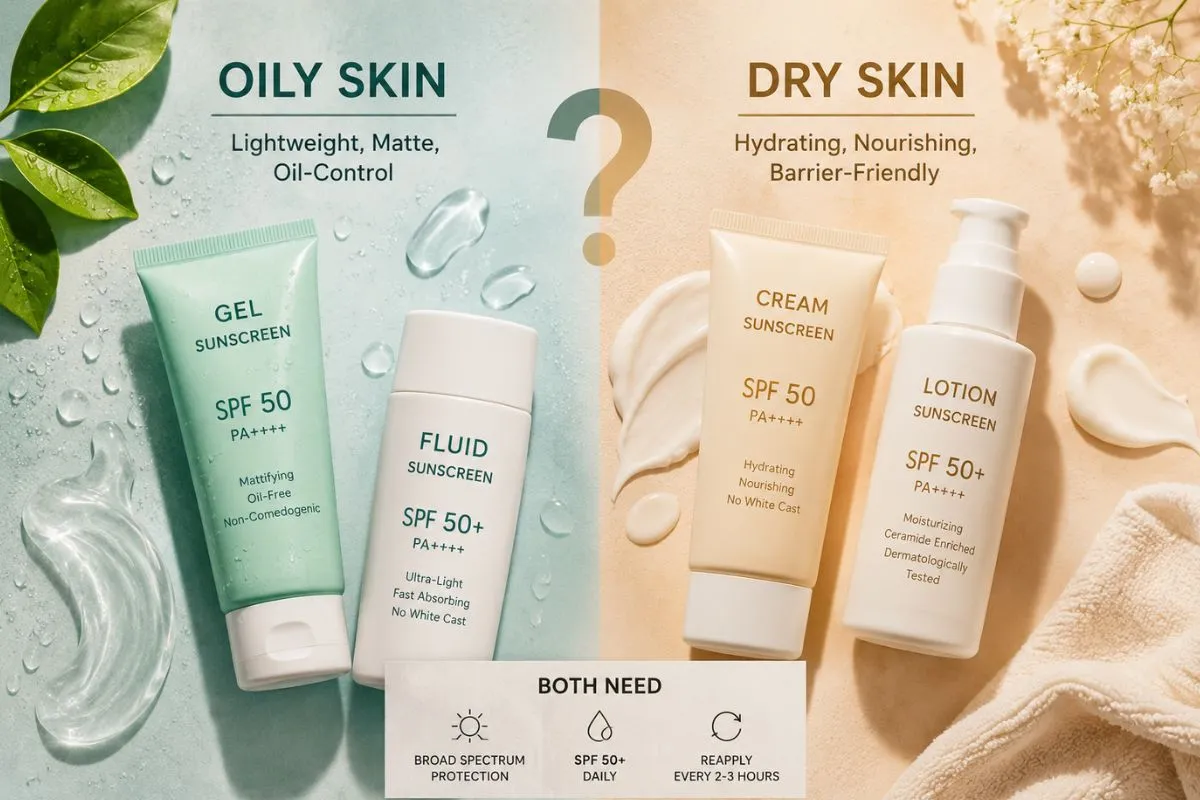
Most sunscreen disappointment has nothing to do with SPF or PA ratings. It comes down to texture. Someone with oily, acne prone skin buys a rich, ceramide packed sunscreen recommended for “sensitive dry skin” and spends the day fighting shine and clogged pores. Someone with genuinely dry skin buys a mattifying, gel based formula marketed for “oily Indian summers” and ends up tight, flaky, and reaching for moisturizer every two hours just to feel comfortable.
Our Honest Guide to Sunscreen in India covers the fundamentals: SPF, PA ratings, reapplication, and the white cast myth. This piece goes one layer deeper into the question that actually determines whether you stick with a sunscreen long enough for it to matter: does the texture suit your skin.
Why Texture Decides Everything
Sunscreen only works if you actually wear it, and wear it every day, generously. A formula that feels wrong on your skin gets applied thinly, skipped on busy mornings, or abandoned within a month. This is the quiet reason so many people conclude “sunscreen doesn’t work for me” when the real issue was never the SPF number. It was the base formulation fighting their skin type from day one.
Oily and Acne Prone Skin: What to Actually Look For
Oily skin in the Indian climate faces a specific set of problems: sunscreen mixing with natural sebum and sweat, sitting heavily under makeup, and in many cases contributing to closed comedones and breakouts if the base contains heavy oils or silicones that trap debris in the pores.
Look for these words on the label:
- Gel based or fluid formulas, rather than cream or lotion textures
- “Non comedogenic” or “oil free,” ideally confirmed by the ingredient list rather than the marketing claim alone
- Water based or alcohol forward formulas that dry down to a matte or semi matte finish
- Niacinamide included in the formula, since it helps regulate oil production while you get your UV protection
What tends to go wrong: Many oily skinned users over correct by choosing extremely stripping, alcohol heavy formulas that leave skin tight, which paradoxically triggers more oil production later in the day as skin tries to compensate. The goal is oil control, not moisture removal. A well formulated gel sunscreen with light hydrators like glycerin or hyaluronic acid built in will control shine without pushing your skin into a rebound oily phase by evening.
A useful trick for humid months: Setting your sunscreen with a light dusting of translucent powder about ten minutes after application can extend the matte finish through a full workday without adding another heavy layer on top.
Dry and Dehydrated Skin: What to Actually Look For
Dry skin has the opposite problem. Lightweight, alcohol forward gel sunscreens, the exact formulas that work well for oily skin, often leave dry skin feeling tight, flaky, and uncomfortable within a few hours, which leads to the same outcome as with oily skin: people simply stop applying it consistently.
Look for these words on the label:
- Cream or lotion based formulas, described as “hydrating” or “moisturizing”
- Ceramides, squalane, or hyaluronic acid included in the ingredient list
- Chemical or hybrid filters rather than pure mineral, since pure mineral formulas can sometimes sit more heavily and emphasize dry patches
- A dewy or satin finish rather than a matte one, which will actually look better on dry skin than a mattifying formula that clings to flaky texture
What tends to go wrong: Dry skin often skips moisturizer before sunscreen, assuming the sunscreen itself will hydrate enough. It usually will not, particularly through a full Indian summer with air conditioning working against skin moisture all day. Applying a proper moisturizer first, letting it absorb for a minute or two, and then applying sunscreen on top gives noticeably better comfort and wear than sunscreen alone.
Combination Skin: The Genuinely Tricky Middle Ground
Combination skin, oily through the T-zone and normal to dry on the cheeks, is common across Indian skin types and frustrating to shop for, since most sunscreens are formulated for one extreme or the other. A few approaches actually work here rather than fighting the skin’s natural pattern:
- A single lightweight, hydrating gel cream formula, applied evenly, tends to serve combination skin better than trying to use two different textures on different zones
- If oiliness through the T-zone genuinely bothers you by midday, a light powder touch up there alone, rather than reapplying full sunscreen everywhere, keeps shine in check without disturbing the rest of your face
- Niacinamide again earns its place here, since it helps balance oil production across uneven skin without over drying the cheeks
Sensitive and Reactive Skin: A Slightly Different Question
For sensitive skin, the more urgent variable is often not oily versus dry but fragrance, alcohol content, and filter type. Mineral filters, specifically zinc oxide, tend to be gentler on reactive skin than chemical filters, even though they require a bit more attention to avoid white cast, a problem we cover in detail in the pillar sunscreen guide. Fragrance free formulas are worth prioritizing regardless of oily or dry leanings if your skin flares easily.
How Climate Changes the Answer, Even for the Same Skin Type
Skin type is not the only variable. Someone with dry skin in humid Mumbai during monsoon season may tolerate a lighter formula than the same skin type would need during a dry Delhi winter. This seasonal shift is exactly why our piece on Does the 10-Step K-Beauty Routine Actually Work in India? found that routines built for one climate rarely transfer cleanly to another. It is worth keeping two sunscreens on rotation, a lighter one for humid months and a slightly richer one for dry winter stretches, rather than expecting a single formula to perform identically year round.
The Real Test: Twenty Minutes, Not Two
The most reliable way to know if a sunscreen texture suits your skin is to apply it and wait twenty minutes before judging. Immediately after application, almost every sunscreen feels slightly heavy or slightly tacky as it settles. The real verdict, shine breaking through, tightness developing, or a comfortable, invisible finish, only becomes clear once it has had time to properly absorb and interact with your skin’s natural oil and moisture levels through a few hours of normal wear, ideally including some time in actual daylight or under a fan or AC, whichever your day usually involves.
If you have already been through a few sunscreens that felt wrong and concluded that sunscreen in general does not agree with your skin, the honest answer is usually simpler: you were matched with the wrong texture, not the wrong step in your routine.
This article is for informational and educational purposes only and does not constitute medical or dermatological advice. Consult a qualified dermatologist for persistent acne, sensitivity, or skin concerns.