Why Are Your Feet Always Cold, Even Under a Blanket? Ayurveda Has An Answer
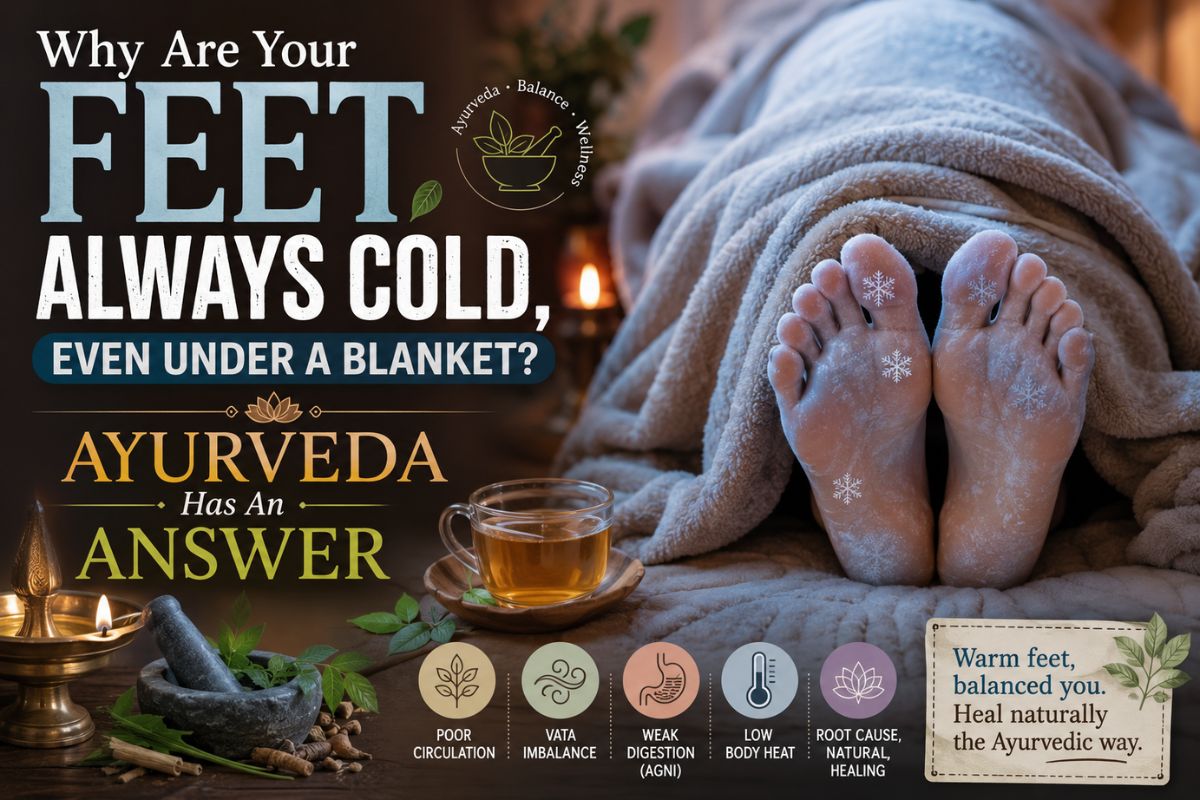
Two pairs of socks, a hot water bottle, a blanket pulled up to your chin, and your feet are still cold. If this is a nightly ritual for you, you already know that piling on more layers rarely fixes it. The real question is not how to add more warmth from the outside, it is why your body is not sending warmth to your feet in the first place.
Real Shee Power is your home remedy bestie, turning your kitchen into your first line of care.
A quick, important note before anything else. This article covers common, usually harmless reasons for cold feet and genuine home remedies for them. It is not a diagnosis. If your cold feet come with numbness, color changes, sores that heal slowly, or persist alongside fatigue and weight changes, that is a sign to see a doctor, not to try another home remedy.

What Ayurveda Actually Says Is Happening
In Ayurveda, cold feet are read as a sign of aggravated Vata, the dosha made of air and space, governing movement, circulation, and how heat travels through your body. When Vata builds up, from stress, irregular eating, too much cold or raw food, or simply rushing through your day without rest, it tightens and constricts your blood vessels. Your body then makes a survival decision, it pulls warm blood inward to protect your core organs, leaving your hands and feet, the farthest points from your heart, running cold.
This lines up closely with what Western medicine also identifies as the most common root cause, poor peripheral circulation, where blood is not efficiently reaching your extremities. Ayurveda and modern circulatory science are essentially describing the same mechanism, just through different vocabulary.
The Honest List Of What Else Could Be Going On
Before jumping into remedies, it is worth knowing what else commonly causes cold feet, since the fix depends on the cause. Anemia, where your body lacks enough healthy red blood cells to carry oxygen and warmth efficiently, is a frequent one. Hypothyroidism, an underactive thyroid slowing your metabolism and heat production, is another, often paired with fatigue, dry skin, and weight changes. Chronic stress genuinely plays a role too, since cortisol and adrenaline released during stress narrow blood vessels exactly the way Ayurveda describes Vata doing, redirecting blood to vital organs and away from your extremities. Smoking, a sedentary lifestyle, and diabetes-related nerve or blood vessel changes round out the more common causes.
If your self care habits already tend toward high stress and little rest, this pattern will feel familiar, and our self care Sunday guide covers a realistic, low-effort way to interrupt that stress cycle weekly, rather than only reaching for a heating pad after the fact.
The Warming Oil Massage, Ayurveda’s First Recommendation
This is the single most consistently recommended Ayurvedic remedy for cold extremities, and it genuinely has a mechanical basis, not just tradition. Warm sesame oil or mustard oil, both considered heating in Ayurvedic terms, massaged into your feet and lower legs in upward strokes toward your heart, stimulates circulation directly rather than waiting for your body to redirect blood on its own.
Warm a small amount of oil slightly, just enough that it is comfortable on skin, and massage your soles, ankles, and calves for five to ten minutes before bed. Sesame oil in particular is considered one of the most warming oils in Ayurvedic practice, making it the default choice for this specific concern.
🧞♀️ Real SHEE Power Genie Takeaway
Wearing thicker socks may keep your feet warm temporarily, but it doesn’t address the underlying cause of persistent cold feet. Gentle oil massage, regular movement, and warming foods can help support healthy circulation, making them a more effective long-term approach than simply adding extra layers.
Warming Foods And Drinks That Kindle Your Internal Fire
Ayurveda calls your metabolic heat Agni, your internal fire, and cold or raw foods are considered to dampen it, while warm, spiced foods support it. A simple ginger tea, fresh ginger steeped in hot water with a pinch of cinnamon and black pepper, taken once or twice a day, is one of the most consistently recommended remedies across both Ayurvedic and general circulatory health sources. Garlic and black pepper, worked into your regular cooking rather than taken as a separate remedy, offer the same warming, circulation-supporting effect.
If you are also someone who deals with the sugar cravings and energy dips that come with feeling generally run down, our piece on what successful women actually do before 8 AM covers how eating something real before your blood sugar crashes affects your whole day’s energy, cold feet included, since low energy and poor circulation often travel together.
Yoga Poses That Specifically Target Circulation
Two simple poses are commonly recommended for this exact concern. Uttanpadasana, the raised leg pose, where you lie on your back and lift both legs to a 45-degree angle, encourages blood flow back toward your core and extremities together. Paschimottanasana, a seated forward bend, gently compresses the abdomen and is believed to stimulate digestive fire alongside circulation. Neither requires any equipment, and five to ten minutes most evenings is enough to notice a difference over a couple of weeks.
What To Actually Avoid If Your Feet Run Cold
A few consistent patterns are worth minding. Sitting with your legs crossed for long stretches restricts blood flow exactly where you are trying to improve it. Cold or raw foods eaten in excess, especially in the evening, work against the warming approach above. Smoking is one of the most direct contributors to poor peripheral circulation, independent of any other cause. And skipping regular movement during the day, especially if you sit for long stretches at a desk, keeps blood pooling centrally rather than reaching your feet.
FAQs
Is it normal for feet to be cold all the time, even in summer? Occasional cold feet in a cold environment is normal. Feet that stay cold regardless of temperature or season, especially alongside fatigue or other symptoms, is worth paying attention to rather than dismissing as just a personal quirk.
How long does an Ayurvedic oil massage take to show results? Most people notice a difference within one to two weeks of consistent nightly practice, since it works by gradually improving circulation rather than providing instant warmth the way a heating pad does.
Can stress really cause cold feet? Yes. Chronic stress triggers cortisol and adrenaline release, which narrows blood vessels and redirects blood toward vital organs, away from your hands and feet, a mechanism that closely mirrors how Ayurveda describes aggravated Vata.
When should cold feet be checked by a doctor instead of treated at home? If cold feet come with numbness, tingling, skin color changes, slow-healing sores, unexplained fatigue, or weight changes, these can point to anemia, thyroid issues, or circulation conditions that need proper medical evaluation rather than home remedies alone.
Reading List
- Top 10 Home Remedies for Weight Loss Inspired by Ayurveda
- 7 Home Remedies for Toothache: A Natural Approach from Ayurveda
- What Actually Stops Period Cramps Fast, Without Popping A Pill?
- What Does A Real Self Care Sunday Actually Look Like?
- What Do Successful Women Actually Do Before 8 AM?
- Incorporate Adaptogens for Brain Health