Coffee Traditions From Around the World That Will Surprise You
One cup of coffee can tell the story of an entire culture.
For some people, coffee is simply a way to wake up. For others, it is a ritual that brings families together, welcomes guests, marks celebrations, and preserves centuries-old traditions. Across the globe, every country has developed its own unique way of growing, brewing, serving, and enjoying coffee.
From coffee brewed in hot sand in the Middle East to buttery tea-like coffee in Scandinavia and ceremonial coffee gatherings in Ethiopia, these fascinating traditions prove that coffee is much more than a beverage.
Here are some of the world’s most surprising coffee customs every coffee lover should know.
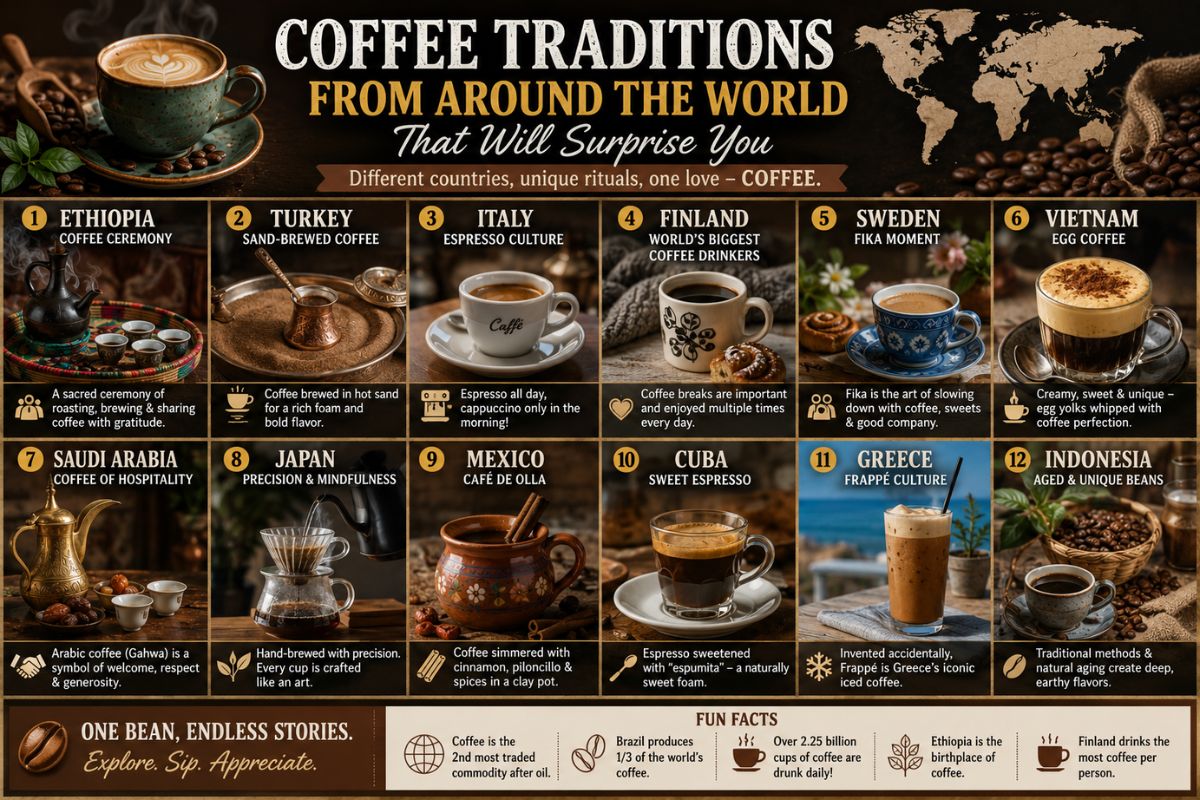
1. Ethiopia Hosts Elaborate Coffee Ceremonies
As the birthplace of coffee, Ethiopia treats every cup with deep respect.
A traditional Ethiopian coffee ceremony can last up to two hours. Green coffee beans are roasted over charcoal in front of guests, ground by hand using a mortar and pestle, and brewed in a clay pot called a jebena. Incense burns throughout the ceremony, creating a calming atmosphere.
Coffee is traditionally served three times:
- Abol
- Tona
- Baraka
The final serving, Baraka, symbolizes blessings and good fortune.
2. Turkey Brews Coffee in Hot Sand
Turkish coffee is one of the world’s oldest brewing methods.
Finely ground coffee, water, and sugar are placed inside a small copper pot called a cezve. Instead of cooking directly over a flame, the pot is slowly heated in hot sand.
The sand distributes heat evenly, creating a rich foam that coffee lovers treasure.
After finishing the drink, many people turn their cup upside down so someone can read the coffee grounds and predict the future.
3. Italy Believes Cappuccino Is Only for Breakfast
Order a cappuccino after lunch in Italy, and locals may quietly assume you’re a tourist.
Italians believe milk-heavy coffees should only be consumed during breakfast because they consider them too heavy after meals.
The rest of the day belongs to espresso.
Most Italians drink their espresso standing at the café counter, often finishing it in less than a minute.
4. Finland Drinks More Coffee Than Anyone Else
Despite its cold climate, Finland consistently ranks among the world’s biggest coffee-consuming nations.
The average Finn drinks around four cups of coffee every day.
Coffee breaks are considered so important that many workplaces legally provide them during the workday.
Coffee often accompanies cinnamon buns, cardamom pastries, and family gatherings.
5. Sweden Has an Entire Lifestyle Built Around Coffee
In Sweden, coffee is inseparable from Fika.
Fika isn’t simply drinking coffee.
It’s taking a deliberate break from work or daily life to enjoy coffee, pastries, and meaningful conversation with friends, family, or colleagues.
For many Swedes, Fika happens at least once every day.
6. Vietnam Loves Egg Coffee
One of the world’s most unusual coffees comes from Hanoi.
Egg coffee is made by whipping egg yolks with sweetened condensed milk until they become light and creamy.
The fluffy mixture is poured over strong Vietnamese coffee, creating a dessert-like drink that resembles tiramisu.
Despite sounding unusual, it has become one of Vietnam’s signature beverages.
7. Saudi Arabia Serves Coffee as a Symbol of Hospitality
Arabic coffee, known as Gahwa, is much more than refreshment.
It symbolizes generosity and respect.
Coffee is brewed with lightly roasted beans flavored with cardamom, cloves, and saffron before being served in tiny handleless cups.
Hosts continually refill guests’ cups until they gently shake the cup to indicate they have finished.
8. Japan Turned Coffee into an Art Form
Japan has elevated hand brewing to extraordinary levels.
Many specialty cafés prepare every cup individually using precise temperatures, carefully timed pours, and handcrafted ceramic drippers.
Slow brewing isn’t considered inconvenient.
It is considered craftsmanship.
Coffee lovers often wait several minutes for a single cup because quality matters more than speed.
9. Mexico Adds Cinnamon to Coffee
Traditional Mexican café de olla is brewed inside a clay pot.
Coffee is simmered with:
- Cinnamon
- Piloncillo (unrefined cane sugar)
- Sometimes cloves or orange peel
The clay pot adds subtle earthy flavors that cannot be replicated using metal cookware.
The result is warm, aromatic, and comforting.
10. Cuba Loves Sweet Espresso
Coffee in Cuba is intentionally sweet.
Sugar is whipped with the first few drops of espresso to create a creamy foam called espumita.
The remaining espresso is poured over it, creating a naturally sweet drink without adding sugar afterward.
Coffee often becomes a social event shared with family and neighbors.
11. Greece Made Cold Coffee Famous
Before iced coffee became trendy worldwide, Greece had already perfected it.
The Greek Frappé was accidentally invented in 1957 when instant coffee was shaken with cold water and ice.
Today it remains one of the country’s most popular summer drinks.
12. Indonesia Ages Coffee Beans Naturally
Indonesia produces some of the world’s most distinctive coffees.
On the island of Sumatra, traditional wet-hulling techniques create earthy, spicy flavors unlike coffee grown elsewhere.
Some producers also age beans for years before roasting, resulting in deep, mellow complexity.
Fun Coffee Facts
- Coffee is the world’s second most traded commodity after crude oil.
- Brazil produces roughly one-third of the world’s coffee supply.
- Ethiopia is widely believed to be coffee’s birthplace.
- More than 2.25 billion cups of coffee are consumed every day worldwide.
- Finland consistently ranks as one of the highest coffee-consuming countries per person.
Which Country Has the Best Coffee Tradition?
Every tradition reflects a different philosophy.
- Ethiopia celebrates community.
- Italy values simplicity.
- Sweden embraces connection.
- Turkey honors history.
- Japan pursues perfection.
- Vietnam encourages creativity.
There is no single “best” tradition, only different ways of appreciating one of the world’s favorite drinks.
Final Sip
Coffee connects people across continents, cultures, and generations. While the beans may come from the same plant, the rituals surrounding them are remarkably diverse. Whether you’re sipping egg coffee in Hanoi, sharing a leisurely Fika in Stockholm, or watching beans roast during an Ethiopian coffee ceremony, each cup offers a glimpse into a community’s history and values.
The next time you enjoy your morning coffee, remember that somewhere else in the world, the very same drink is being prepared in a completely different, yet equally meaningful, way.
Frequently Asked Questions
Which country has the oldest coffee tradition?
Ethiopia is widely recognized as the birthplace of coffee and has one of the oldest and most elaborate coffee traditions.
Why is Turkish coffee so famous?
Its unique brewing method, rich foam, intense flavor, and cultural heritage have made Turkish coffee famous worldwide.
What is the strangest coffee in the world?
Vietnamese egg coffee is often considered one of the most unusual yet delicious coffee drinks.
Which country drinks the most coffee?
Finland consistently ranks among the highest in coffee consumption per capita.
What is Fika?
Fika is a Swedish tradition of taking a break to enjoy coffee, pastries, and conversation, emphasizing relaxation and social connection.
Read: Top 10 Best Coffees in the World: A Bucket List for Every Coffee Lover