The Faroe Islands Are Not On Most Bucket Lists Yet, And That Is Exactly The Point
Real Shee Power is your online travel genie, helping you with all your journey needs.
Eighteen islands scattered in the North Atlantic, roughly halfway between Iceland and Norway, home to more sheep than people, and largely absent from the travel lists most people build their year around. That absence will not last much longer. Pinterest’s own 2026 trend data flagged “ethereal places” as one of the fastest-growing travel search categories of the year, naming the Faroe Islands directly, and search interest is already catching up to the photographs that have been quietly circulating for years, as covered in our Pinterest 2026 trends piece.
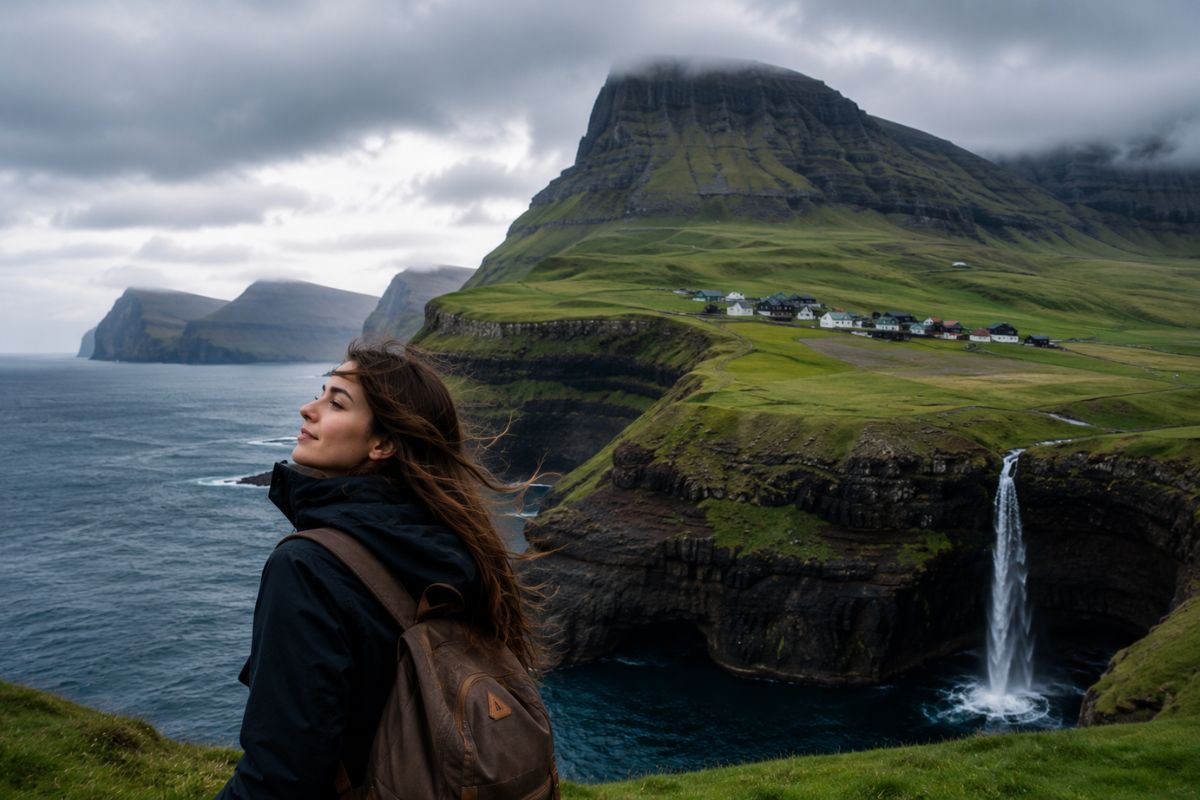
This is a place built almost entirely out of drama, waterfalls that fall directly into the ocean, villages tucked into fjords so narrow they feel imagined, grass-roofed churches, and a national mood that treats fog, wind, and sudden weather shifts as simply part of the plan rather than an inconvenience to it.
Why The Faroe Islands Feel Different From Everywhere Else
The Faroe Islands are an autonomous territory of the Kingdom of Denmark, not part of the European Union or the Schengen Area, which matters for visa planning even for travelers who assume Denmark automatically covers them. The islands are connected by an extraordinary network of sub-sea tunnels and a handful of ferries, meaning a trip here involves genuinely driving beneath the ocean floor between islands, one of the more surreal logistics of any destination on this list.
Locals describe experiencing all four seasons in a single day as a completely normal occurrence, and that unpredictability is part of the appeal rather than a flaw to plan around. Waterproof, layered clothing is not optional gear here, it is the actual dress code.
When To Actually Go
June through August is the prime window, bringing the longest days, up to roughly 20 hours of light, the driest stretch by Faroese standards, and every seasonal ferry and tour running at full schedule. Puffins arrive on Mykines Island specifically during this window too, typically from June through mid-August, most active in the evenings as they return from the sea.
Many of the most iconic sights, Mulafossur waterfall, the village of Saksun, and Fossá waterfall, are genuinely open and reachable year-round, which means a winter trip is a real, if colder and windier, option for travelers who want to see the islands the way locals actually experience them, rugged, quiet, and considerably less crowded. Whatever season is chosen, the standard local advice holds, come prepared for every kind of weather regardless of the forecast.
🧞♀️ Real Shee Power Genie Takeaway
Book your rental car and any ferry crossings, especially to Mykines, four to six months ahead for a 2026 trip. This is a small archipelago with limited capacity, and popular routes sell out well before peak season the way most people assume only applies to flights.
Where To Actually Go
Múlafossur Waterfall And Gásadalur

Photo via Wikimedia Commons
The single most photographed sight in the Faroe Islands, and for good reason. The waterfall drops about 30 metres directly off a cliff into the North Atlantic, right beside the tiny hamlet of Gásadalur, population in the low teens. Until a tunnel opened in 2004, the village was reachable only by a mountain hike or helicopter, which explains why it still feels remote despite now being a short, well-marked drive from Vágar Airport. Walk the short unpaved path from the parking area, then take the circular trail around the village for a second angle on the falls. On windy days, the waterfall’s spray blows sideways, a strange and genuinely memorable sight in itself.
Saksun, The Village In A Bowl

Photo via Wikimedia Commons, licensed under CC BY-SA 4.0
A handful of turf-roofed houses and a small white church sit inside a natural amphitheater formed by steep green mountains on the island of Streymoy, opening onto a tidal lagoon that was once a proper harbor before a storm sealed it off with sand generations ago. It remains one of the most consistently recommended stops on any Faroe itinerary, quiet, dramatic, and easily combined with a visit to nearby Tjørnuvík.
Mykines And The Puffins
The westernmost island in the archipelago, reachable only by a limited ferry or helicopter service, Mykines is home to the Faroe Islands’ largest puffin colony and a lighthouse walk considered one of the best hikes in the entire country. Because ferry capacity is genuinely limited, this is the single booking to prioritize months in advance if puffins and dramatic sea-cliff walking are trip priorities.
Kalsoy And The Kallur Lighthouse
Reached by a short ferry crossing, Kalsoy is a narrow, dramatic island best known for the Kallur Lighthouse hike, a route made internationally famous as a James Bond filming location. The trail runs along a knife-edge ridge with sweeping views over neighboring islands on a clear day.
Tórshavn, The World’s Smallest Capital With The Biggest Character
Home to the historic Tinganes peninsula, one of the oldest continuously inhabited parliamentary sites in the world, Tórshavn is compact enough to explore fully on foot in a single day, but rewards a slower pace, harborside cafés, a small but excellent National Museum, and the kind of walkable old town that photographs beautifully in any weather.
Vestmanna Sea Cliffs
A boat tour out of the western village of Vestmanna threads directly into towering sea cliffs and sea caves where seabirds nest on ledges hundreds of meters above the water, the classic North Atlantic boat excursion and, weather permitting, one of the most dramatic short trips available on the islands.
Sørvágsvatn, The Lake Above The Ocean
An optical trick of geography makes this lake on Vágar Island appear to hang suspended above the sea from certain angles, especially from the dramatic Trælanípa cliff viewpoint above it, a moderate hike that’s become one of the archipelago’s signature walks.
A Realistic 7-Day Faroe Islands Route
- Days 1-2, Vágar: Land, hike to Trælanípa for the Sørvágsvatn view, then visit Gásadalur and Múlafossur.
- Days 3-4, The Northern Isles: Ferry to Kalsoy for the Kallur Lighthouse hike, then explore the rugged cliffs of Viðoy.
- Days 5-7, Tórshavn And Streymoy: Base in the capital, visit the historic village of Kirkjubøur, take the Vestmanna sea cliffs boat tour, and build in at least one unstructured day for weather to cooperate on anything missed.
Travelers with a full week or more often add a ferry day trip to Mykines for the puffins and a detour to Saksun and Tjørnuvík on Streymoy, both easily folded into the Tórshavn leg of the route above.
Practical Notes Before Booking
The Faroe Islands are not in the EU or Schengen Area, so nationality-specific visa requirements should be checked independently rather than assumed to follow Denmark’s own rules. Many popular hiking trails, including several of the most scenic ones, now charge a small access fee and occasionally require a registered guide, worth factoring into a trip budget alongside the islands’ generally high cost of living. Sundays are notably quiet nationwide, with many supermarkets and restaurants in Tórshavn closed or operating limited hours, worth planning meals around rather than discovering on arrival.
FAQs
Do the Faroe Islands require a separate visa from Denmark? Yes, potentially. The islands are not part of the EU or Schengen Area, so travelers should check requirements specific to the Faroe Islands rather than assuming Danish or Schengen visa coverage applies automatically.
When can you see puffins in the Faroe Islands? Primarily from around June through mid-August, with Mykines Island hosting the largest and most accessible colony, most active in the evenings as birds return from the sea.
How many days do you need for a first Faroe Islands trip? A minimum of seven days is commonly recommended to cover Vágar, the northern islands, and Tórshavn and Streymoy without rushing between ferry and tunnel connections.
Is the weather really that unpredictable? Yes, genuinely. Locals and repeat visitors alike describe experiencing all four seasons in a single day as normal, which is why waterproof, layered clothing is considered essential regardless of season.