Bologna Is The Reason Every Other Italian Meal Feels Like A Compromise
Real Shee Power is your travel foodie bestie, serving up the world one plate at a time.
Italians gave Bologna three nicknames, and none of them are subtle. La Rossa, the red, for its ancient brick towers and terracotta rooftops. La Dotta, the learned, for housing Europe’s oldest university. And La Grassa, the fat, for a food culture so rich and specific that most of what the world thinks it knows as Italian food, spaghetti bolognese included, isn’t actually served here at all. This is Part of the Real Shee Power Travel the World on a Plate series, following stops in Bangkok and Oaxaca, and it might be the most quietly confident food city of the three.
Bologna doesn’t need to convince anyone it’s a food destination. It simply is one, has been for centuries, and continues on entirely unbothered by outside opinion.
.jpg "Bologna Is The Reason Every Other Italian Meal Feels Like A Compromise 2") Photo via Wikimedia Commons
Photo via Wikimedia CommonsThe Myth To Let Go Of Before You Land
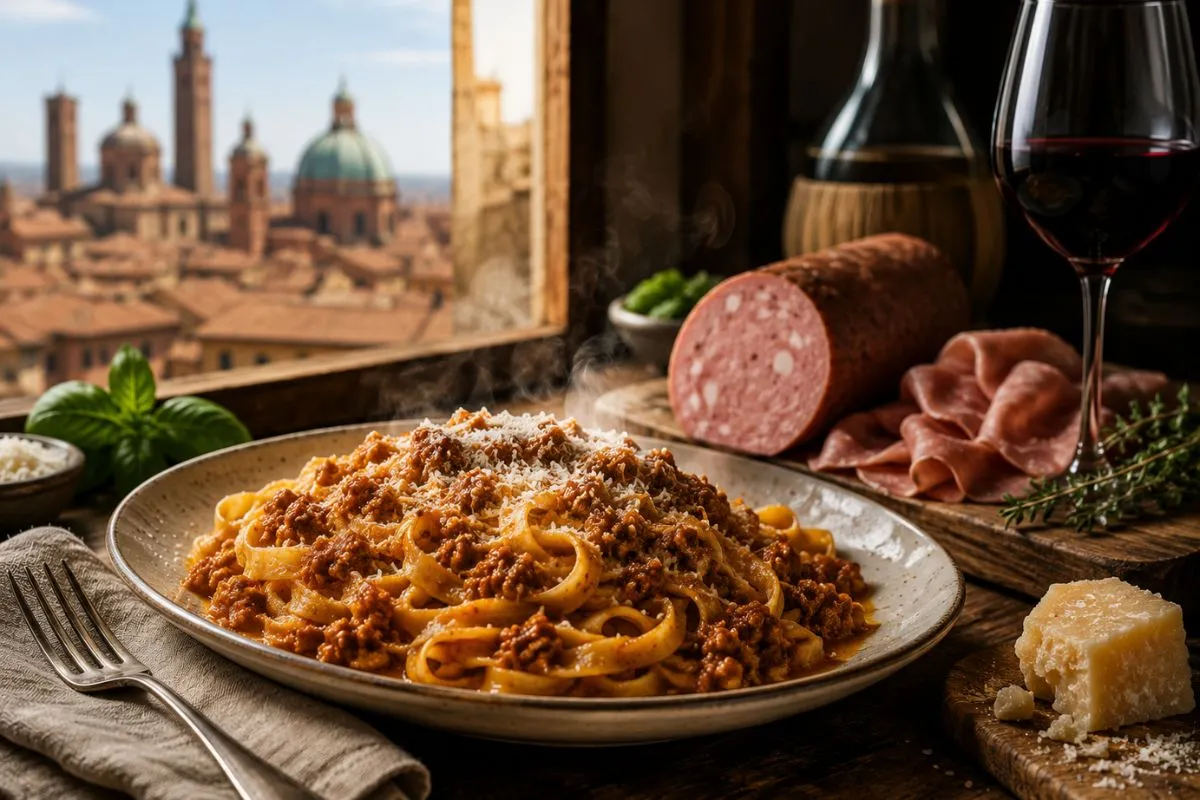
Spaghetti Bolognese, as it’s known abroad, spaghetti tossed in a tomato-heavy meat sauce, is not a dish you’ll actually find in Bologna. In this city, ragù is served with tagliatelle, never spaghetti, and the sauce itself leans far more meat-forward and far less tomato-heavy than the version most of the world grew up eating. The distinction matters enough that the Italian Culinary Academy formally registered the official tagliatelle al ragù recipe with the Bologna Chamber of Commerce in 1982, a soffritto of celery, carrot, and onion, hand-minced beef and pork, tomato concentrate, white wine, and milk, simmered gently for at least two hours, ideally three. Arrive expecting the version you know, and Bologna will politely, deliciously correct you.
The Four Pillars Of Bolognese Cuisine
Before looking at a single restaurant menu, four dishes are worth knowing, since together they form the foundation of everything else on the table here.
Tagliatelle al Ragù, the dish described above, is the city’s signature, and the one every visitor should eat at least once from a proper sit-down kitchen rather than a tourist-facing spot near the main square.
Tortellini in Brodo are Bologna’s most delicate specialty, tiny, hand-folded pasta parcels roughly the size of a pinky finger, filled with a mix of pork loin, prosciutto, mortadella, and Parmigiano Reggiano, served swimming in a light, rich broth rather than a heavy sauce. Local legend holds their shape was inspired by the navel of the goddess Venus, and while that’s more folklore than fact, the dish itself lives up to the romance. Traditionally eaten on Sundays and holidays, but genuinely welcome any day of the week.
Mortadella is what most of the world knows as bologna in name only, and tasting the real thing, a large, smooth-textured pork sausage studded with cubes of fat, subtly spiced, sliced thin enough to nearly melt on the tongue, makes the American deli version feel like a distant, unrelated cousin.
Lasagne Bolognese rounds out the four, layered with the same slow-cooked ragù, béchamel, and fresh egg pasta that built this city’s culinary reputation in the first place.
🧞♀️ Real Shee Power Genie Takeaway
If you only remember one rule from this entire guide, make it this: never order spaghetti bolognese in Bologna. Ask for tagliatelle al ragù instead, and watch a local’s face soften with approval rather than polite tourist tolerance.
Where To Eat: The Quadrilatero, Bologna’s Beating Heart
Just steps from Piazza Maggiore, the Quadrilatero is Bologna’s medieval market district, a grid of narrow lanes following the same Roman street pattern they have for two thousand years. Once home to the city’s craft and merchant guilds, painters, goldsmiths, butchers, and fishmongers, the area remains a genuinely working food market today, used daily by residents rather than existing purely for visitors.
Via Pescherie Vecchie, Old Fishmongers’ Street, is the most photographed lane in the district, its name now more historical than literal, since stalls today sell a mix of fresh pasta, cheese, cured meats, and seasonal produce alongside fish. Wander here in the morning, when locals are buying eggs and meat for their own Sunday tortellini, and the neighborhood’s real, unhurried rhythm is easiest to feel.
Within the wider Quadrilatero, Mercato di Mezzo is a split-level indoor market packed with casual eateries, butchers, and cheesemongers, busiest and liveliest on weekends, and one of the easiest places to graze your way through several Bolognese specialties in a single visit without committing to a full sit-down meal.
What To Actually Order, Dish By Dish
Tigelle, small round flatbreads traditionally cooked between hot stones, split open and filled with cured meats, cheese, or a garlic and rosemary spread called cunza, make an excellent, less formal introduction to the region’s flavors.
Piadina, a soft, thin flatbread folded around fillings like prosciutto and mozzarella or pesto and prosciutto, is the closest thing Bologna has to genuine street food, sold from small stalls and kiosks across the city.
Cotoletta alla Bolognese, also called la petroniana, is a veal cutlet fried in butter and topped traditionally with prosciutto and Parmigiano, a heartier, more indulgent plate worth ordering at least once.
Balanzoni, large green tortelloni made with spinach-tinted dough and filled with ricotta, mortadella, and Parmigiano, offer a colorful, slightly playful twist on the city’s more classic pasta shapes.
Tenerina Cake closes the meal properly, a flourless dark chocolate cake with a slightly crisp exterior and a soft, almost fudgy center, dating back to the early 20th century and originally named in honor of Queen Elena of Montenegro.
Beyond The City: What Bologna’s Region Gives The World
Bologna sits at the heart of Emilia-Romagna, a region responsible for an outsized share of Italy’s most famous exports. Parmigiano Reggiano and Prosciutto di Parma are both produced in the surrounding countryside, and Aceto Balsamico Tradizionale comes from nearby Modena, meaning a meal here is rarely just about the city itself, it’s a tasting of the entire region concentrated onto one plate.
How To Actually Spend A Food Day In Bologna
Start the morning walking the Quadrilatero while it’s still quiet, watching stalls open and locals do their actual grocery shopping. Stop for a mid-morning espresso and a slice of something sweet at a historic café near Piazza Maggiore. Take a proper sit-down lunch of tortellini in brodo or tagliatelle al ragù at a family-run trattoria rather than anywhere directly facing the main square. Spend the afternoon walking beneath Bologna’s covered porticoes, over 40 kilometers of them citywide, a UNESCO World Heritage Site since 2021, connecting the city’s history to its food culture in a way that rewards slow wandering. End the day with aperitivo, one of the best rituals in Italian travel and one of the things that most clearly separates Bologna from more tourist-heavy Italian cities, a pre-dinner drink accompanied by small bites, taken slowly, without rush.
.jpg "Bologna Is The Reason Every Other Italian Meal Feels Like A Compromise 3")
Photo via Wikimedia Commons
A Practical Note On Timing
Most Quadrilatero stalls and shops operate Monday through Saturday, roughly 7:30am to 1:30pm for the freshest morning trade, with some reopening in the afternoon and evening. Many restaurants close on Mondays, a pattern common across Italy, so building a Sunday or weekday-morning market visit into the trip is worth planning around rather than discovering on arrival.
FAQs
Is spaghetti bolognese actually eaten in Bologna? No. Ragù in Bologna is traditionally served with tagliatelle, not spaghetti, and the sauce itself is meatier and less tomato-forward than the internationally known version.
What is the single dish to prioritize on a short trip to Bologna? Tortellini in brodo is often cited as the most quintessentially Bolognese dish, small, hand-folded, and traditionally eaten on Sundays, though tagliatelle al ragù runs a close second as the city’s signature plate.
Is the Quadrilatero market touristy or still genuinely local? Both, in a good way. It’s popular with visitors, but remains a real, functioning daily market for Bologna residents, especially in the morning hours before the busiest tourist traffic arrives.
How many days should a food-focused trip to Bologna include? Three days allows time for the Quadrilatero, a proper sit-down meal of each of the four core dishes, and at least one day trip into the surrounding Emilia-Romagna countryside for Parmigiano or balsamic vinegar production.