Travel the World Around the Plate: The Hearty, Underrated Cuisine of Niger
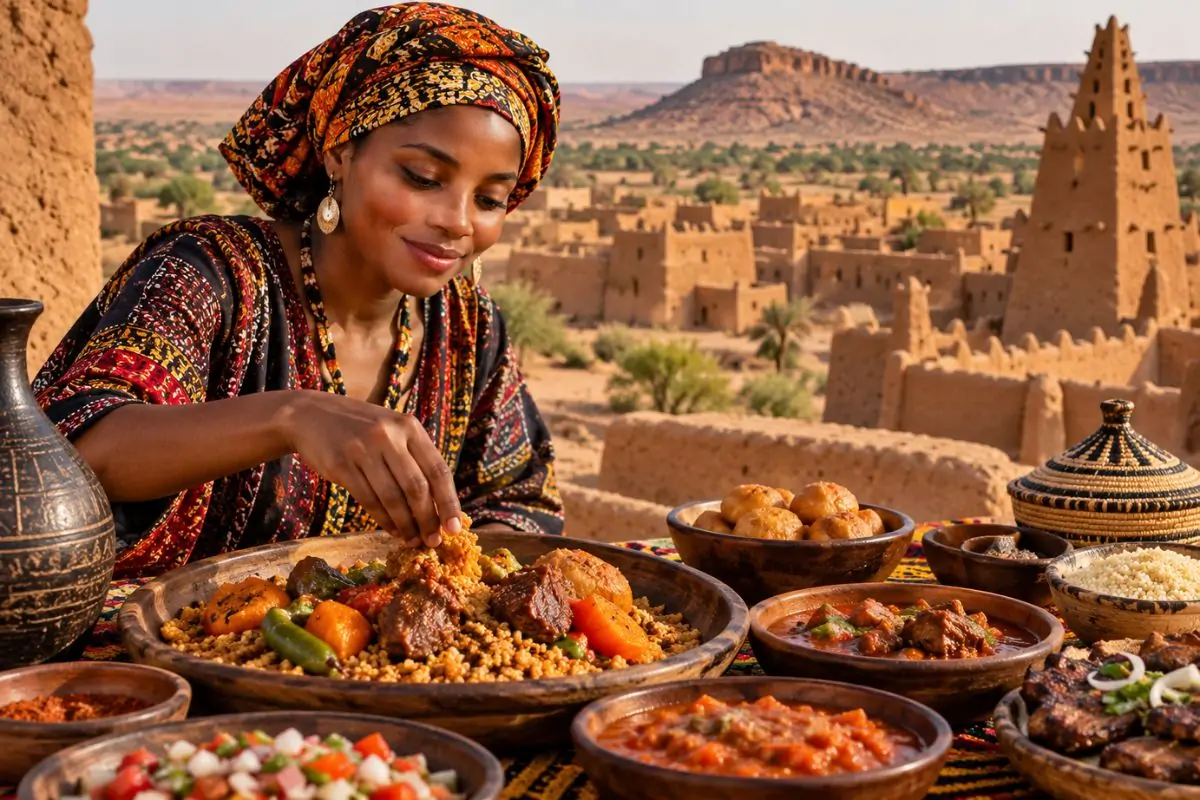
Ask most people to name a West African cuisine, and Nigeria, Ghana, or Senegal usually come up first. Niger rarely gets mentioned, which is a genuine oversight, because the food of this vast, landlocked Sahelian nation tells its own story entirely, one shaped by desert heat, river life, and a hospitality so central to the culture that an empty plate in front of a guest is considered almost unthinkable.
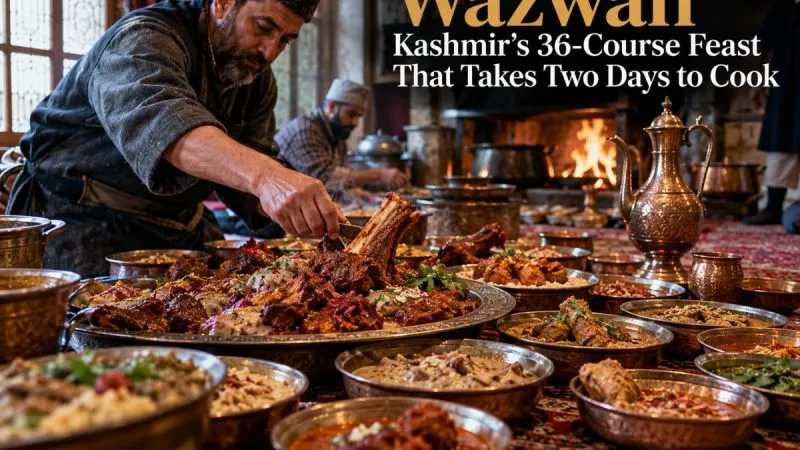
If you enjoyed our deep dive intoKashmir’s 36-course Wazwan feast, this one takes you from the Himalayas to the edge of the Sahara.
A Cuisine Built Around One Grain
If there’s a single ingredient that defines the Nigerien table, it’s millet. It’s pounded in a mortar, boiled into a thick, comforting porridge, and served alongside a sauce, meat, or fish, functioning as the daily backbone of meals across the country in much the same way rice anchors a plate in parts of Asia. In regions with better growing conditions, particularly southern Niger and the Aïr Mountains, rice, couscous, and even bread step in as alternatives, but millet remains the grain most Nigeriens grew up eating.
“Millet is a staple of everyday Nigerien cuisine.”
Chicken Djerma, the Dish That Represents the Nation
If Niger has one dish that functions as an unofficial national plate, it’s Chicken Djerma, named after the Zarma-Djerma people who live along the banks of the Niger River. It’s a slow-simmered chicken stew built on onions, tomatoes, and ground peanuts, a combination that captures Sahelian cooking in a single pot, simple, protein-rich, and deeply tied to the ingredients the region can actually grow and trade.
The quick version, for anyone who wants to cook it at home:
Brown chicken pieces in oil, then sauté onion and garlic until lightly golden. Stir in tomatoes, salt, and spices, and let the mixture simmer briefly. Dilute peanut paste in a glass of water and add it to the pot, followed by two more glasses of water. Cover and simmer gently for 35 to 45 minutes, stirring occasionally so the sauce doesn’t catch at the bottom. It’s traditionally served over rice, millet, or fonio, a smaller, nuttier ancient grain that’s quietly having its own global moment right now.
“This dish illustrates the importance of local grains in the Nigerien diet. Its simplicity reflects the nourishing and traditional nature of Sahelian cuisine.”
Families reserve it especially for large gatherings and rural celebrations, and the recipe is typically passed down rather than written, learned by watching a mother or grandmother rather than from a cookbook.
Dambou, the Southern Classic
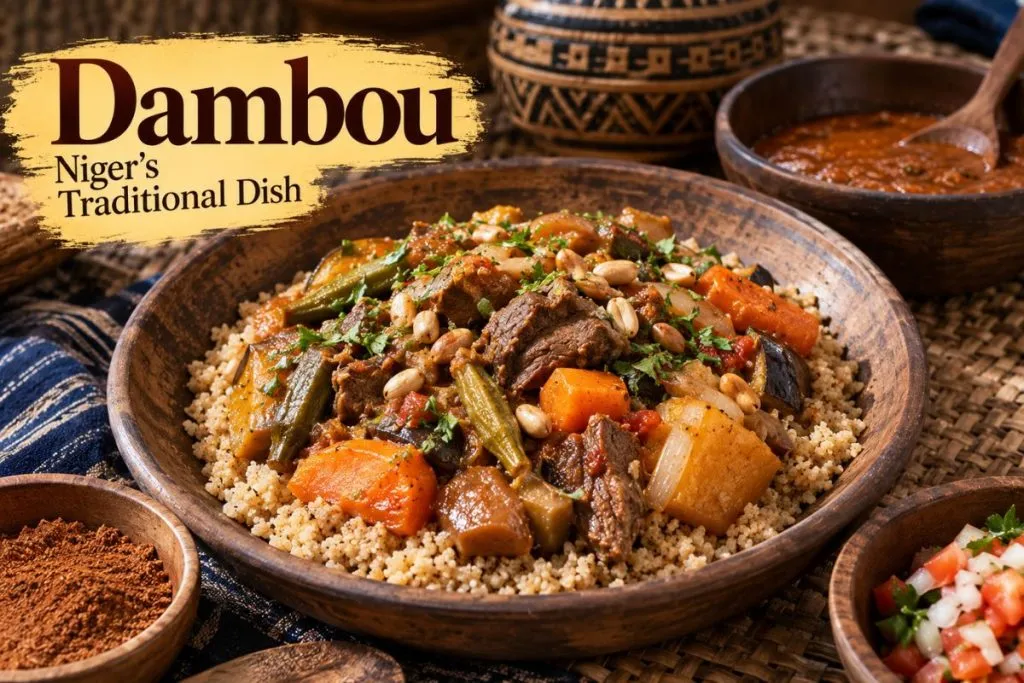
In Niger’s south, where the Zarma and Songhai communities are concentrated, dambou is the dish locals reach for. It’s a hearty mix of shredded greens, most commonly cabbage, combined with grains and often enriched with a bit of meat or fish, cooked down into something closer to a one-pot meal than a side dish. It’s the kind of recipe that varies slightly from household to household, the way a “family recipe” tends to everywhere in the world, without ever losing its core identity.
Koulikouli, the Snack That Travels Well
For something smaller and more portable, koulikouli is the Nigerien answer to a protein-dense street snack. Made from ground peanuts, the paste is pressed to remove excess oil, rolled into small balls, and then roasted or fried until firm. It can be eaten straight as a snack or ground back down and used as a seasoning in other dishes. It’s especially associated with the Maradi region, and if you’ve ever had West African peanut-based condiments elsewhere, koulikouli is very likely a cousin of something you’ve already tasted.
Beroua: Couscous Reinvented From Cowpeas
One of the more fascinating culinary techniques in Niger involves beroua, a traditional method of transforming cowpeas into a couscous-style dish, most closely associated with communities in Dogondoutchi, Maradi, and Zinder. Researchers studying local food knowledge in the region have documented beroua as a dish built entirely on generations of inherited technique rather than formal recipes, now increasingly promoted at food exhibitions both within Niger and internationally as a point of culinary pride.
What’s in the Cup, Not Just the Plate
No meal in Niger is complete without tea, and it isn’t treated casually. Nigerien tea, brewed strong from black tea leaves, is traditionally served in small, handle-less glass cups, held carefully by the rim since the tea itself is poured scalding hot. The ritual of preparing and sharing it, often across three distinct rounds each slightly different in strength and sweetness, mirrors tea culture across much of the wider Sahara and Sahel.
For something cooler, bissap, a hibiscus tea sweetened and served cold, and lemoun hari, a ginger-lemon infusion, are the go-to refreshments, especially during Niger’s long, hot stretches of the year.
The Bigger Picture Behind the Plate
What’s striking about Nigerien cuisine, once you look past the ingredient lists, is how closely it mirrors the rhythm of life in the Sahel itself. Meals shift with the seasons, richer and more dairy-heavy during the rainy season when herds produce more milk, leaner during dry stretches when households rely more heavily on stored grains and whatever the market can provide. Rice, imported oils, and packaged flavour enhancers have crept steadily into everyday cooking, but the backbone, millet, peanuts, and a shared pot at the centre of the table, has remained remarkably intact.
“Nigerien cuisine reflects the warmth and hospitality of the Sahel.”
That’s really the biggest takeaway here. This isn’t cuisine built for spectacle or Instagram. It’s food built for survival, community, and generosity in one of the more demanding climates on Earth, and that context is exactly what makes it worth seeking out.