
Why Your Perfume Smells Different on Your Skin Than It Does in the Bottle: The Science Behind Your Signature Scent
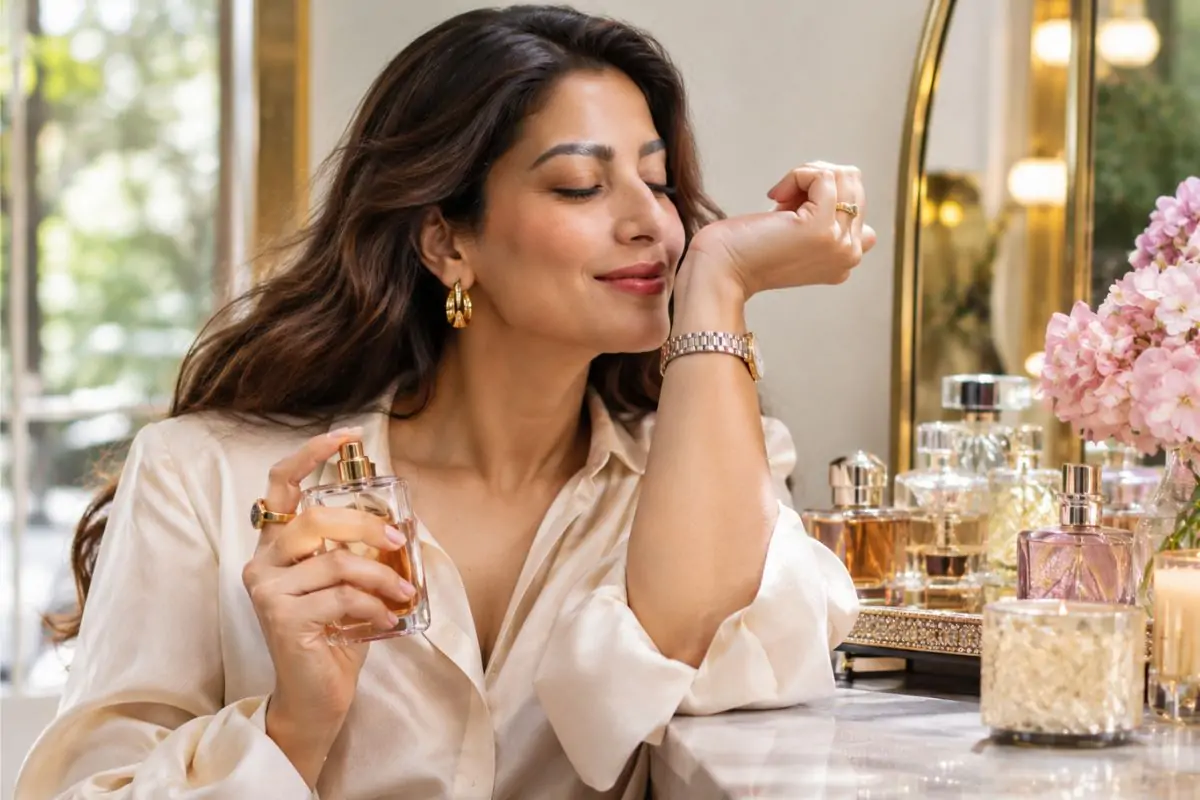
Have you ever fallen in love with a perfume at a beauty counter, sprayed it on your wrist, and thought you had finally found your signature fragrance? Then, a few hours later, you smelled your skin again and wondered whether you had accidentally bought a completely different perfume.
Perhaps the opening was fresh and citrusy, but later it became sweet and heavy. Maybe a fragrance that smelled luxurious on your friend seemed sharp on you. Or perhaps the perfume you adored on a paper tester simply disappeared after 30 minutes on your skin.
You are not imagining it. Perfume can genuinely smell different depending on where and how it is worn.
A fragrance is not a fixed smell that behaves identically in every situation. It is a carefully constructed mixture of aromatic materials that evaporate at different rates. When you spray it on your skin, the fragrance interacts with your body temperature, natural skin oils, the surrounding environment and even the products you have applied beforehand.
Understanding these factors can help you choose perfumes more intelligently, make them last longer and avoid spending money on fragrances that smell beautiful in the shop but disappointing at home.
1. Your Skin Is Not a Neutral Surface
The first reason perfume smells different on different people is that skin is not simply a surface on which fragrance sits.
Human skin has its own characteristics, including natural oils, moisture levels, temperature and acidity. These can influence how a fragrance develops and how quickly certain aromatic ingredients evaporate.
For example, someone with naturally oily skin may find that a fragrance remains noticeable for longer than it does on someone with very dry skin. This is partly because fragrance materials can interact with the skin’s surface oils, affecting how they are retained and released.
However, this does not mean oily skin automatically makes every perfume smell better. A fragrance can still develop differently depending on its ingredients and the individual wearing it.
The important point is that the perfume you smell on a tester strip is not necessarily the perfume you will experience throughout the day.
2. The First Smell Is Not the Whole Perfume
One of the biggest mistakes people make when buying perfume is judging it immediately after spraying.
Fragrances are commonly described through three stages: top notes, heart notes and base notes.
Top notes: These are the scents you notice first. They are often fresh, bright and volatile, including citrus, light fruits and some aromatic herbs.
Heart notes: These emerge as the opening notes begin to fade. Floral, spicy, fruity and aromatic ingredients often form the heart of a fragrance.
Base notes: These provide depth and character as the fragrance develops. Woods, musk, amber-like accords, vanilla and resins are commonly used in this stage.
This structure is often called the fragrance pyramid. It is a useful way to understand perfume, although modern fragrance compositions do not always develop in such a neat sequence.
A perfume that initially smells like fresh lemon may eventually become woody, musky or creamy. If you purchase it after smelling only the opening, you may be buying a fragrance you have not actually experienced yet.
3. Body Temperature Can Influence How Quickly Perfume Develops
Perfume is designed to release aromatic molecules into the air. Temperature influences evaporation, which is one reason a fragrance can seem different in warm and cool conditions.
When you apply perfume to warm skin, some volatile ingredients may evaporate more quickly. This can make the opening feel stronger initially, while the fragrance may also evolve faster.
In colder weather, evaporation can be slower, and certain fragrances may seem more restrained.
This is one reason a perfume that feels perfect during winter may become overwhelming in the heat.
For hot and humid conditions, many people prefer lighter compositions with citrus, green, aquatic or airy floral notes. During cooler months, they may enjoy deeper woody, spicy, amber or vanilla-based fragrances.
These are preferences rather than strict rules. The best fragrance is ultimately the one you enjoy wearing.
4. Dry Skin Can Make Perfume Seem to Disappear Faster
If your perfume never seems to last, your skin may be part of the explanation.
Fragrance often has less staying power on very dry skin because there is less surface oil to help retain some aromatic materials. This does not mean the perfume is defective or that your skin is doing something wrong.
A simple solution is to moisturise before applying fragrance.
Use an unscented body lotion and allow it to absorb before spraying your perfume. A moisturised surface can help fragrance feel more comfortable and may improve its persistence.
You can also use a matching body lotion from the same fragrance range, provided you enjoy the combined scent.
Avoid applying perfume over irritated, broken or freshly shaved skin if it causes discomfort.
5. Your Moisturiser, Shampoo and Deodorant May Be Changing the Smell
Sometimes the problem is not the perfume at all. It is everything you are wearing underneath it.
Imagine applying a sweet vanilla fragrance after using a strongly scented floral body lotion. Then add a fruity shampoo, a scented deodorant and a hair serum with its own fragrance.
The result may be a combination that smells quite different from the perfume you originally purchased.
This is called fragrance layering, and it can be intentional. However, when several strongly scented products are used together, their aromas may compete rather than complement one another.
If you want to understand how a perfume smells on your skin, test it with unscented moisturiser and minimal additional fragrance.
Once you know its character, you can experiment with layering.
6. Why the Same Perfume Smells Different on Two Women
This is one of the most interesting aspects of fragrance.
Two people can wear exactly the same perfume and experience different results. One may notice the floral notes more strongly, while another may perceive the woody or musky elements.
Differences in skin condition, temperature, application amount, surrounding environment and individual perception can all contribute.
There is also a psychological element. Smell is closely connected to memory and emotion. A fragrance associated with a pleasant experience may feel more attractive to one person than to another.
However, there is no reliable scientific basis for assigning a particular fragrance preference or smell to someone’s personality, hormones or identity.
Your perfume does not reveal your character. It simply becomes part of how you experience and express yourself.
7. The Paper Tester Strip Can Be Misleading
Perfume counters often provide paper strips because they are convenient for comparing several fragrances.
But paper and skin are very different testing surfaces.
A paper strip does not have natural oils, moisture or body heat. It also does not reproduce the conditions under which you will actually wear the perfume.
This means a fragrance may smell sharper, cleaner or more linear on paper than it does after developing on your skin.
Paper strips are useful for narrowing down choices. They are not the final test.
If you are seriously considering buying a perfume, always test it on your skin before purchasing a full bottle.
8. How to Test a Perfume Properly Before Buying It
A good fragrance deserves more than a five-second decision.
Follow this simple testing method:
- Spray the fragrance on clean skin, preferably on your wrist or inner forearm.
- Avoid rubbing your wrists together. This can disturb the fragrance on the skin’s surface.
- Give the opening a few minutes to settle.
- Smell it again after approximately 30 minutes.
- Check how it develops after two to four hours.
- Notice whether you still enjoy the scent as it becomes softer or changes character.
- If possible, wear it for a full day before buying.
Do not test ten perfumes on your skin at once. Your nose can become overwhelmed, making it difficult to distinguish individual fragrances.
If you are testing several options, use paper strips to shortlist them and then apply only one or two favourites to your skin.
9. Why Some Perfumes Last All Day While Others Disappear Quickly
Perfume longevity depends on several factors, including formulation, concentration, ingredients, application and environmental conditions.
You may see fragrance labels such as:
Eau de Cologne:Generally has a lower fragrance concentration and is often designed for a lighter, fresher experience.
Eau de Toilette:Usually lighter than an Eau de Parfum, although actual performance varies considerably.
Eau de Parfum:Often contains a higher concentration of aromatic materials than Eau de Toilette.
Parfum or Extrait de Parfum:Typically has a higher fragrance concentration, although this does not guarantee that every formula will last longer.
Concentration is only one part of the story. Some lighter fragrances can remain noticeable for hours, while certain expensive Eau de Parfums may fade relatively quickly.
The ingredients and overall formulation matter enormously.
Do not assume that a higher price or stronger concentration automatically means better performance.
10. Where Should You Apply Perfume?
Perfume is commonly applied to areas where the skin is relatively warm, such as the wrists, neck and behind the ears.
These areas can help the fragrance become noticeable as it evaporates.
For a more subtle experience, you can spray lightly onto clothing, provided the fabric is suitable. Always test an inconspicuous area first because some perfumes can stain delicate or light-coloured materials.
Avoid spraying fragrance directly into your eyes, onto irritated skin or onto jewellery.
You do not need to cover yourself in perfume. A few carefully placed sprays are often enough.
11. Does Your Diet or Hormonal Cycle Change Your Perfume?
You may have heard that what you eat, your hormones or your menstrual cycle can dramatically change how perfume smells on your body.
The reality is more complicated.
Diet, health, medication, hormonal changes and environmental factors can influence natural body odour in some circumstances. However, there is not enough reliable evidence to claim that a particular menstrual phase consistently changes how a specific perfume develops.
Similarly, claims that certain foods make your perfume smell sweeter or that a particular fragrance reacts with your hormones to create a unique scent should be treated cautiously.
If you notice a sudden and persistent change in your natural body odour, it is worth considering broader health or lifestyle factors rather than assuming your perfume is responsible.
12. How to Make Your Favourite Perfume Last Longer
If you have found a fragrance you genuinely love, a few simple habits may help you enjoy it for longer.
- Apply perfume to clean, moisturised skin.
- Store bottles away from direct sunlight and excessive heat.
- Keep the bottle tightly closed when not in use.
- Avoid storing perfume in a bathroom where temperature and humidity fluctuate.
- Consider using a matching body lotion if one is available.
- Apply a suitable amount rather than repeatedly spraying throughout the day.
- Avoid rubbing the fragrance after application.
A perfume bottle should ideally be stored in a cool, dry and dark place. Proper storage helps protect the fragrance from heat, light and oxidation.
The Real Secret: Buy the Perfume You Love on Your Skin
There is a reason fragrance enthusiasts often say that perfume should never be purchased in a hurry.
A beautiful opening can be misleading. A perfume that smells extraordinary in the first minute may become too sweet, too powdery or too intense after an hour. Another fragrance that seems ordinary initially may develop into something you absolutely love.
The trick is to give perfume time.
Do not buy a fragrance because it smells expensive on a paper strip, because an influencer recommends it or because it is currently fashionable. Test it on your own skin, experience its development and decide whether you enjoy wearing it.
After all, a signature fragrance is not the perfume that impresses everyone else in the shop. It is the one you still love when you catch its scent on your wrist hours later.
Frequently Asked Questions
Why does my perfume smell different on my skin?
Natural skin oils, moisture, temperature, application conditions and the fragrance formulation can influence how a perfume develops and how long it remains noticeable.
Why does perfume smell better on someone else?
People have different skin conditions and body temperatures, and they may apply different amounts of fragrance. Individual smell perception and personal associations also influence how a perfume is experienced.
Should I rub my wrists after applying perfume?
No. It is better to let the fragrance dry naturally rather than rubbing the wrists together.
Does moisturising make perfume last longer?
Moisturising can help fragrance remain noticeable for longer on dry skin. An unscented lotion is a useful option because it is less likely to interfere with the perfume.
Why does my perfume disappear after one hour?
This may be due to the fragrance formulation, skin condition, environmental temperature or the way you perceive the scent. You may also become less aware of a fragrance through olfactory adaptation, even when other people can still smell it.
Is Eau de Parfum always longer-lasting than Eau de Toilette?
Not necessarily. Eau de Parfum generally has a higher fragrance concentration, but longevity depends on the formula and ingredients, not just the label.