
11 Things That Make Your Home Look Expensive Without Spending a Fortune
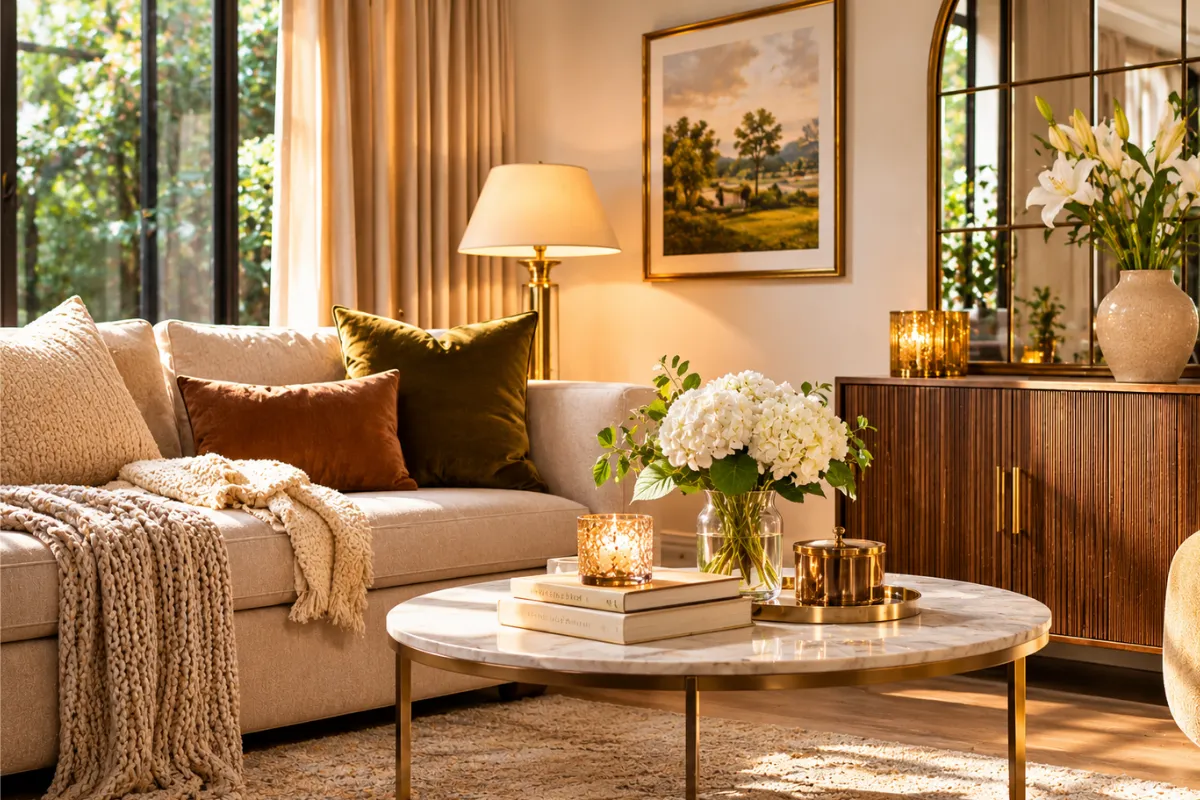
Have you ever walked into someone’s home and immediately felt that it looked expensive? Not necessarily because it was enormous or filled with designer furniture, but because everything seemed beautifully put together.
The lighting was warm, the curtains fell perfectly, the furniture looked thoughtfully arranged, and even the simplest objects appeared intentional.
Here is the interesting part: a luxurious-looking home does not always require a luxury budget.
In fact, some of the most effective interior design upgrades are surprisingly affordable. You do not need marble floors, imported furniture or expensive artwork. You need a little attention to detail, an understanding of colour and proportion, and the ability to recognise what makes a space feel harmonious.
Whether you live in a compact apartment or a spacious house, these 11 changes can make your interiors look more sophisticated without requiring a major renovation.
Table of Contents
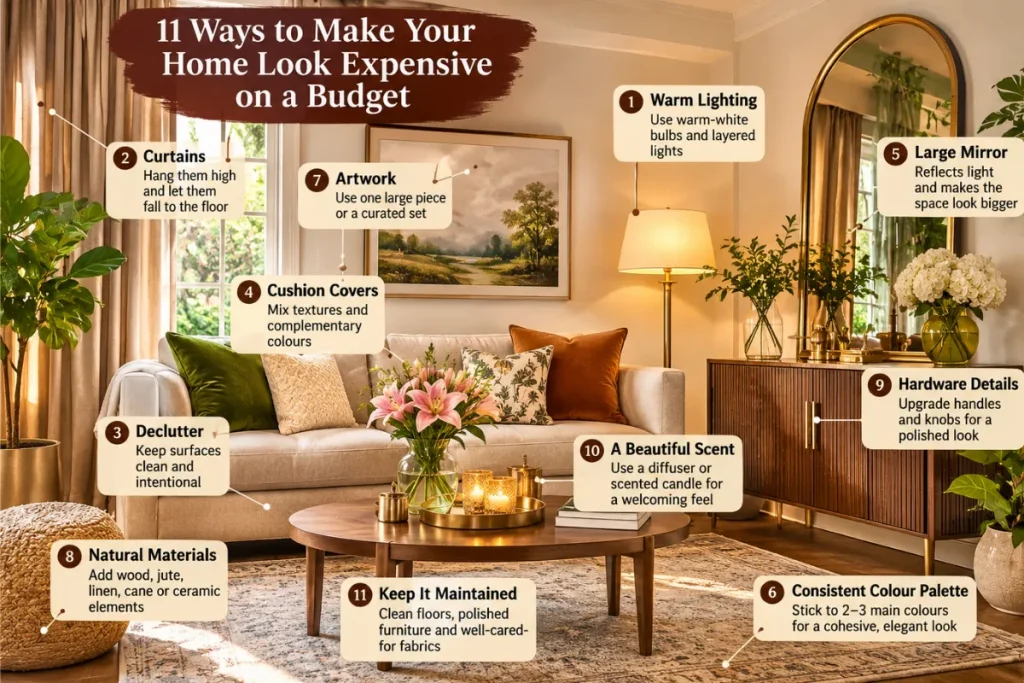
1. Replace Harsh White Lighting With Warm Lighting
Lighting is one of the biggest differences between a home that feels ordinary and one that feels inviting.
Bright, harsh lighting can make even beautiful furniture and expensive finishes look flat. Warm lighting creates depth, softness and atmosphere.
Consider using warm-white bulbs in living rooms, bedrooms and dining areas. A floor lamp beside a sofa, a table lamp on a console or subtle lighting near a bookshelf can make a room feel more layered.
You can also use lamps with fabric shades to soften the light.
For a comfortable residential atmosphere, bulbs around 2700K to 3000K are often a good starting point. You may prefer brighter, more neutral lighting in kitchens and work areas.
The trick is to avoid relying on a single ceiling light to illuminate an entire room.
2. Choose Curtains That Make Your Ceilings Look Taller
Curtains can dramatically change the proportions of a room.
One common decorating mistake is hanging curtains directly above the window frame. This can make the windows and ceilings appear shorter.
Instead, install the curtain rod closer to the ceiling and allow the curtains to fall almost to the floor.
Choose simple fabrics such as linen-look cotton, textured polyester or light-filtering blends. Neutral colours like ivory, beige, soft grey and warm white are easy to coordinate with most interiors.
Full-length curtains also create a more finished appearance than short curtains that stop halfway down the wall.
If your budget allows only one change in a room, new curtains can be an excellent place to start.
3. Declutter Your Surfaces
A room does not look expensive because it contains more things. Often, it looks expensive because it contains fewer, better-arranged things.
Look at your coffee table, kitchen counter, bedside table and television unit. Are they covered with objects that have accumulated over time?
Remove anything that does not need to be there.
Then create a few intentional arrangements. A coffee table might have a small stack of beautiful books, a decorative bowl and a vase of fresh flowers. A console table could feature a lamp, a framed photograph and one sculptural object.
Leave some empty space around these items.
This is sometimes called negative space in interior design. It allows individual objects to stand out instead of competing for attention.
4. Invest in Beautiful Cushion Covers
You do not need a new sofa to give your living room a makeover.
Changing cushion covers can make a surprisingly noticeable difference.
Choose a combination of textures rather than buying every cushion in the same fabric. Linen, velvet, cotton, boucle-style fabrics and woven materials can work beautifully together.
A restrained colour palette often looks more sophisticated. Try combinations such as:
- Cream, camel and chocolate brown.
- Ivory, olive green and beige.
- Navy, white and soft grey.
- Rust, warm beige and muted terracotta.
You can mix different sizes and shapes, but avoid overcrowding the sofa.
A few carefully chosen cushions can make an ordinary seating arrangement feel more considered.
5. Add One Large Mirror
Mirrors are among the most useful decorating tools, particularly in smaller homes.
A well-positioned mirror reflects natural light, creates a sense of openness and adds visual interest.
Consider placing a large mirror opposite or beside a window so that it reflects daylight. In an entryway, a full-length mirror can make the space feel more welcoming while also serving a practical purpose.
Choose a frame that complements your interiors. Thin black frames look contemporary, wooden frames add warmth, and antique-style finishes can introduce character.
Avoid filling every wall with small mirrors. One well-positioned statement mirror often has more impact.
6. Choose a Consistent Colour Palette
A home can contain beautiful furniture and still feel visually chaotic if every room uses unrelated colours.
A consistent colour palette helps create a sense of continuity.
Start with two or three main colours and introduce additional shades through accessories.
For example, a warm neutral palette might include ivory, beige, natural wood and muted brown. A more dramatic palette could combine deep green, cream, brass and walnut.
You do not have to make every room identical. Instead, repeat a few colours across different spaces through cushions, artwork, curtains, rugs and decorative objects.
This creates a subtle connection between rooms and makes the overall home feel thoughtfully designed.
7. Use Artwork Instead of Filling Walls With Small Decorations
Bare walls can make a room feel unfinished, but filling them with too many small decorative objects can create visual clutter.
A large artwork or a carefully arranged pair of prints can make a stronger statement.
Choose something that complements the colours and character of your home. It could be an abstract painting, a landscape photograph, a botanical print or a piece of traditional art.
The frame matters too. Simple wooden, black or metallic frames can make inexpensive prints look more polished.
You do not need original artwork worth thousands. A print you genuinely enjoy, displayed well, can be more effective than an expensive piece that does not suit the room.
8. Bring Natural Materials Into Your Home
Natural materials add warmth and texture, which can make interiors feel more inviting.
Wood, stone, linen, cotton, jute, cane and ceramic finishes are all worth considering.
You can introduce them without replacing major furniture.
Try a wooden tray on your coffee table, a woven basket beside the sofa, ceramic vases on a console or a jute rug beneath a seating arrangement.
The combination of different textures makes a room feel more layered.
Even a simple room with neutral walls can become visually interesting when it contains a thoughtful mix of natural materials.
9. Upgrade Small Hardware Details
Sometimes the smallest details make the biggest difference.
Old, mismatched cabinet handles, worn drawer knobs and outdated taps can make a kitchen or bathroom look tired.
Replacing cabinet handles with simple, coordinated hardware can refresh the appearance of furniture without replacing the entire unit.
Depending on your existing interiors, consider brushed brass, matte black, brushed steel or understated chrome.
You can also update hooks, door handles and other visible hardware where practical.
Before buying anything, check the existing measurements and installation requirements. A small upgrade should not turn into an expensive repair project.
10. Make Your Home Smell Beautiful
A beautiful home is not only about what people see. It is also about what they experience when they walk through the door.
A clean, fresh-smelling home immediately feels more welcoming.
Start with the basics: regular cleaning, good ventilation, clean upholstery, fresh bedding and properly maintained bathrooms.
Then, if you enjoy fragrance, introduce a subtle scent through a diffuser, scented candle or room spray.
Choose something that complements the atmosphere of your home. Fresh citrus, soft florals, green notes and gentle woody fragrances can all work well.
Avoid using too many competing fragrances. A home should smell fresh, not like several perfume counters operating at once.
Never leave a burning candle unattended, and follow the manufacturer’s instructions for fragrance products.
11. Keep Your Floors and Furniture Beautifully Maintained
You can spend money on decorative accessories, but neglected floors and furniture will still make a room feel unfinished.
Clean flooring, polished wooden surfaces, maintained upholstery and properly arranged furniture contribute significantly to the overall appearance of a home.
Remove visible stains, repair loose handles, clean glass surfaces and keep furniture free from unnecessary clutter.
Pay attention to rugs too. A rug that is too small can make a seating arrangement look disconnected. Ideally, choose a size that visually anchors the furniture rather than floating awkwardly in the middle of the room.
You do not need to buy everything new. Sometimes cleaning, repairing and rearranging what you already own creates the most noticeable improvement.
5 Decorating Mistakes That Can Make a Home Look Less Polished
Even beautiful homes can lose their charm because of a few avoidable decorating decisions.
1. Too many decorative objects: Every surface does not need to be filled. Allow some areas to remain uncluttered.
2. Poorly sized rugs: A tiny rug beneath a large sofa can make the furniture arrangement feel unbalanced.
3. Mismatched lighting: Different lighting temperatures in the same space can create an inconsistent atmosphere.
4. Furniture pushed against every wall: Depending on the room, bringing furniture slightly inward can create a more natural conversation area.
5. Buying everything at once: A home often looks better when it develops gradually. Choose pieces that complement one another rather than purchasing an entire matching collection.
How to Make Your Home Look Expensive on a Small Budget
If you cannot afford to make all 11 changes, start with the improvements that have the greatest visual impact.
Here is a simple weekend plan:
- First: Declutter the living room and remove unnecessary objects.
- Second: Rearrange your cushions and introduce a consistent colour palette.
- Third: Improve the lighting with a warm table or floor lamp.
- Fourth: Clean the windows, mirrors, floors and visible furniture.
- Fifth: Add one attractive decorative object, a framed print or fresh flowers.
You can complete much of this without purchasing new furniture.
Frequently Asked Questions
1. How can I make my house look expensive on a low budget?
Start with decluttering, better lighting, full-length curtains, coordinated cushion covers and well-maintained furniture. These changes can improve the appearance of a room without requiring renovation.
2. Which colours make a home look luxurious?
Warm white, ivory, beige, taupe, olive green, chocolate brown and muted grey are popular choices. Deep navy and burgundy can also create a sophisticated atmosphere.
3. Does expensive furniture make a home look luxurious?
Not necessarily. Furniture proportions, arrangement, maintenance, lighting and the overall colour scheme often matter more than the price of individual pieces.
4. How can I make a small living room look expensive?
Use appropriately sized furniture, keep surfaces uncluttered, choose a consistent colour palette, hang curtains higher and use mirrors to reflect natural light.
5. What is the easiest way to make a bedroom look more luxurious?
Start with clean, well-made bedding, coordinated cushions, warm bedside lighting, uncluttered surfaces and curtains that complement the room.
Final Thoughts
A beautiful home is not necessarily a home filled with expensive things. It is a space where colours, textures, lighting and furniture work together.
The secret is to be selective. Instead of buying more decorations, pay attention to what you already own. Instead of replacing your furniture, consider whether rearranging it could improve the room. Instead of chasing every interior design trend, develop a style that feels comfortable and personal.
Luxury is often found in the details: a beautifully made bed, soft lighting in the evening, curtains that fall perfectly, a clean coffee table and a room that feels calm the moment you enter.
And the best part? None of these things requires a fortune.