10 Hidden Details & Cameos You Missed in Nitesh Tiwari’s Ramayana Trailer
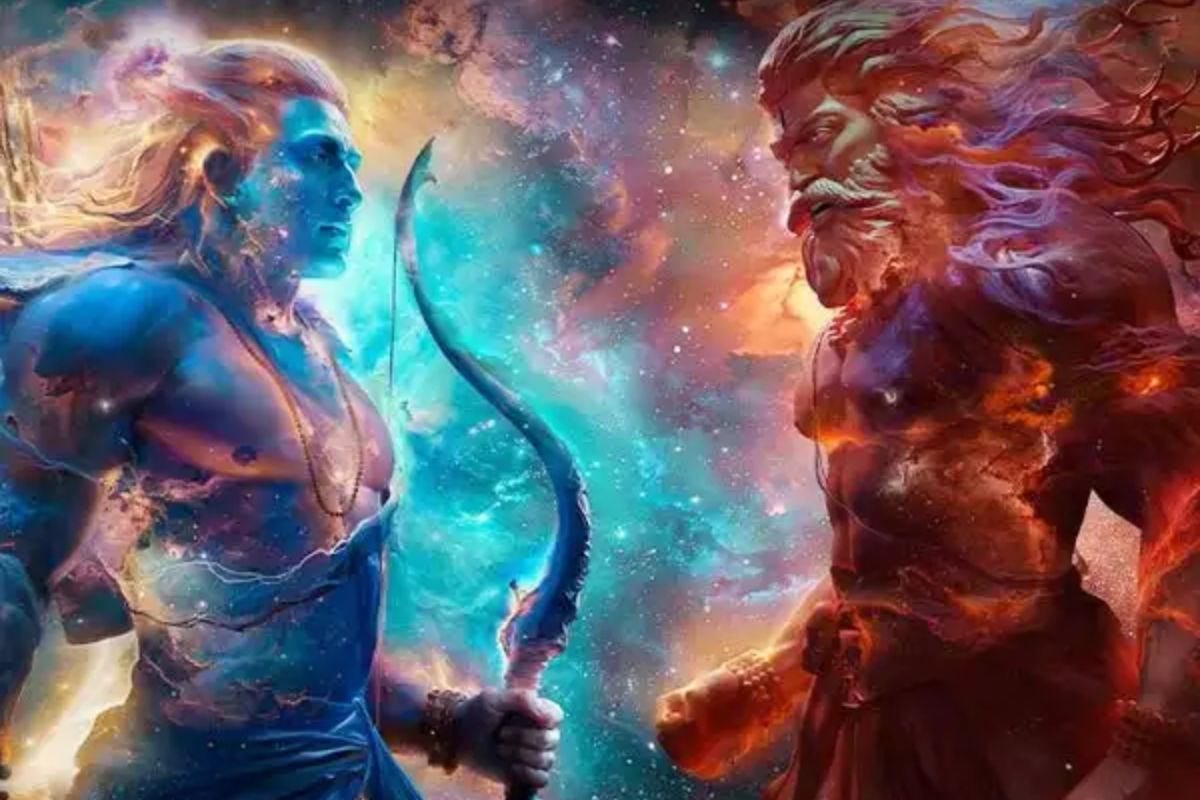
Nitesh Tiwari’s Ramayana trailer is finally here, and while the Internet is buzzing over Ranbir Kapoor’s divine look and Yash’s towering presence as Ravana, the visual spectacle is packed with hidden details most viewers completely walked past. From double-role hints to ancient architectural motifs, we broke down the 10 biggest easter eggs and mythological nods tucked inside the trailer. 🎬👇
10 Things You Missed in Nitesh Tiwari’s Ramayana Trailer
Nitesh Tiwari’s magnum opus Ramayana has unveiled its trailer, presenting a visual scale unprecedented in Indian cinema. Starring Ranbir Kapoor as Lord Ram, Yash as Lankesh Ravana, and Sai Pallavi as Goddess Sita, the teaser showcases sweeping vistas, a score co-composed by Hans Zimmer and A.R. Rahman, and world-class visual effects led by DNEG.
Beyond the sheer grandeur, the trailer contains deep mythological references, hidden character cameos, and subtle storytelling details that go far beyond a surface-level watch. Here are 10 subtle details, hidden cameos, and mythological nods you likely missed.
1. Airavat’s Celestial Appearance (The Assault on Swarga Loka)
One of the most visually arresting blink-and-miss shots features a majestic, multi-tusked white elephant clad in golden armor clashing in the skies. This is Airavat, the divine mount of Lord Indra. This brief sequence teases a lesser-explored chapter of the epic: Ravana’s campaign against Swarga Loka (Heaven) and his son Meghnad defeating Indra to earn the title Indrajit. It establishes Ravana not just as a king on Earth, but as a cosmic conqueror who challenged the Devas.
2. Sita as a Warrior Princess
Popular media often depicts Goddess Sita as purely gentle and passive, but Tiwari’s adaptation pulls directly from localized traditions and Valmiki’s nuanced text. In a swift, high-tempo sequence, Sai Pallavi’s Sita is seen gracefully wielding a sword alongside royal guards. Showing her skilled in martial arts during her early days in Mithila gives her character a grounded, fiercely resilient dimension.
3. Double Role Visuals: Ranbir Kapoor as Lord Parashuram
Did you catch the intense confrontation between Lord Ram and the fiery sage Parashuram after the breaking of the Shiv Dhanush? Look closely: Ranbir Kapoor plays both roles. Parashuram—the sixth avatar of Lord Vishnu—recognizes Ram as the seventh avatar, symbolically passing on his cosmic responsibility before retreating to the mountains. The dual casting is a brilliant visual metaphor for the divine lineage transitioning from one era to the next.
4. Arun Govil’s Legacy Continuity
For generations of viewers, Arun Govil was Lord Ram in Ramanand Sagar’s iconic 1987 television series. In a poignant, emotional passing-of-the-torch moment, Govil appears in the trailer as King Dasharatha, Ram’s heartbroken father. Watching the original TV Ram play the father to Ranbir Kapoor’s silver-screen Ram adds a deep layer of meta-nostalgia to the emotional exile scene.
5. Vivek Oberoi as Vidyutjihva
Amid the rapid-fire montage of Lanka’s royal family, Vivek Oberoi makes a dramatic appearance as Vidyutjihva, a powerful demon warrior of the Kalakeya clan and the husband of Surpanakha (played by Rakul Preet Singh). His inclusion hints that the film won’t gloss over the internal politics of Lanka, as Vidyutjihva’s fatal rivalry with Ravana is a key catalyst for Surpanakha’s tragic arc.
6. The Golden Deer (Maricha) Transformation Frame
While everyone focused on Ram taking aim with his bow in the Dandaka forest, a slowed-down frame reveals the subtle optical illusion around the golden deer. The deer isn’t just an animal—it shimmers with a faint, smoky aura, betraying the dark magic of the demon Maricha (played by Saurabh Sachdeva). It’s a delicate VFX touch showing Maricha’s struggle under Ravana’s coercion.
7. The Architectural Dualism: Ayodhya vs. Golden Lanka
The production design contrasts two radically different worlds through color palette and geometry:
- Ayodhya is rendered with warm sandstone, organic arches, and open-air courtyards lit by natural sunlight, symbolizing harmony, warmth, and Dharma.
- Lanka is depicted as a towering, hyper-symmetric citadel built of dark basalt and shimmering gold leaf, full of harsh geometric angles that convey raw power and opulence without peace.
8. Pushpak Vimana’s Floral Geometry
Ravana’s legendary flying chariot, the Pushpak Vimana, makes a brief appearance as a massive aerial shadow moving over the ocean. Rather than looking like a generic mechanical ship or a simple floating throne, its structural design resembles an unfolding lotus made of bronze and dark gold—faithfully honoring the ancient text’s description of it being a flower-shaped (Pushp) celestial vehicle.
9. Shobana as the Matriarch Kaikasi
Tucked inside a dimly lit chamber scene in Lanka is veteran actress Shobana playing Kaikasi, the mother of Ravana, Kumbhakarna, Vibhishana, and Surpanakha. Her ominous posture and dark attire set the tone for the royal court of Lanka, emphasizing the matriarchal influence that shaped Ravana’s ruthless ambition.
10. The Strategic Absence of Lord Hanuman
Despite Sunny Deol’s highly anticipated casting as Lord Hanuman, he is completely absent from the trailer. This deliberate omission suggests the filmmakers are holding back the Vanara army and Hanuman’s grand entry for a dedicated reveal later, ensuring Part 1 keeps its core focus on the emotional relationship between Ram and Sita, Kaikeyi’s boons, and the setup of the ultimate war.