
Are You Accidentally Aging Yourself Every Morning? Experts Say Yes
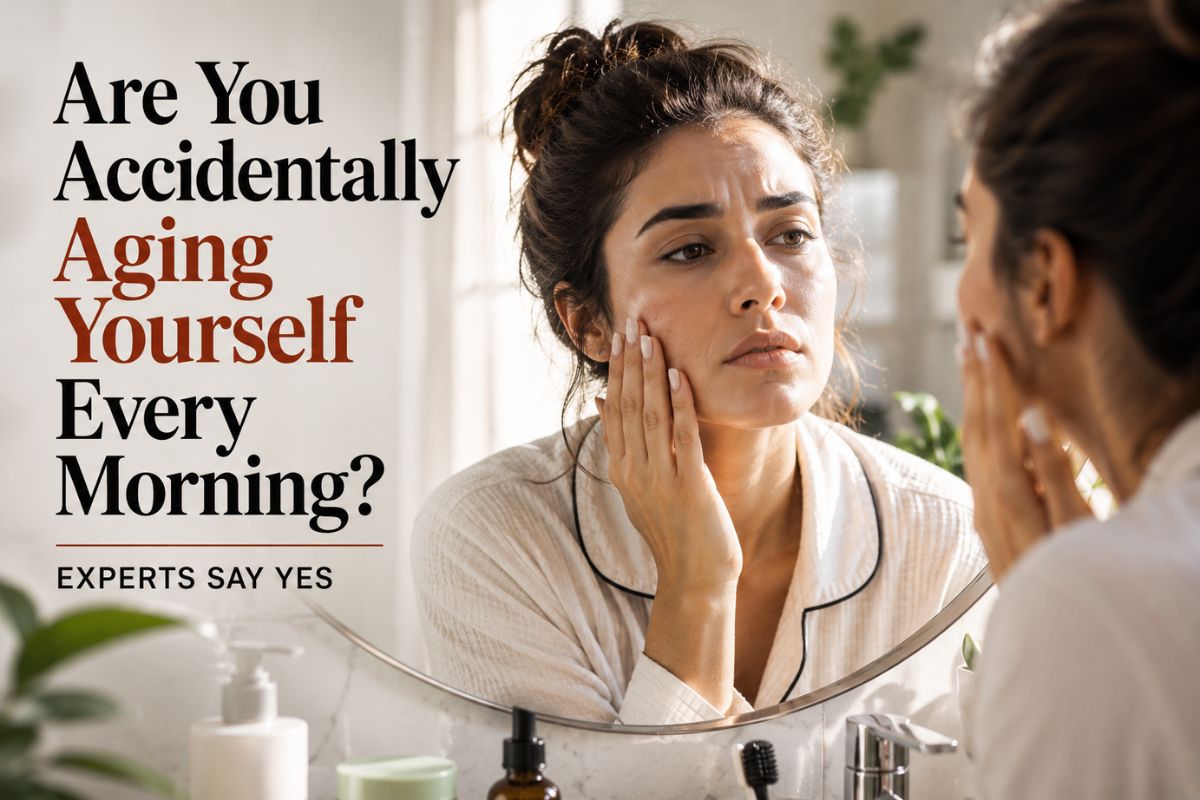
Nobody wakes up and decides to age faster on purpose. And yet, according to the dermatologists who spend their days looking at what actually shows up on skin over years, most of the damage doesn’t happen from one dramatic mistake. It happens from a handful of completely ordinary morning habits, repeated daily, for years, until one day you’re staring in the mirror wondering where a decade went.
Here’s what the research and the experts actually say is quietly working against you before you’ve even had breakfast, and what’s worth changing versus what’s just internet noise.
You’re Skipping SPF Because It’s Cloudy, or You’re “Staying In”
This is the one nearly every dermatologist leads with, and for good reason. Up to 80 percent of visible facial aging comes from cumulative UV exposure, not genetics, not diet, not a single bad sunburn from a decade ago. That number holds even on overcast days and even when you’re indoors, since UVA rays pass straight through window glass and keep working on your collagen while you sit at your desk convinced you’re safe.
The habit that actually ages you here isn’t dramatic. It’s the quiet decision, most mornings, to skip sunscreen because the sky looks grey or because you’re “not really going anywhere.” Over a year, that decision adds up to hundreds of hours of unprotected exposure your skin has to absorb the cost of eventually.
Broad-spectrum SPF 30 or higher, every single morning, rain or shine, indoors or out. Make it as automatic as brushing your teeth, not a step you evaluate based on the weather app.
You’re Reaching for Your Phone Before You’ve Opened Your Eyes Properly
This one surprises people, but it’s backed by real physiology, not just a wellness trend. Checking notifications the second you wake disrupts your natural cortisol rhythm and adds a small stress spike before your body has even finished waking up. On its own, one morning of this does nothing. Repeated daily for years, it chips away at sleep quality and keeps your baseline stress response elevated, and chronically elevated stress hormones are genuinely linked to collagen breakdown over time.
Before you panic, this isn’t the same as the “cortisol face” trend that took over social media, the idea that one stressful week gives you a visibly puffier, older face by Friday. We’ve actually written about why that specific claim oversells a real mechanism into a fake overnight villain. The truth is slower and less dramatic: it’s not one stressful morning that ages you, it’s years of chronically disrupted sleep and stress load, and reaching for your phone before you’re even upright is one small, repeated contributor to that pattern, not a single catastrophic act.
Even five minutes of not touching your phone before getting up gives your nervous system a gentler entry into the day. It’s a small habit, but it’s one of the few on this list that costs you literally nothing.
You’re Washing Your Face With Water That’s Too Hot
It feels good in the moment, especially in winter, but hot water strips the same protective lipid barrier that’s supposed to keep moisture in and irritants out. A compromised barrier shows up as dryness, redness, and sensitivity in the short term, and as accelerated fine lines and a rougher texture over the long term, since a damaged barrier ages faster and heals slower.
Lukewarm water only. Your skin genuinely cannot tell the difference between “hot enough to feel like self-care” and “hot enough to damage the barrier,” so there’s no reason to risk the second to get the first.
You’re Over-Exfoliating Because More Active Ingredients Feels Like More Progress
Morning routines have quietly gotten more aggressive over the last few years, largely thanks to social media normalizing five and six step routines with multiple acids stacked together. The problem is that exfoliation works by removing your outermost protective layer, and doing it too often or too harshly doesn’t speed up glow, it just keeps your skin in a low-grade state of inflammation, which is one of the most consistent drivers of accelerated aging that dermatology research keeps coming back to.
Signs you’ve crossed the line: persistent redness, stinging when you apply products that never used to sting, more breakouts rather than fewer, and skin that feels tight and uncomfortable rather than smooth.
One gentle exfoliating step, a few times a week, not daily, and never combined with three other active ingredients in the same routine. If your skin ever stings when you apply your usual products, that’s not “the actives working.” That’s your barrier asking you to stop.
You’re Skipping Moisturizer Because Your Skin Feels Oily in the Morning
A surprisingly common mistake, especially among people with acne-prone or oily skin who assume moisturizer will make things worse. In reality, skipping it often does the opposite of what you’re trying to achieve. When skin is stripped of moisture, it can overcompensate by producing more oil, and a chronically under-moisturized barrier ages faster, not slower.
Even five minutes of not touching your phone before getting up gives your nervous system a gentler entry into the day. It’s a small habit, but it’s one of the few on this list that costs you literally nothing.
The fix: A lightweight, oil-free moisturizer still belongs in every morning routine, oily skin included. The goal isn’t zero oil. It’s a balanced, intact barrier.
You’re Drinking Your Morning Coffee and Nothing Else
Coffee before water isn’t a dramatic skin crime, but starting the day dehydrated and then adding a mild diuretic on top of it is a habit that compounds. Skin is one of the last organs to receive hydration when the body is running low, so chronic mild dehydration shows up as duller, less plump skin over time, well before anything else about your health is visibly affected.
Water first, coffee second. Nobody is saying give up the coffee.
The Actual Pattern Behind All of This
None of these habits are individually catastrophic. That’s precisely why they’re so easy to keep doing for years without noticing the cost. Skin aging isn’t usually caused by one dramatic event. It’s the sum of small, repeated choices, sun exposure you didn’t protect against, sleep you didn’t prioritize, a barrier you stripped a little too often, made consistently enough that the effects eventually stop being invisible.
The good news is that the fixes are just as unglamorous as the mistakes. None of them require an expensive product or a twelve-step routine. They require consistency with genuinely boring basics: SPF, gentle cleansing, an intact barrier, real sleep, and a nervous system that isn’t in low-grade fight-or-flight mode before you’ve even had breakfast.
For a deeper look at how sleep, stress, and gut health specifically feed into how your skin actually ages, our guide on why glow is a report card rather than a product walks through the biology in more detail. And if you want the full picture on how much of the “instant aging” panic circulating online is actually accurate, our breakdown of the cortisol face trend is worth reading next.
External references
- Pujos et al., “Impact of Chronic Moderate Psychological Stress on Skin Aging,” Journal of Cosmetic Dermatology, 2024: ncbi.nlm.nih.gov
- Sundelin et al., “Cues of fatigue: effects of sleep deprivation on facial appearance,” Sleep, 2013