
Why Is Your Skin Oily but Still Feels Dry? The Skincare Mystery Explained
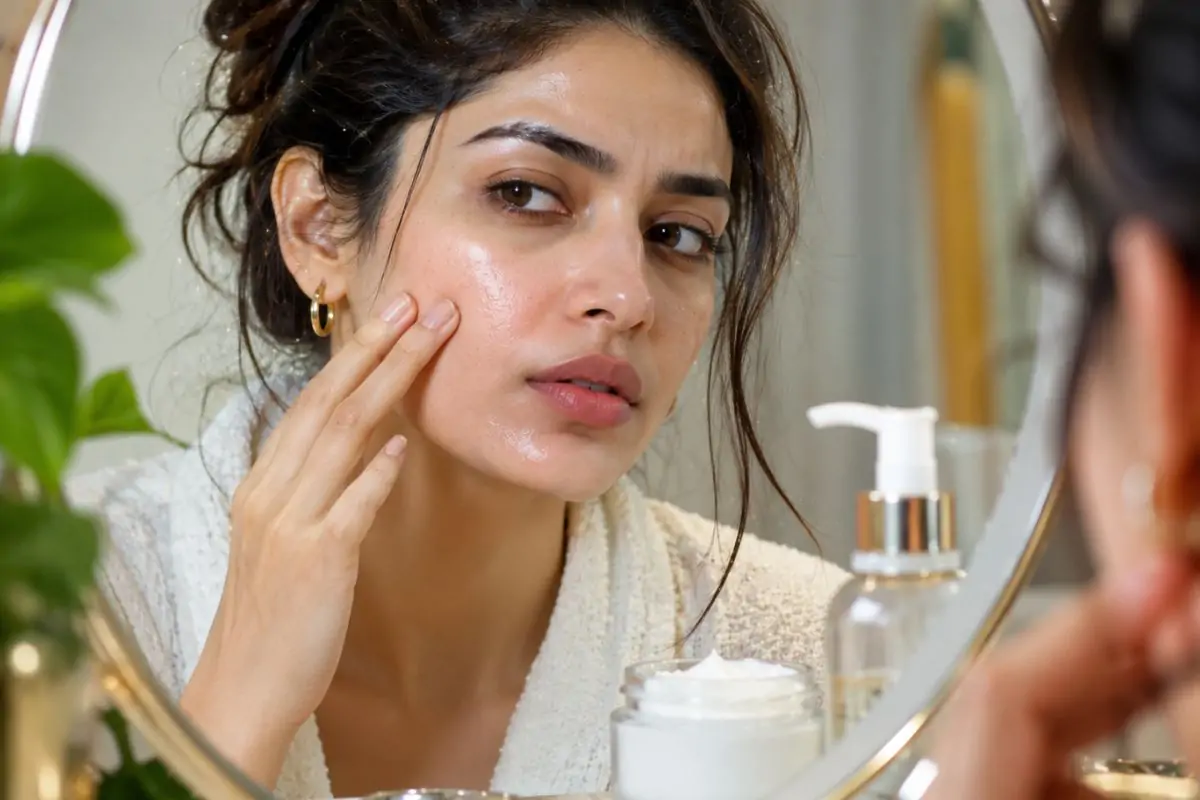
Your face looks shiny by lunchtime, yet your cheeks feel tight, your makeup clings to dry patches and your skin never quite feels comfortable. Welcome to the confusing world of oily but dehydrated skin.
You wash your face in the morning. A little moisturiser, perhaps some sunscreen, and you’re ready to go.
A few hours later, your forehead is shining, your nose looks unusually oily, but your cheeks feel tight. Your foundation has settled into tiny dry patches, and your skin somehow looks both greasy and thirsty.
So, what exactly is happening?
You might assume your skin is simply oily. Perhaps you buy an oil-control cleanser, skip moisturiser or reach for stronger exfoliating products. But sometimes these choices make the problem worse.
The explanation could be a combination of excess sebum, dehydration and a weakened skin barrier. These are three different things, and understanding the difference can completely change how you approach skincare.
1. Oily Skin and Dehydrated Skin Are Not the Same Thing
This is where most of the confusion begins.
Oily skin describes the amount of sebum, the natural oil produced by sebaceous glands. Dehydrated skin describes a lack of water in the outer layers of the skin.
One is about oil. The other is about water.
And yes, your skin can be both oily and dehydrated at the same time.
Imagine a glass of water with a thin layer of oil floating on top. The oil does not mean the water underneath is sufficient. Similarly, having an oily complexion does not automatically mean your skin has enough moisture.
Dehydration can affect different skin types, including oily, dry, combination and normal skin.
2. Your Skin Barrier May Be Struggling
Your skin has a protective outer layer called the stratum corneum. It helps limit water loss and protects against environmental irritants.
Think of it as a carefully organised protective wall. Skin cells form the structure, while lipids such as ceramides, cholesterol and fatty acids help hold everything together.
When this barrier becomes impaired, your skin may lose water more easily.
You might notice:
- Tightness after washing your face.
- Dry or flaky patches despite an oily T-zone.
- Increased sensitivity to products.
- Stinging when applying skincare.
- A rough or uneven texture.
- Makeup that looks patchy or settles into dry areas.
These symptoms do not automatically prove that your skin barrier is damaged, but they can be clues that your routine needs adjusting.
3. Your Cleanser Could Be Making Things Worse
One of the biggest skincare mistakes is assuming that oily skin needs to be aggressively cleansed.
If your face becomes shiny quickly, it is tempting to use a strong foaming cleanser several times a day. Some people also use hot water, cleansing brushes and exfoliating products together.
The result can be irritation and excessive dryness.
A cleanser should remove dirt, sunscreen, makeup and excess oil without leaving your skin feeling stripped.
 Beauty & Skincare
10 Healthy Beauty Habits That May Not Be Working
Some beauty routines seem harmless, but could be doing more harm than good. Discover 10 common habits worth rethinking for healthier skin and smarter self-care.
Read Full ArticleTry a gentle, non-abrasive cleanser. Wash your face with lukewarm water and avoid repeatedly cleansing throughout the day just because your skin looks shiny.
If you wear heavy makeup or water-resistant sunscreen, an appropriate first cleanse followed by a gentle cleanser may help remove residue without excessive scrubbing.
4. Skipping Moisturiser Can Be Counterproductive
There is a persistent belief that oily skin does not need moisturiser.
This is misleading.
Moisturisers help support the skin barrier and reduce water loss. Even oily skin can benefit from a suitable moisturising product.
If heavy creams make your face uncomfortable, look for lightweight lotions or gel-creams.
Ingredients worth knowing include:
Glycerin:A humectant that attracts water to the outer layers of the skin.
Hyaluronic acid:A humectant that helps bind water, although its performance depends on the overall formulation and how it is used.
Ceramides:Lipids that help support the skin barrier.
Panthenol:Also known as provitamin B5, it is commonly used in moisturisers for its conditioning and skin-soothing properties.
Squalane:An emollient that helps soften skin and reduce moisture loss.
You do not need every ingredient in one product. A well-formulated moisturiser that your skin tolerates is more important than an impressive ingredient list.
5. Over-Exfoliation Can Leave Your Skin Looking Worse
Exfoliation can improve the appearance of uneven texture and clogged pores. But using too many exfoliating products can irritate the skin.
Glycolic acid, lactic acid, salicylic acid and other exfoliating ingredients each have different properties. Combining several products without a clear routine can increase the risk of irritation.
Watch out for warning signs such as persistent stinging, redness, flaking and unusual sensitivity.
If your skin feels irritated, temporarily simplify your routine. Use a gentle cleanser, a suitable moisturiser and sunscreen during the day. Pause potentially irritating active ingredients until your skin feels comfortable again.
If irritation persists, seek advice from a dermatologist rather than trying increasingly strong products.
6. Can Weather Make Your Skin Oily and Dehydrated?
Absolutely, environmental conditions can influence how your skin feels.
Hot and humid weather may increase the appearance of shine and make some people feel oilier. Cold weather, indoor heating and low humidity can contribute to dryness and increased water loss.
Air conditioning can also make indoor environments feel dry, although the effect varies.
This explains why the same skincare routine may feel comfortable during one season and unsuitable during another.
You may need a lighter moisturiser during humid months and a richer formulation during colder or drier periods.
The goal is not to own two completely different skincare collections. It is to adjust the texture and amount of products according to how your skin responds.
7. Does Drinking More Water Fix Dehydrated Skin?
Water is essential for overall health, but drinking extra water is not a guaranteed treatment for dehydrated skin.
If you are not drinking enough fluids, correcting that can help your overall hydration. However, skin hydration also depends on the condition of the skin barrier, environmental factors and topical skincare.
This is why applying a suitable moisturiser can matter.
A humectant such as glycerin can attract water into the outer skin layers, while emollients and occlusive ingredients help reduce water loss.
Think of hydration as a combination of factors rather than a problem that can always be solved by drinking another glass of water.
8. Your Skincare Routine May Simply Be Too Complicated
The beauty industry constantly introduces new ingredients, serums and treatment combinations.
One week, everyone is talking about exfoliating acids. The next, it is retinol, vitamin C, peptides or another trending ingredient.
But adding more products does not automatically produce better skin.
In fact, a complicated routine can make it difficult to identify what is irritating your complexion.
If your skin feels oily, tight and uncomfortable, consider simplifying your routine.
A basic morning routine:
- Gentle cleanser, or simply rinse with water if appropriate for your skin.
- Lightweight moisturiser.
- Broad-spectrum SPF 30 or higher sunscreen.
A basic evening routine:
- Remove makeup and sunscreen.
- Cleanse gently.
- Apply a suitable moisturiser.
Once your skin feels comfortable, you can consider introducing targeted products one at a time.
9. How to Tell Whether Your Skin Is Oily, Dry or Dehydrated
These conditions can overlap, but a few patterns may help you understand what you are experiencing.
| Skin pattern | What you may notice |
|---|---|
| Oily skin | Persistent shine, especially around the forehead, nose and chin |
| Dry skin | Roughness, flaking and a consistently tight feeling |
| Dehydrated skin | Tightness, dullness and sometimes fine dehydration lines |
| Combination skin | Oily areas alongside normal or dry areas |
| Oily and dehydrated skin | Visible shine combined with tightness or dry patches |
These are general clues, not diagnostic tests. Skin conditions can look similar, and persistent symptoms deserve professional assessment.
10. When Should You See a Dermatologist?
Occasional tightness or temporary dryness may improve with a simpler skincare routine.
However, consult a dermatologist if you experience persistent redness, burning, itching, cracking, painful breakouts or irritation that does not settle.
Conditions such as eczema, contact dermatitis, rosacea and seborrhoeic dermatitis can sometimes resemble ordinary dryness or irritation. Treating them with random skincare products may delay the right care.
If a product causes a significant reaction, stop using it. Seek prompt medical help for severe swelling, blistering, breathing difficulty or other signs of a serious allergic reaction.
The Real SHEE Power Takeaway
Your skin does not need to be completely matte to be healthy. Natural oil is not the enemy, and adding more skincare products is not always the answer.
If your face looks oily but feels uncomfortable, stop treating it as an oil problem alone. Think about hydration, barrier health, cleansing habits and environmental conditions.
Sometimes the smartest beauty decision is not buying another serum. It is giving your skin a break, choosing a gentle moisturiser and letting a simpler routine do its work.
Frequently Asked Questions
1. Can oily skin be dehydrated?
Yes. Oily skin produces more sebum, while dehydrated skin lacks sufficient water in its outer layers. Both conditions can occur together.
2. Should I use moisturiser if my face is oily?
Yes. Choose a lightweight, non-comedogenic moisturiser that feels comfortable on your skin.
3. Does hyaluronic acid help oily, dehydrated skin?
It can help attract and bind water in the outer skin layers. It is usually included in a broader moisturising formulation.
4. Why does my face feel tight after washing?
Your cleanser may be too harsh, or your skin may already be dry or irritated. A gentler cleanser may help.
5. Can over-exfoliation cause oily but dry skin?
Excessive exfoliation can irritate the skin and impair its protective barrier, potentially contributing to dryness, tightness and discomfort.
6. How long does it take to repair a damaged skin barrier?
There is no universal timeline. Mild irritation may improve after simplifying a routine, while persistent or more serious skin problems may require professional treatment.