Kasar Devi Temple: Why This Himalayan Shrine Deserves a Pilgrimage, Not a Photo-Stop
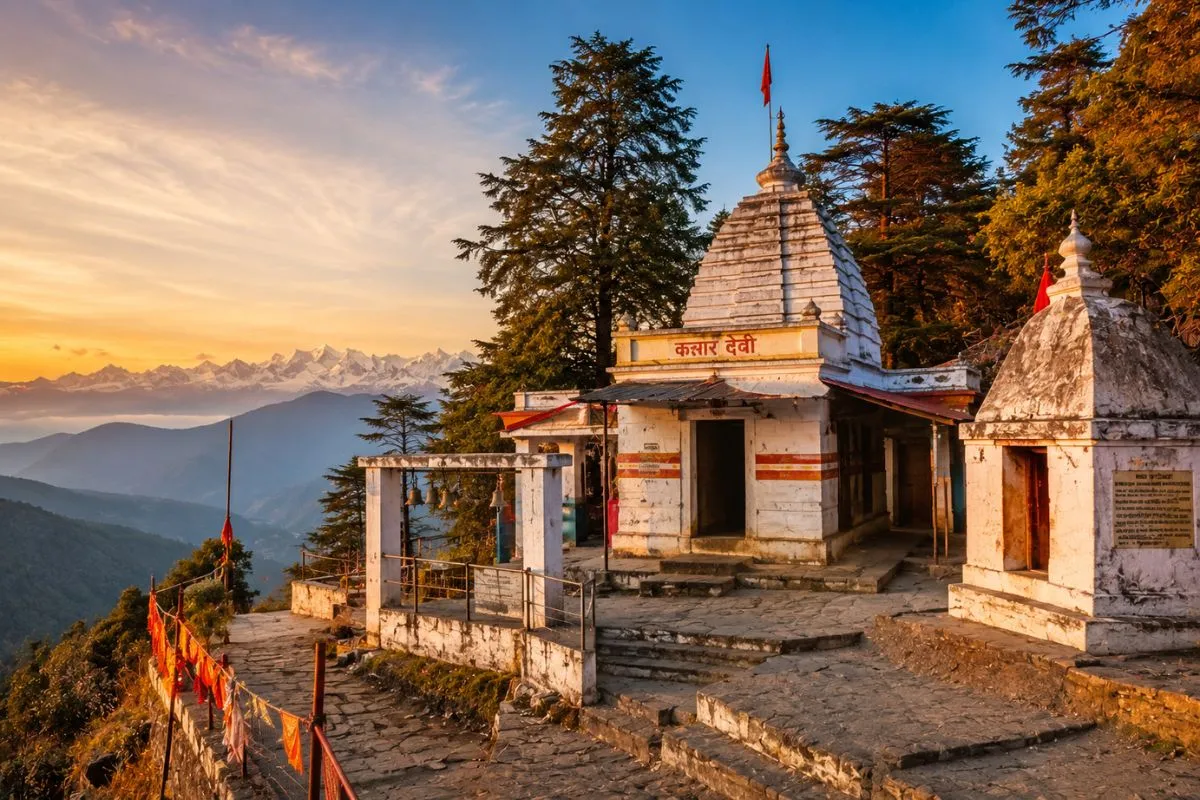
There is a hill in the Kumaon Himalayas that scientists, saints, and seekers have all stood on and felt the same thing — silence that speaks. Kasar Devi Temple was never built for your itinerary. It was built for your inner journey.
Most guides will tell you what time the Kasar Devi Temple opens, how to get a taxi from Almora, and which café to hit after. This isn’t that guide. This is for the woman who’s tired of collecting destinations and ready to collect stillness instead — the kind Kasar Devi has been quietly offering seekers for over 2,000 years.
If you’re exploring more sacred ground across the Himalayas, Real Shee Power’s guide to mystical Himalayan temples hidden above the clouds and our roundup of India’s most powerful Shakti Peethas are worth reading alongside this one — Kasar Devi belongs in that same conversation of energy-first, ego-last travel.
Where Kasar Devi Temple Sits, and Why the Ground Itself Is Considered Sacred
Perched at roughly 2,116 metres on Kashyap Hill, about 8 km from Almora town in Uttarakhand, the temple is believed to have been founded by followers of the ancient Kashyapa tradition, a lineage that many trace back over two thousand years. Local legend also credits the sage Vashishta with meditating in the forests around the site, with the belief that the goddess herself blessed the ground and turned it into a spiritual center. The current temple structure is believed to date to the 2nd century CE, dedicated to Goddess Kasar Devi — worshipped as a manifestation of Durga.
What makes this hill genuinely different from the hundred other “scenic temples” on India’s tourist trail is what lies beneath it. Kasar Devi is believed to sit within the Van Allen Belt, giving the region a geomagnetic character similar to sites like Stonehenge and Machu Picchu — a claim that has drawn scientists and mystics alike to study why meditation here feels different. Whether or not you personally hold a scientific view on geomagnetism, the effect on the ground is consistent: people arrive restless and leave quiet.

🛕 Kasar Devi Temple
Perched atop the Kasar Devi ridge near Almora, this centuries-old temple is revered for its spiritual significance and breathtaking Himalayan views. The area lies within the Earth’s Van Allen Belt, attracting meditation seekers, spiritual travelers, and notable visitors such as Swami Vivekananda and Bob Dylan over the years.
Image & Destination Information: Incredible India.
The Saints Who Came Before You Weren’t Sightseeing
This is the part most travel blogs skim past, and it’s the part that actually matters.
Built in the 2nd century CE and dedicated to Goddess Kasar Devi, the temple has long been considered a place of powerful spiritual and cosmic energy but its modern spiritual reputation was cemented in 1890, when a young monk sat down here to meditate.
In the 1890s, Swami Vivekananda meditated at Kasar Devi, later documenting the depth of his experience here — an event that brought global attention to the site. The cave he used still stands near the temple today. You can sit inside it and feel the same silence and subtle vibration that visitors continue to describe as meditative and healing.
He wasn’t the only one who felt it. Swami Vivekananda, Rabindranath Tagore, the Tibetan Buddhist teacher Lama Anagarika Govinda, and Western Buddhist scholar Robert Thurman have all visited this hill, and Western figures including D.H. Lawrence, Cat Stevens, Bob Dylan, George Harrison, and Denmark’s Alfred Sorensen (Sunyata Baba) also made their way here. The ridge on which the temple sits — often called Crank’s Ridge or Hippie Hill — became a haven for spiritual seekers through the 1960s and 70s, not because it was fashionable, but because something on that hilltop kept pulling deep thinkers toward silence instead of scenery.
None of them came for a photograph. They came because the hill asked something of them, and they answered.
For more on how remote Himalayan geography has shaped indigenous spiritual practice, Real Shee Power’s piece on ancient Indian rituals still practiced for healing and wholeness traces a similar thread.
Why Kasar Devi Should Never Be Treated Like a Tourist Stop
Here is the honest, slightly uncomfortable truth: Kasar Devi has started appearing on “top things to do near Almora” lists, sandwiched between cafés and viewpoints. That framing does the temple a disservice, and it does you one too.
A tourist destination asks: what will I see, eat, and photograph here?
A spiritual site asks: what will I release, and what will I carry home instead?
Whether or not you personally believe in energy fields, the calm, the silence, and the view at Kasar Devi are described as genuinely, deeply transformative by nearly everyone who sits with them long enough. That transformation only happens if you arrive with the intention to receive it — not to check a box.
What “visiting for spiritual elevation” actually looks like at Kasar Devi:
- Arrive early, before the day-trip crowds. The temple is quietest — and most potent — in the first hour after sunrise.
- Sit before you photograph. Give yourself at least 15–20 minutes of stillness before you reach for your phone.
- Visit the Vivekananda cave with silence, not commentary. It rewards presence, not narration.
- Come with a question, not an agenda. Seekers throughout history have used this hill to sit with something unresolved, not to “see the sights.”
- Leave space after. Don’t rush straight to a café or the next stop. Let the stillness travel with you for a while.
If solo, reflective travel through sacred landscapes is your language, Real Shee Power’s guide to the safest places on Earth for a woman to travel completely alone and our feature on a feminine healing journey to Triyuginarayan both speak to this same slow, intentional way of moving through the Himalayas.
The Kasar Devi Fair: When the Whole Hill Comes Alive
Every year around Kartik Purnima, the Kasar Mela draws devotees and visitors in large numbers, and its significance has spread well beyond India to draw foreign visitors too. Held during Kartik Purnima (usually November–December), it fills the ridge with a vibrant, devotional energy.
If your intention is deep, quiet meditation, plan your visit outside the fair window. If your intention is to witness collective devotion — the kind of shared spiritual energy that’s genuinely moving in its own right — time your trip to coincide with it.
How to Reach Kasar Devi Temple
- By Air: Pantnagar Airport is the nearest airport, roughly 124 km away.
- By Rail: Kathgodam is the closest railway station, about 88 km from Kasar Devi.
- By Road: Kasar Devi is just 8 km from Almora, reachable by taxi, shared cab, or local bus.
A short, steep walk from the drop-off point leads up to the temple — comfortable footwear matters more than a full face of makeup here.
Nearby Sacred Ground Worth Your Stillness
Kasar Devi is rarely a standalone trip — most spiritual travellers pair it with:
- Chitai Golu Devta Temple, famed for its bells of justice
- Nanda Devi Temple, Almora’s oldest surviving shrine
- Jageshwar Temple Complex, a cluster of over 100 ancient stone shrines
For a broader map of Uttarakhand’s lesser-known sacred villages, don’t miss Real Shee Power’s guide to Devbhoomi’s hidden offbeat temple villages and our feature on the mystical Himalayan lakes locals still revere after dark.
Real Shee Power Takeaways
- Kasar Devi Temple dates to the 2nd century CE and is dedicated to Goddess Kasar Devi, an incarnation of Durga.
- The site sits within a rare geomagnetic zone, believed to intensify meditation — a claim that has drawn both mystics and scientists to this same hilltop for over a century.
- Swami Vivekananda meditated here in 1890, and his cave still holds that same charged silence today.
- The ridge earned global recognition as “Crank’s Ridge,” attracting seekers like Bob Dylan, George Harrison, and Lama Anagarika Govinda — none of them here for tourism.
- The single most important thing you can bring to Kasar Devi isn’t a camera. It’s intention.
- Visit early, sit before you shoot, and let the hill do what it’s done for two thousand years of seekers before you.
Kasar Devi doesn’t need more visitors. It needs more people willing to arrive as seekers. Be one of them.