
Unlocking the Essence of the Ashtavakra Gita
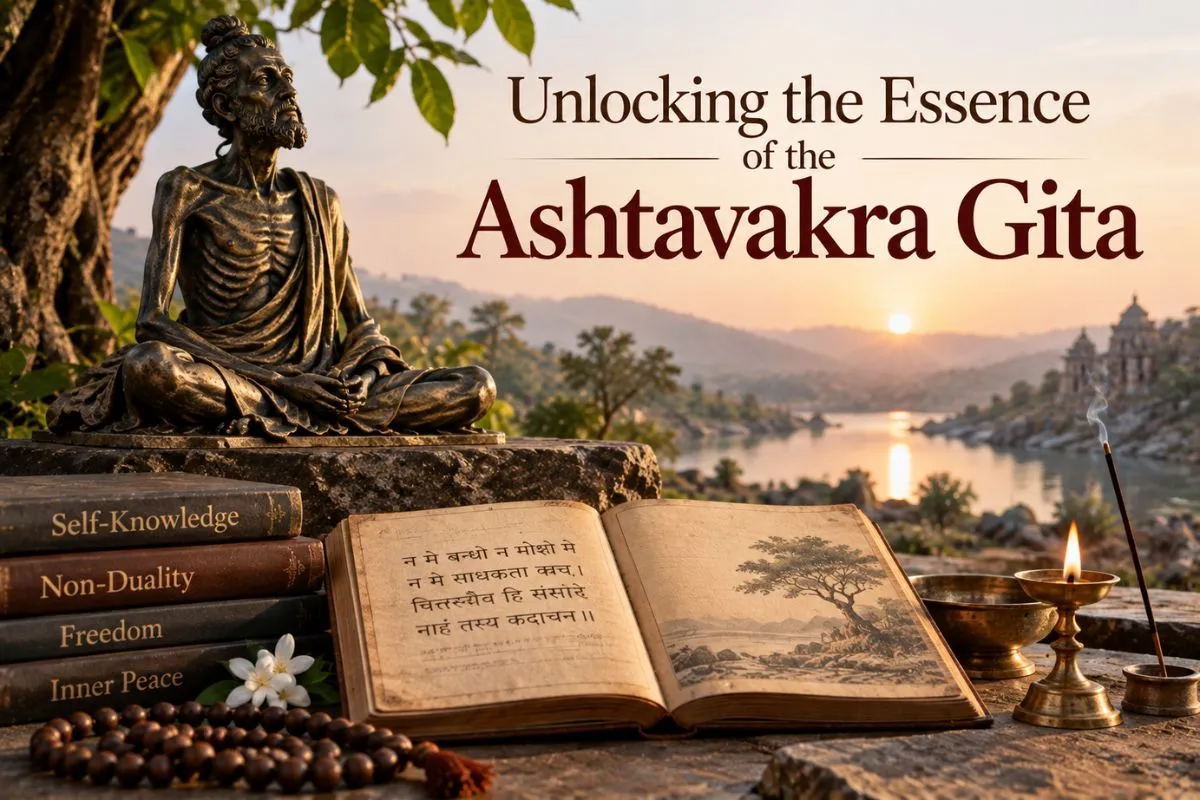
Among the grand scriptures of Indian philosophy, theAshtavakra Gitastands out for its directness, clarity, and radical perspective. Formatted as a conversation between the deformed sageAshtavakraand the philosopher-kingJanaka, it bypasses long rituals, tedious spiritual exercises, and complex dogmas to deliver a single, profound truth:You are already free.
The Core Philosophy: You Are Pure Awareness
Most spiritual paths teach that enlightenment requires years of intense meditation, penance, or moral perfectionism. The Ashtavakra Gita challenges this notion by asserting a radical form ofAdvaita(pure non-dualism):
- You Are Not the Body or Mind:You are neither your physical form, your racing thoughts, nor your societal roles. You are the unattached, infinite witness (theSakshi) who observes all these changing experiences.
- Bondage is an Illusion:Suffering arises when you misidentify yourself with the mind and body. Once you realize that your true essence—pure consciousness—is untouched by joy or sorrow, the illusion of bondage dissolves instantly.
- The Pathless Path:Liberation is not a distant goal to reach through effort; it is a present reality to recognize. You do not need to give up your world or duties. Like King Janaka, you can fulfill your responsibilities while remaining inwardly unattached.
Why Is It So Radical?
The Ashtavakra Gita is often considered a text for “advanced” seekers because it offers no gradual stepping stones. It discards religious rituals, moralizing lectures, and structured meditation techniques as temporary tools created by the mind. Instead, it urges you to drop all striving, let go of the ego, and simply rest in your natural state of pure awareness.
Summary Box: Key Aspects & Controversies of the Ashtavakra Gita
- Primary Paradigm: Extreme Advaita Vedanta (Non-Dualism) focused on direct, immediate self-realization.
- Core Message: The Self (Pure Consciousness) is ever-free, untouched by body, mind, karma, or the material world.
- The Central Issue / Debate:
- Rejection of Traditional Practice: It dismisses religious rituals, yoga practices, and gradual spiritual disciplines as unnecessary or mind-created illusions.
- Beyond Morality: It teaches that the true Self is untouched by good or bad deeds, leading critics to warn that misinterpreting the text can foster spiritual bypass, moral apathy, or intellectual arrogance without genuine inner transformation.
- Target Audience: Seekers looking for direct self-inquiry rather than ritualistic worship or step-by-step spiritual methods.