
Surendra Kumar Sharma Disappearance: How a 45-Day Missing Person Case Ended With a Body Beneath a Bathroom Floor
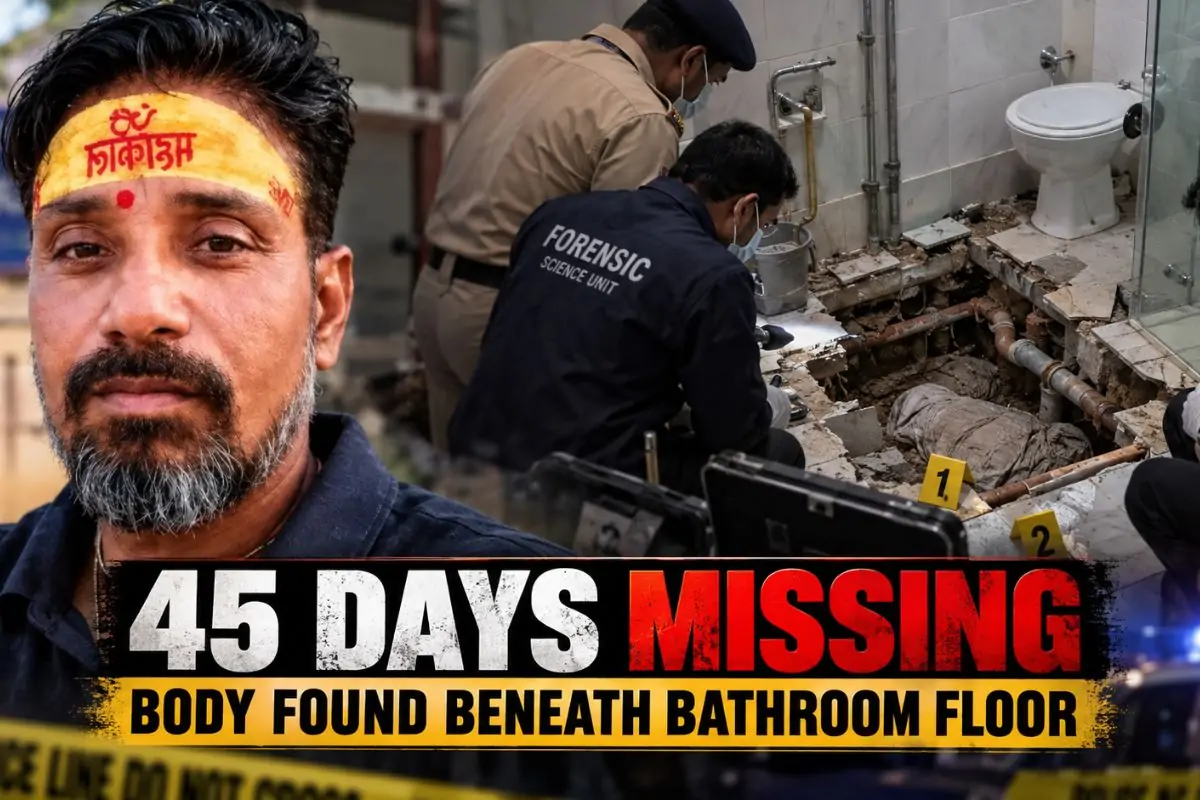
For 45 days, Surendra Kumar Sharma was officially a missing person in Agra, a case number in a file, a name on a police diary entry, a face his family described to reporters as having simply “gone somewhere.” What ended up buried beneath the freshly tiled bathroom floor of his own home tells a very different story, one that Uttar Pradesh police say began not with a disappearance at all, but with a killing inside the house he shared with his wife and two daughters.
For 45 days, Surendra Kumar Sharma was officially a missing person in Agra, a case number in a file, a name on a police diary entry, a face his family described to reporters as having simply “gone somewhere.” What ended up buried beneath the freshly tiled bathroom floor of his own home tells a very different story, one that Uttar Pradesh police say began not with a disappearance at all, but with a killing inside the house he shared with his wife and two daughters.
For 45 days, Surendra Kumar Sharma was officially a missing person in Agra, a case number in a file, a name on a police diary entry, a face his family described to reporters as having simply “gone somewhere.” What ended up buried beneath the freshly tiled bathroom floor of his own home tells a very different story, one that Uttar Pradesh police say began not with a disappearance at all, but with a killing inside the house he shared with his wife and two daughters.
This report reconstructs the case in detail using multiple independent news sources, including PTI wire reporting carried by ThePrint, and coverage from Free Press Journal, Gulf News, and Daily Pioneer, cross-checking details where accounts differ and flagging discrepancies rather than smoothing them over. Domestic homicide cases like this one sit inside a much wider pattern of family and marital violence in India that Real Shee Power covers on an ongoing basis through itscrime and safety coverage, which tracks both the cases making headlines and the systemic patterns behind them.
How the Case Began: A Missing Person Report in May
According to police accounts carried by multiple outlets, Surendra Kumar Sharma, a 44-year-old man originally from Bharatpur who had lived in Agra’s Renuka Dham Colony, under the jurisdiction of Sikandra police station, for roughly nine years, was reported missing in late May 2026. Sources differ slightly on the exact date he was last seen: Free Press Journal and Digital Terminal report he had been missing since May 18, while the formal missing person complaint was registered with police on May 26, roughly eight days later, according to Gulf News’s account citing Times of India reporting.
That gap between when a person is last seen and when a formal complaint is filed is common in missing person cases generally, but it takes on a different weight in hindsight here. During those eight days and the weeks that followed, Sharma’s wife, Ruby Sharma, is reported to have told family members, neighbours, and eventually police that her husband had “gone somewhere” and would return. Multiple outlets, including Digital Terminal and Daily Pioneer, describe her as maintaining this account consistently over the following weeks, even as extended family grew increasingly concerned.
Forty-Five Days of an Unresolved Case
For the next month and a half, the case remained an open missing person inquiry rather than a criminal investigation. Gulf News’s account, which cites Times of India reporting, describes Ruby Sharma as maintaining the appearance of a distressed spouse throughout this period, reportedly crying in front of neighbours and joining efforts to search for her husband. A neighbour identified as Gaurav Dixit told reporters that the couple had frequently quarrelled, and that residents had repeatedly asked Ruby Sharma about her husband’s whereabouts as the weeks dragged on without any developments, with her allegedly deflecting the questions each time.
- Surendra Kumar Sharma, 44, was reported missing in Agra’s Sikandra area, with sources placing his last confirmed sighting around May 18, 2026, and a formal missing person complaint filed May 26.
- His wife, Ruby Sharma, maintained for 45 days that he had left home and would return, according to multiple family and neighbour accounts.
- Police say the case broke open after officers noticed freshly laid tiles and plaster in the couple’s bathroom during a follow-up visit, prompting an excavation.
- A decomposed body, later identified as Sharma’s, was recovered beneath the bathroom floor on or around July 3, 2026.
- Ruby Sharma was arrested, and police allege she confessed during questioning, though the exact sequence of the killing is described differently across sources.
- Investigators are examining the motive and whether other individuals assisted in concealing the crime.
The Breakthrough: What Made Police Suspicious
Accounts of exactly what triggered the breakthrough vary in detail, which is worth flagging directly rather than papering over. Free Press Journal’s reporting attributes the turning point to Sharma’s brother, who reportedly alerted police to inconsistencies in the family’s account of the disappearance. Digital Terminal and Daily Pioneer instead describe the break coming from a routine follow-up visit to the residence, during which officers reportedly noticed newly laid bathroom tiles and fresh plaster work, details that stood out enough to prompt further questioning. It’s possible both elements played a role, a tip that renewed police attention combined with a physical detail investigators noticed once they looked more closely, though no single source available confirms the full sequence definitively.
What is consistent across every account is the outcome: police, acting on suspicion, ordered the bathroom floor excavated. Beneath layers of concrete, they recovered a decomposed body.
The Discovery and Identification
The body was recovered from beneath the bathroom floor of the Sharma residence in Renuka Dham Colony on or around July 3, 2026, roughly 45 days after Sharma had last been seen. PTI’s wire report, carried by ThePrint, quotes Assistant Commissioner of Police Amisha confirming that the body was that of Surendra Sharma, and that his wife, Ruby Sharma, was arrested and taken in for interrogation.
Sources differ on his exact age at the time of death, with some reports listing him as 44 and others as 45, a minor discrepancy likely stemming from different birth date records or rounding across separate wire pickups of the same story. The body’s condition after 45 days of concealment necessitated forensic examination and a post-mortem to confirm cause of death, which multiple outlets reported was pending at the time of initial coverage.
The Alleged Method: What Police Say Happened
The most detailed account of the alleged killing itself comes from Gulf News’s reporting, which cites Times of India as its source. According to this account, police allege that Ruby Sharma first served her husband food mixed with sleeping pills. Once he lost consciousness, she allegedly strangled him, then dug a pit beneath the bathroom floor, buried the body, and sealed it with cement to conceal the crime.
This level of detail about premeditation, specifically the use of sleeping pills prior to strangulation, appears in fewer of the available sources than the broader facts of the case (the missing person report, the excavation, the arrest), which means it should be treated as a specific, sourced allegation from police rather than a universally confirmed fact at this stage of reporting. Other outlets describe the killing in more general terms, stating only that she is accused of murdering him and burying the body, without detailing the alleged method.
The Arrest and What Comes Next Legally
Ruby Sharma was taken into custody following the discovery, with PTI’s report indicating she was arrested and being interrogated to establish a motive. Digital Terminal’s coverage states she allegedly confessed to the crime during questioning, though as with any confession made in police custody, its evidentiary weight and admissibility will ultimately be determined through the formal judicial process rather than through news reporting.
A case of this nature in India typically proceeds under provisions of the Bharatiya Nyaya Sanhita covering murder and causing disappearance of evidence, given the alleged concealment of the body. Investigators are also reportedly examining whether anyone else was involved in helping bury the body or maintain the 45-day cover story, a detail confirmed across multiple sources including ThePrint’s PTI report and Digital Terminal’s coverage. No motive had been officially confirmed or publicly released in the available reporting at the time of this article, and forensic and post-mortem findings were still described as pending in several of the accounts reviewed.
Community Reaction and Local Context
Neighbours in Renuka Dham Colony reportedly expressed shock at the discovery, according to Daily Pioneer’s coverage, with the case drawing local comparisons to other high-profile Indian cases involving prolonged concealment of a body inside a family home. The neighbour account from Gaurav Dixit, cited in multiple reports, adds a texture to the case that pure police statements don’t capture: a household known locally for frequent quarrels, a missing man whose family kept up an active search, and a wife who, according to these accounts, participated in that search while allegedly having already committed the crime being searched for.
It’s worth being precise about what is and isn’t established here. A neighbour’s account of “frequent quarrels” is testimony about the general tenor of a relationship, not evidence of a specific motive, and none of the available reporting presents a confirmed, on-the-record motive for the alleged killing itself.
Why the Timeline Matters
The 45-day gap between Sharma’s disappearance and the discovery of his body is significant for a few reasons beyond the human tragedy of it. First, it illustrates a real limitation in how missing person cases are initially handled: without physical evidence pointing to foul play, a missing person report from a spouse describing an adult who “left” is, understandably, treated differently by investigators than an active crime scene. Second, the timeline shows the investigation’s turning point came from a combination of a family member’s persistence and a physical detail (the tiling work) that stood out to officers on a follow-up visit, rather than a single dramatic breakthrough. That combination, family pressure keeping a case alive plus an eventual physical or forensic detail, is a pattern that recurs across a number of similar concealment cases reported in India in recent years.
What This Case Fits Into, Nationally
While this case involves a wife as the accused and a husband as the victim, reversing the more statistically common pattern in Indian domestic violence data, it belongs to the same broader category tracked by the National Crime Records Bureau: crimes occurring inside a marriage, between people who lived together, investigated initially as a missing person matter before evidence pointed toward homicide. Cases involving concealment of a body inside the family home specifically have drawn increased police training focus in Uttar Pradesh in recent years, according to state police statements referenced in past NCRB-adjacent reporting, precisely because they can remain undetected for weeks without a physical anomaly like fresh construction work drawing attention.
Open Questions the Case Has Not Yet Answered
Based on the sources reviewed for this report, several elements remain unresolved or inconsistently reported as of the most recent coverage available:
- The precise motive behind the alleged killing has not been officially confirmed in any source reviewed.
- Accounts differ on whether the initial break in the case came from a tip by Sharma’s brother or from officers independently noticing construction work during a routine visit.
- The exact alleged method (sleeping pills followed by strangulation) is sourced to a single detailed account and has not been independently corroborated across all outlets covering the case.
- Whether any other individuals will face charges in connection with the alleged concealment remains under investigation, per police statements.
- Final post-mortem and forensic results, which would establish an official cause of death, were reported as pending at the time the case was covered.
The Bottom Line
What’s confirmed, consistently, across every source reviewed for this report is this: a man went missing from his home in Agra in May 2026, his wife maintained for 45 days that he would return, and police ultimately recovered his body from beneath the bathroom floor of that same home in July, arresting her in connection with his death. Everything beyond that consistent core, the exact date he disappeared, the specific tip that broke the case open, the precise method alleged, sits at varying levels of confirmation across the available reporting, and a case at this stage, with post-mortem results and a formal charge sheet still pending in the sources reviewed, is not yet legally settled. It remains, as of this writing, an active police investigation and a matter for the courts to determine, not a closed case.
Sources & Further Reading
- Press Trust of India, via ThePrint:UP woman kills husband, buries body beneath bathroom floor; arrested
- ThePrint:Agra woman held for killing husband, burying body under bathroom floor after murder
- Free Press Journal:UP Horror: Woman Detained After Husband’s Body Found Buried In Bathroom 45 Days After Disappearance
- Gulf News:45-day missing case twist: Husband’s body under bathroom floor, wife arrested
- Daily Pioneer:Agra man missing for 45 days found buried beneath bathroom floor, wife arrested
- Digital Terminal:Agra Horror: Missing Man’s Body Found Buried Beneath Bathroom Floor After 45 Days; Wife Arrested
- Real Shee Power:Crime Against Women and Family Safety, ongoing coverage