The True History of Bappa Rawal The Man Who Saved India
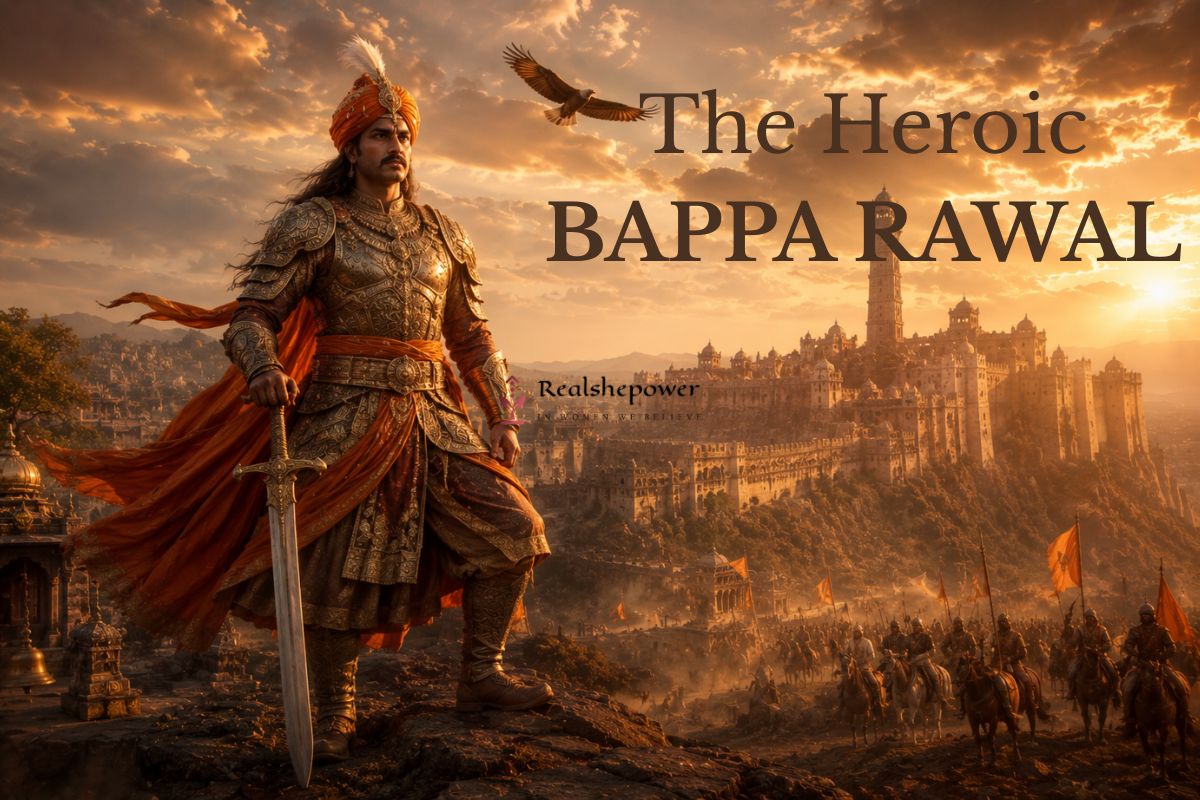
History often speaks of empires that rose and fell within a century, but the story of Mewar is different. It is a story of an unbroken line of rulers that lasted for over 1,300 years. At the very heart of this legendary dynasty stands one man: Bappa Rawal.
While he is often surrounded by myths and legends, the historical reality of Bappa Rawal is even more impressive. He was the man who turned the tide of history in the 8th century, serving as the “Shield of India” against one of the greatest expansionist powers the world had ever seen. This is the detailed account of his life, his struggle, and his incredible valour.
The Early Years: A Prince in Hiding
Bappa Rawal was born as Prince Kalbhoj in the early 8th century (around 713 CE). He belonged to the Guhila clan, but his childhood was far from royal. Following the death of his father in battle and the fall of their ancestral seat, the young prince had to be spirited away to the safety of the Aravalli hills.
Growing up among the Bhil tribes and Brahmin priests in the remote village of Nagda, the future Maharana lived the life of a cowherd. This period was crucial for his development. It was here that he learned the “grassroots” of leadership. He didn’t just rule over the people; he lived with them, understood the difficult terrain of Rajasthan, and built a bond with the tribal communities that would serve as the backbone of Mewar’s military for the next millennium.
The Divine Blessing and the Vision for Mewar
Tradition tells us that during his time as a cowherd, Kalbhoj met the sage Harit Rashid, a devotee of Lord Shiva (Eklingji). The sage recognized the royal spark in the young boy and became his mentor. He taught him the principles of “Dharma” (righteousness) and military strategy.
It was Harit Rashid who gave him the title “Bappa” (meaning father or elder) and “Rawal” (a title of sovereignty). More importantly, the sage instilled a unique political philosophy in him: the ruler of Mewar would not be a “King” in the traditional sense, but the Diwan (Chief Servant) of Lord Eklingji. This meant the land belonged to the Divine, and the ruler was merely its trustee. This humility became the secret strength of the Mewar dynasty.
The Capture of Chittorgarh
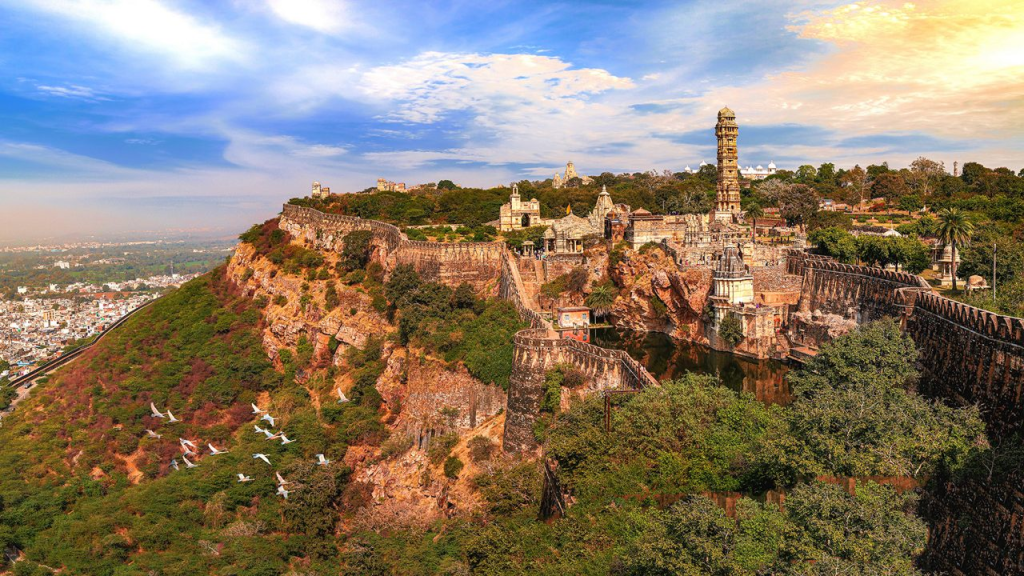
By the year 734 CE, Bappa Rawal was ready to reclaim his heritage. The most formidable fortress in the region was Chittorgarh, then held by the Mori (Mauryan) Rajputs. At just 21 years old, Bappa Rawal led a brilliant campaign to capture the fort.
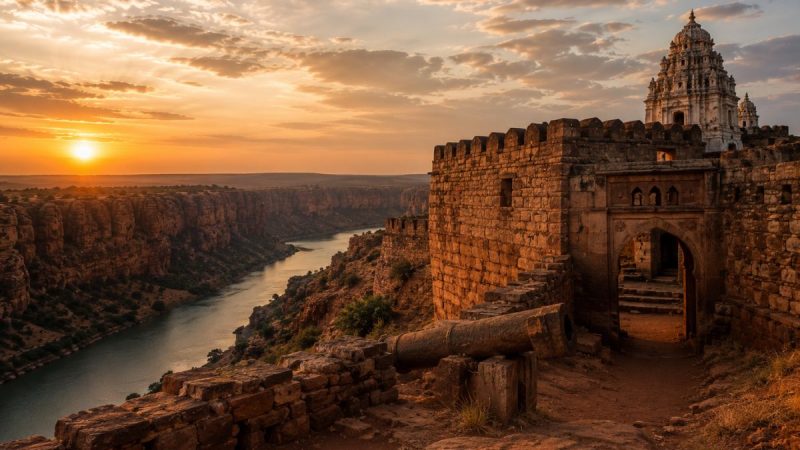
He didn’t just rely on brute force. Using his knowledge of the local tribes and his growing reputation as a fair and powerful leader, he consolidated local chieftains who were dissatisfied with the current rule. When he finally took Chittorgarh, he didn’t just take a fort; he established a capital that would become the symbol of Indian resistance for centuries.
The Shield of India: Defeating the Caliphate
The true test of Bappa Rawal’s valour came from the West. During the early 8th century, the Umayyad Caliphate was the most powerful empire on Earth, having conquered lands from Spain to the borders of India. Having taken Sindh, the Arab armies moved toward the heart of India, led by commanders like Junaid and Tamim.
While many smaller kingdoms fell, Bappa Rawal did something revolutionary: he formed a confederacy. He reached out to other great contemporary rulers, including Nagabhata I of the Pratihara dynasty and Vikramaditya II of the Chalukya dynasty. Under Bappa Rawal’s leadership, this united Indian front met the invaders in a series of titanic battles.
Bappa Rawal was not content with merely defending his borders. He utilized the desert terrain of Rajasthan to exhaust the invading cavalry. In a decisive battle in the Rajasthan desert, the combined Indian forces crushed the Arab army. Bappa Rawal personally led the charge, and his physical strength was said to be so immense that he could cleave an enemy and his horse in a single blow, a feat later mirrored by his descendant, Maharana Pratap.
The Pursuit Beyond the Borders: Rawalpindi
Unlike many rulers of his time, Bappa Rawal understood the importance of a “forward defense.” He did not stop at the border. He pursued the retreating armies through the Punjab and into the Northwest Frontier.
Historical accounts and local legends suggest that he established a massive military base in the north to act as a permanent deterrent against future invasions. This outpost was called a “Pindi” (camp). Because it belonged to the “Rawal,” it eventually became known as Rawalpindi (now in modern-day Pakistan). This shows the sheer scale of his influence; he moved the “defense line” of India hundreds of miles away from its heartland.
The Economic Architect
Bappa Rawal knew that valour in battle required a stable economy. He was the first in the region to introduce a standardized gold coinage. He encouraged trade and ensured that the agricultural routes were protected.
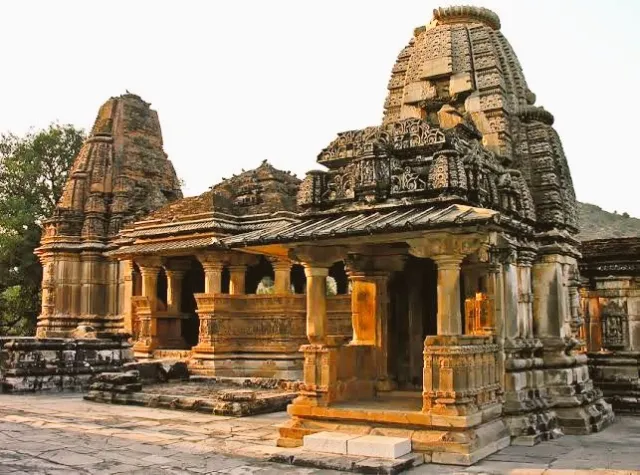
By stabilizing the region, he allowed for the flourishing of art and temple architecture. He commissioned the first temple of Bhagwan Eklingji at Kailashpuri, which remains the spiritual center of Mewar to this day. He turned a group of scattered tribes and displaced nobles into a structured, wealthy, and militarily superior state.
The Legacy: A Dynasty of 1,300 Years
After ruling for nearly 20 years and securing the borders of India, Bappa Rawal did something few powerful men do: he walked away. At the age of 50, he abdicated the throne in favor of his son and returned to the spiritual life, dedicating his final years to the worship of Shiva.
His legacy, however, was just beginning. Because of the foundations he laid:
- Mewar remained independent when almost every other kingdom fell to the Delhi Sultanate.
- His descendants included giants like Maharana Kumbha, Maharana Sanga, and Maharana Pratap.
- The House of Mewar became the “Sun” of the Rajput clans, the only ones who never gave their daughters in marriage to the Mughals.
Summary of Facts about Bappa Rawal:
| Category | Detail |
| Birth Name | Prince Kalbhoj |
| Dynasty | Guhila (later known as Sisodia) |
| Key Victory | Capture of Chittorgarh in 734 CE |
| Major Achievement | Defeated the Arab Caliphate expansion into India |
| Titles | Bappa (Father), Rawal (King), Hindu Suraj (Sun of the Hindus) |
| Spiritual Center | Eklingji Temple, Nagda |
| Legacy | Founder of the longest-running unbroken monarchy in history |
Bappa Rawal was more than a king; he was the primary reason that Indian culture and religion survived the 8th-century onslaught. He was a man of immense physical power, but even greater mental clarity. He taught India that the best way to defend one’s home is to unite with one’s neighbors and meet the enemy before they ever reach your gates.
Move with authority. Move with history.