The Unseen Secrets of Mewar History
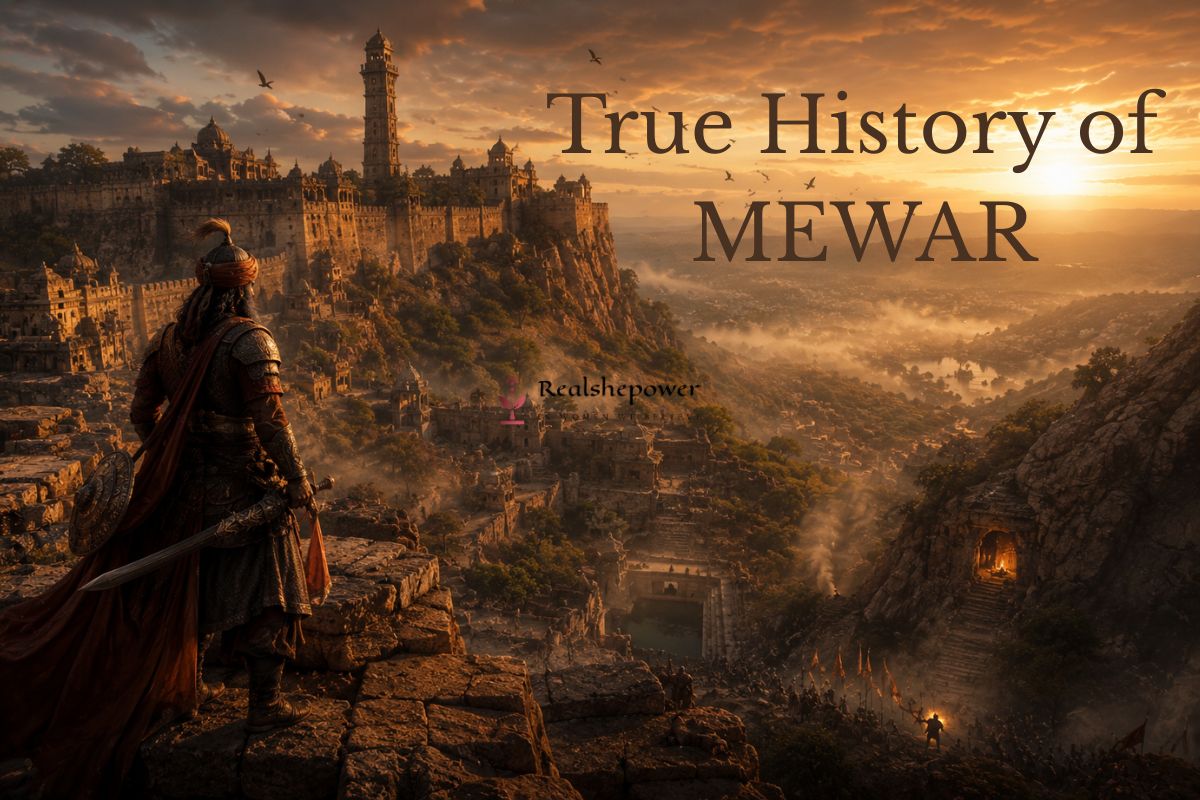
The history of Mewar is often distilled into the heroism of Maharana Pratap or the tragedy of Jauhar, but the “True History” is a thousand-year saga of a dynasty that operated more like a modern resilient corporation than a feudal fiefdom.
While empires across India including the Delhi Sultanate, the Mughals, and even the British shifted boundaries, the Guhila-Sisodia dynasty remained the longest-running unbroken monarchy in the world for over 1,300 years.
Here is the strategic, economic, and political history of Mewar you likely haven’t heard.
1. The 8th Century “Shield of India”
While textbooks credit the 15th century for the Rajput rise, Mewar’s most significant global contribution happened in the 700s. Bappa Rawal (c. 713–753 CE) didn’t just defend a local fort; he formed a multi-state confederacy to repel the Umayyad Caliphate’s eastern expansion.
- The First Global Stand: Historians compare Bappa Rawal to Charles Martel of France. While Martel stopped the Arab expansion at the Battle of Tours in the West, Bappa Rawal crushed the advance in the East, keeping the Indian heartland secure for another 300 years.
- The “Rawalpindi” Connection: Legend and some historical accounts suggest that the Pakistani city of Rawalpindi is named after Bappa Rawal, serving as a military outpost (Pindi) where he stationed his troops after pursuing the retreating invaders as far as Ghazni.
For a powerful Indian example of strategic resistance, read our detailed article on the true history of Bappa Rawal.
2. The Economic Engine: The Jawar Silver Mines
Mewar’s ability to resist superpowers like the Mughal Empire for 80 years wasn’t just due to “Rajput pride”; it was backed by Silver.
- The Jawar Breakthrough: In the 14th century, during the reign of Maharana Lakha, silver was discovered in Jawar (near Udaipur). These became the oldest silver and zinc mines in the world.
- Technological Lead: Mewar was 400 years ahead of Europe in zinc smelting. They used a sophisticated distillation process to extract pure zinc, a metal critical for making high-quality brass for weaponry and armor.
- Funding the Resistance: This mineral wealth allowed the Maharanas to maintain a professional army, hire expert engineers for their 84 massive forts, and sustain a high-level economy even when their trade routes were blocked by enemies.
3. The 84-Water-Body Fortification
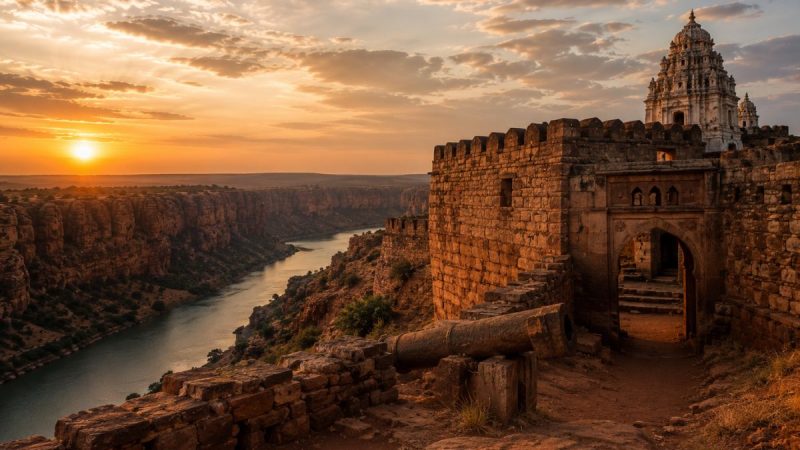
When you look at Chittorgarh, you see a fort. When a strategist looks at it, they see a Hydrological Masterpiece.
- The 4-Year Siege Proof: Chittorgarh had 84 water bodies, including wells, ponds, and step-wells (baoris). This network was designed to hold enough water to support 50,000 people for four consecutive years without a single drop of rain.
- Siege-Proofing: While other forts fell due to thirst, Mewar’s forts like Kumbhalgarh and Chittor were designed as self-sustaining ecosystems. This is why sieges against Mewar often lasted years, forcing invaders into a war of attrition they couldn’t afford.
4. The Diplomatic Custodians: Diwan of Eklingji
One of the most profound political moves in Mewar’s history was the abdication of the throne to the Divine.
- The Regent Strategy: From Bappa Rawal onwards, the Maharanas declared themselves not as “Kings,” but as the Diwans (Chief Servants) of the deity Lord Eklingji.
- The Political Advantage: This wasn’t just piety; it was a masterstroke in internal stability. By declaring the deity as the true King, the Maharana made rebellion or coups “sacrilegious.” It created a unique social contract where the ruler was a trustee of the people and the land, rather than an owner. This is the root of the “RealShePower” ethos—leadership as service.