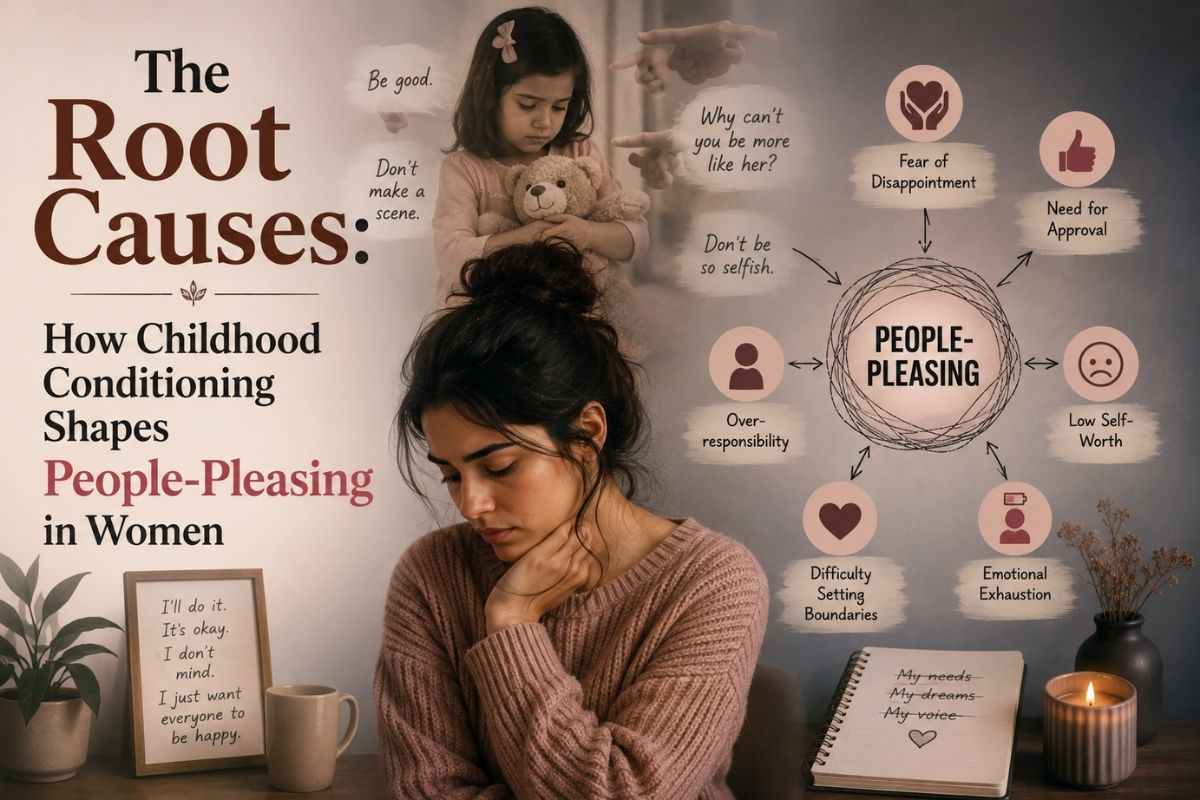
The Root Causes: How Childhood Conditioning Shapes People-Pleasing in Women
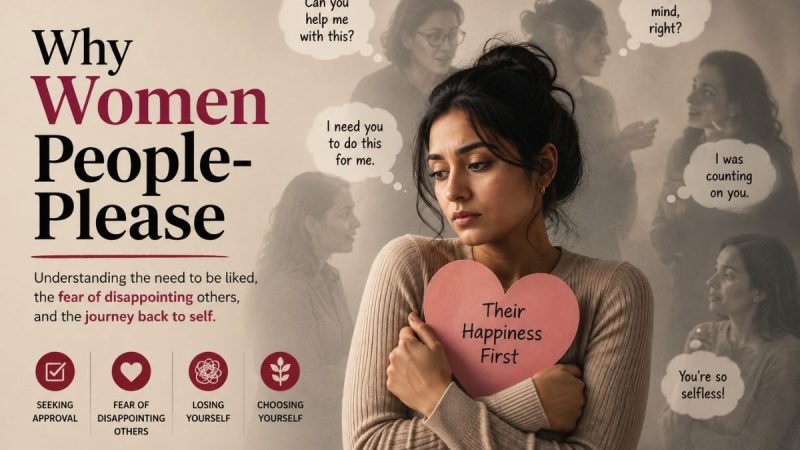
Part of our series on the psychology of people-pleasing. Start with the pillar guide: Why Women People-Please
Ask a chronic people-pleaser when it started, and most will draw a blank. That’s because the pattern usually doesn’t begin with one dramatic event — it’s built slowly, through hundreds of small moments that taught a girl exactly which parts of herself were welcome.
The “Good Girl” Blueprint
From an early age, many girls absorb an unspoken rulebook: be agreeable, be helpful, don’t make waves. Praise gets handed out generously for compliance — “such a good girl,” “so easy,” “no trouble at all” — while assertiveness, anger, or simply saying “I don’t want to” is met with a cooler reception.
A child’s brain is wired to seek connection above almost everything else. So when she notices that certain behaviors earn warmth and others earn distance, she adapts. Fast. Not because she’s calculating, but because connection issurvival when you’re small.
Parentification and Emotional Labor
In some households, girls are subtly (or not so subtly) cast as the emotional manager of the family — soothing a parent’s mood, mediating conflicts, or reading the emotional temperature of a room before anyone else notices it’s shifted. Psychologists call this parentification: when a child takes on responsibilities, especially emotional ones, that belong to an adult.
Girls who grow up this way often become remarkably attuned to others’ feelings. It’s a real skill — but it comes at a cost. Their own needs get filed under “deal with later,” and “later” has a habit of never arriving.
Attachment Styles Set the Template
Attachment theory offers another lens here. Children who experience inconsistent caregiving — where love and attention feel conditional or unpredictable — often develop an anxious attachment style. As adults, this can translate into a persistent, low-hum fear: if I disappoint someone, I’ll lose them.
That fear doesn’t need logic to feel real. It runs on old wiring, not present-day evidence.
Why This Matters Now
None of this is about blaming parents or replaying old wounds for their own sake. It’s about recognizing that a pattern which feels like “just who I am” was actually learned — which means it can also be unlearned.
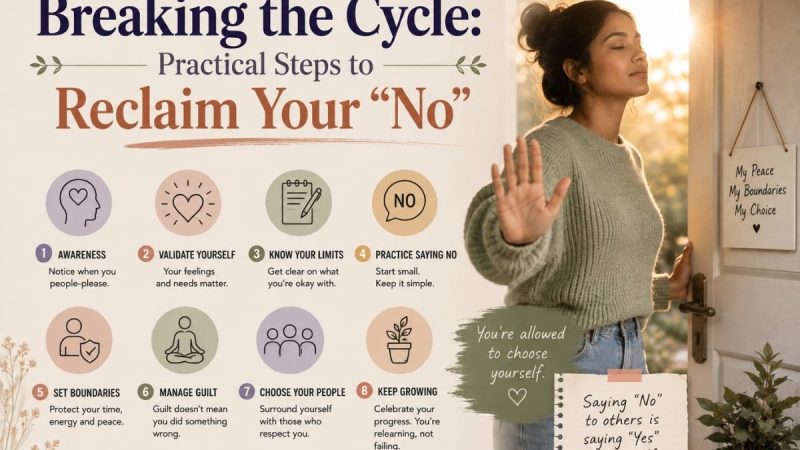
Curious what that process actually looks like? → Breaking the Cycle: Practical Steps to Reclaim Your “No”
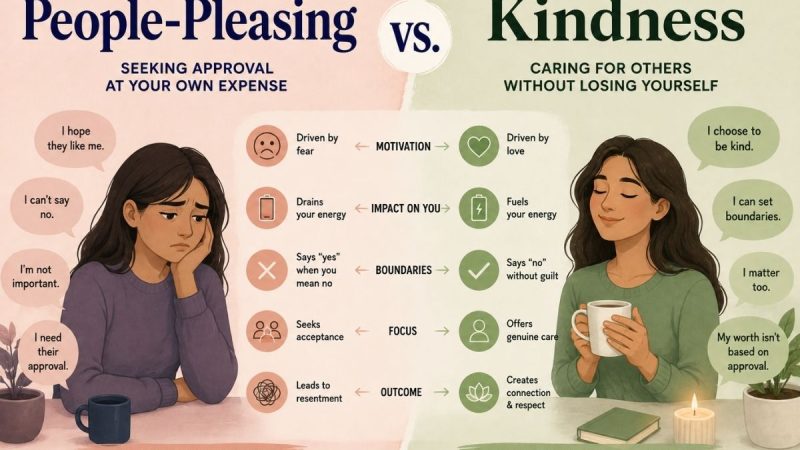
Or, if you’re still untangling whether your kindness is genuine or fear-based, this comparison might help: People-Pleasing vs. Kindness: How to Tell the Difference