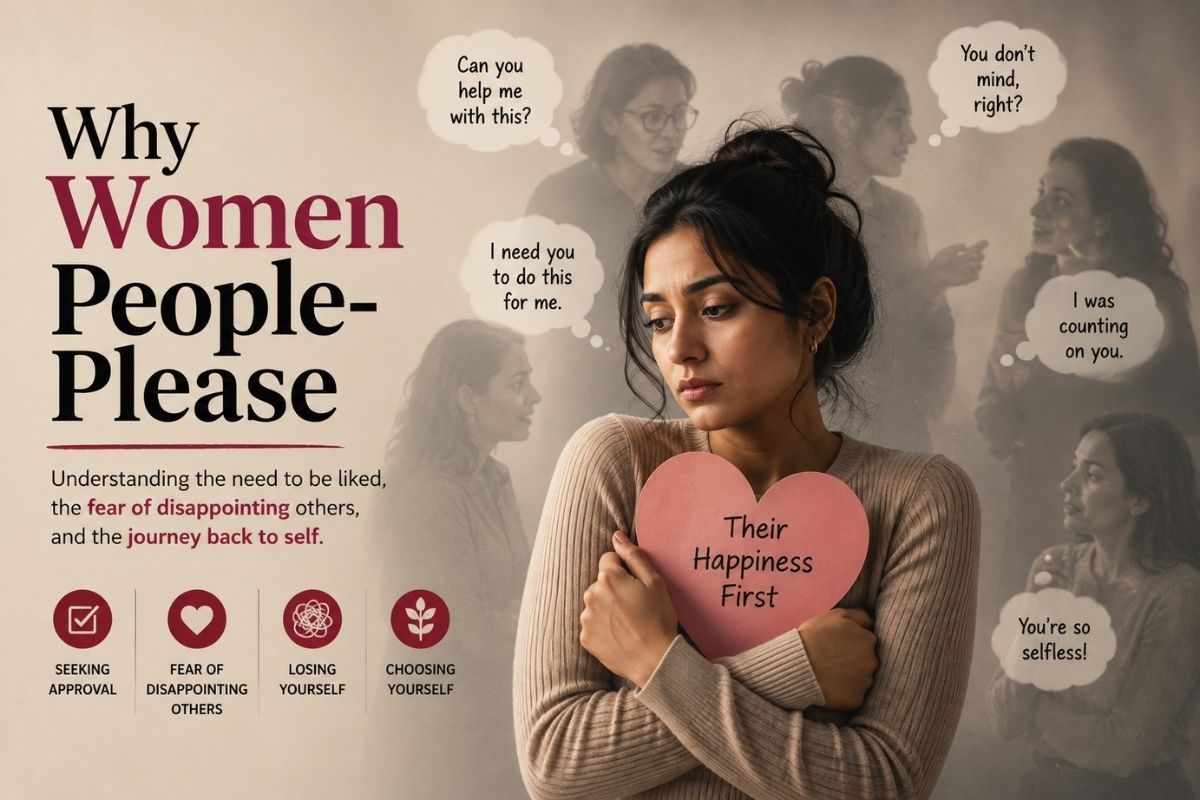
Why Women People-Please: The Psychology Behind Saying Yes When You Mean No
She said yes to the extra project. Yes to the dinner she didn’t want to attend. Yes to absorbing her friend’s bad mood as her own responsibility to fix. By the time she got home, she couldn’t remember the last time she said no and meant it.
If this feels familiar, you’re not imagining things, and you’re definitely not alone. People-pleasing isn’t a personality quirk. It’s a psychological survival strategy, and for many women, it starts long before adulthood.
It’s Not About Being “Too Nice”
The phrase “people-pleaser” makes it sound like a character flaw like someone who’s simply too generous for their own good. But psychologists see it differently. People-pleasing is often rooted in fawning, one of the lesser-known trauma responses alongside fight, flight, and freeze. Fawning is what happens when a person learns, usually early in life, that keeping others happy is the safest way to keep themselves safe.
For women specifically, this tendency gets reinforced by decades of social conditioning. Girls are praised for being “good,” “easy,” and “helpful” while assertiveness in girls is often relabeled as bossiness or attitude. Over time, the nervous system starts to equate approval with safety, and disapproval starts to feel like genuine danger.
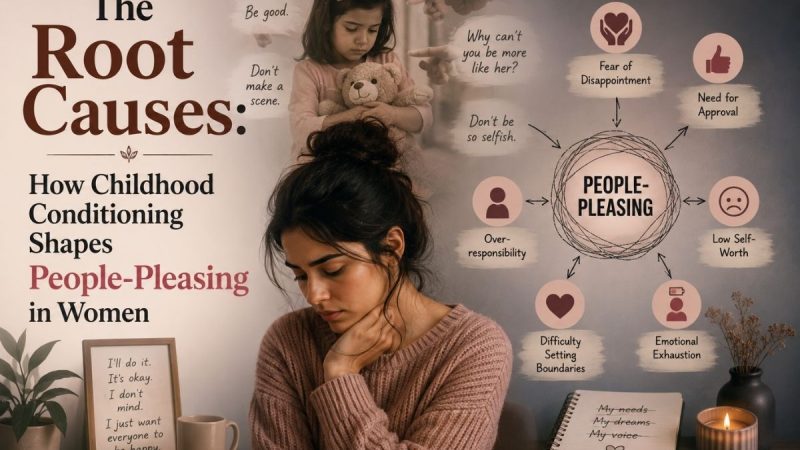
Want to understand where this pattern actually begins? → The Root Causes: How Childhood Conditioning Shapes People-Pleasing in Women
The Fine Line Between Kindness and Self-Erasure
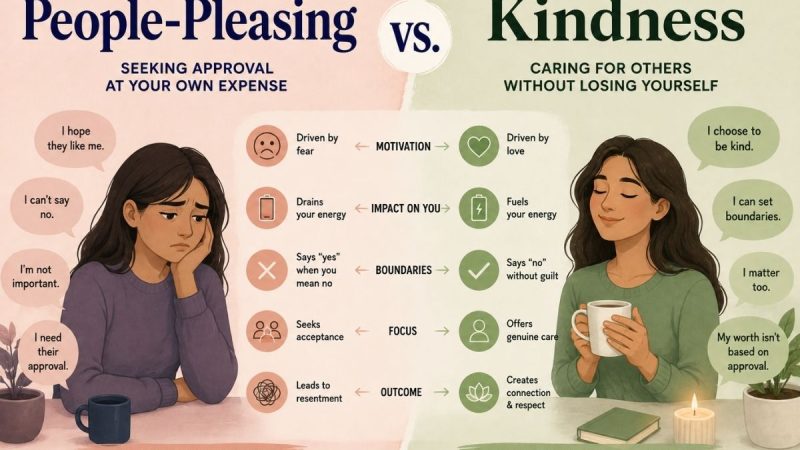
Here’s where it gets tricky: people-pleasing wears the costume of a virtue. It looks like kindness, generosity, flexibility — all qualities we genuinely want to cultivate. So how do you know when caring for others has quietly become a way of disappearing?
The distinction usually comes down to one question: is this coming from choice, or from fear?
→ People-Pleasing vs. Kindness: How to Tell the Difference
The Cost Is Higher Than You Think
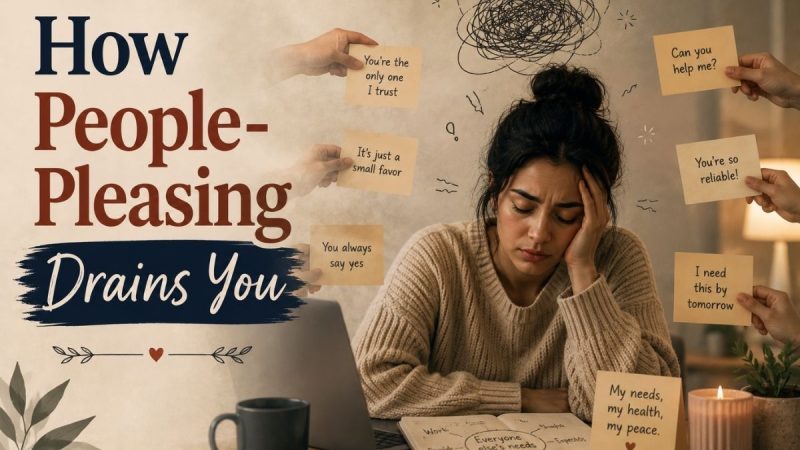
Chronic people-pleasing isn’t just emotionally draining — it has measurable effects on the body and brain. Constantly suppressing your own needs keeps the nervous system in a low-grade state of alert, which over time is linked to anxiety, burnout, and even physical symptoms like tension headaches and digestive issues.
→ The Physical Toll: How Chronic People-Pleasing Affects Women’s Mental Health
Where It Shows Up Hardest: Relationships
People-pleasing rarely stays confined to the workplace or friend groups — it often shows up most intensely in romantic relationships, where the stakes (and the fear of conflict) feel highest.
→ People-Pleasing in Relationships: Why Women Struggle to Set Boundaries with Partners
So, Can You Actually Unlearn It?
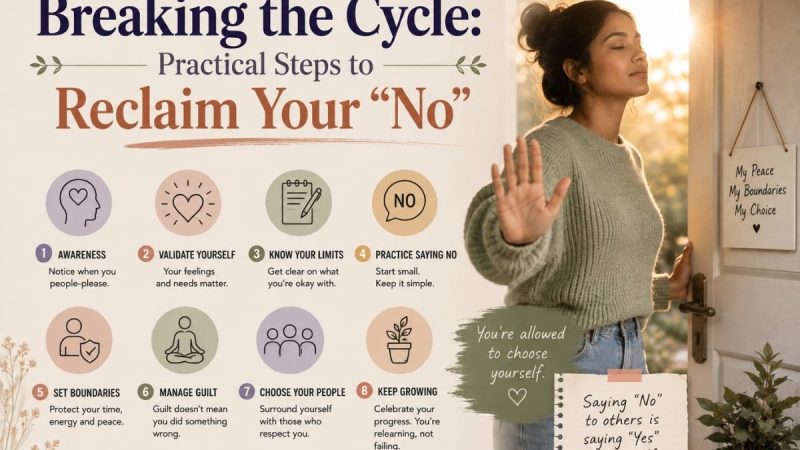
Yes — but not by “just saying no” once and expecting everything to change. Unlearning people-pleasing means retraining a nervous system that has spent years equating disapproval with danger. It’s slow, it’s uncomfortable, and it’s absolutely doable.
→ Breaking the Cycle: Practical Steps to Reclaim Your “No”
The Bottom Line
People-pleasing isn’t a character flaw to be ashamed of — it’s an adaptation that once made sense. But the strategy that kept you safe at seven years old isn’t the same one that will let you thrive at thirty-seven. Understanding the psychology behind it is the first step toward choosing, finally, from a place of freedom rather than fear.