
People-Pleasing vs. Kindness: How to Tell the Difference
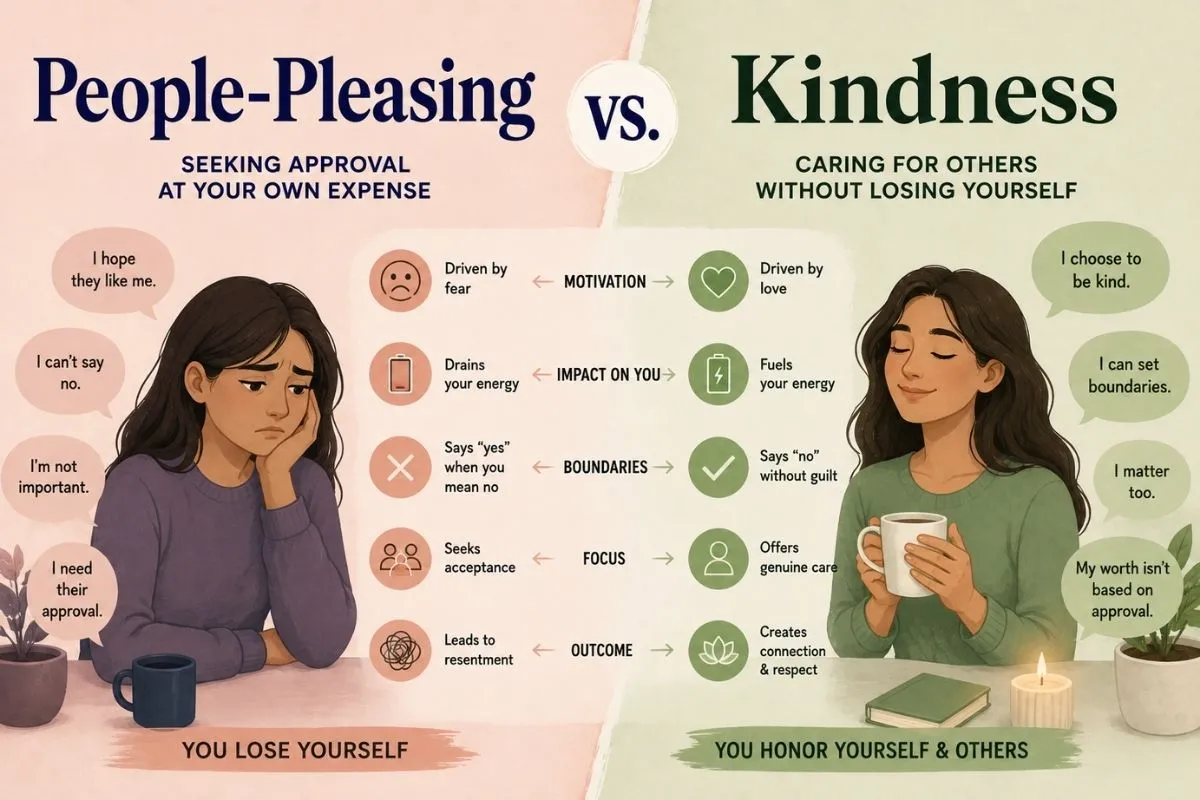
This piece follows on from our pillar guide, Why Women People-Please: The Psychology Behind Saying Yes When You Mean No, and pairs closely with The Root Causes: How Childhood Conditioning Shapes People-Pleasing in Women. If that article explained where the pattern comes from, this one helps you spot it in real time.
“But Ilikehelping people.” This is usually the first objection that comes up when people-pleasing gets named out loud, and it’s a fair one. Kindness is a genuine virtue. So how do you tell it apart from a fear response wearing a friendly disguise?
The Litmus Test: Choice vs. Compulsion
Real kindness feels expansive. It comes from a place of abundance: you have something to give, and giving it feels good, even energizing.
People-pleasing feels compulsive. It’s not “I’d like to help,” it’s “Ihaveto help, or something bad will happen,” even if that “something bad” is just a vague, uncomfortable sense of guilt or dread.
A simple test: imagine saying no to the request. If the idea produces mild disappointment but no real distress, that’s a boundary being respected. If it produces genuine anxiety, a racing heart, or spirals of guilt, that’s fear driving the bus, not generosity.
Kindness Doesn’t Require Self-Abandonment
Genuine kindness can coexist with limits. You can care about someone and still decline to fix their problem, attend their event, or absorb their bad mood. People-pleasing, by contrast, treats every request as non-negotiable, regardless of your own capacity in the moment.
A useful reframe: kindness asks, “What do I have to give right now?” People-pleasing asks, “What will happen if I don’t?”
Watch for the Resentment Signal
One of the clearest markers of people-pleasing is delayed resentment. You say yes, everything seems fine in the moment, and then later, quietly, you feel used, unappreciated, or exhausted. That resentment is data. It’s usually a sign the “yes” wasn’t freely given in the first place.
Why This Distinction Matters
Mislabeling people-pleasing as kindness keeps the pattern invisible, and invisible patterns are much harder to change. Naming it accurately is what makes room for a different choice next time.
If you’re wondering how this pattern took root in the first place, this piece digs into the origins:The Root Causes: How Childhood Conditioning Shapes People-Pleasing in Women
And if you’re ready to start shifting the pattern itself:Breaking the Cycle: Practical Steps to Reclaim Your “No”