10 Things Emotionally Mature Women No Longer Explain to Anyone

There is a strange kind of freedom that arrives when a woman stops feeling the need to explain herself.
It usually does not happen overnight. For years, many women become experts at explaining. Why they said no. Why they need space. Why they changed their mind. Why they are not available. Why they chose a certain career. Why they do not want children yet, or why they do. Why they left a relationship. Why they are quieter than they used to be. Why they are suddenly dressing differently, earning differently, living differently.
And then, somewhere along the way, something changes.
She realizes that explaining herself does not always create understanding. Sometimes it simply gives other people more material to debate.
Emotional maturity is not becoming cold, arrogant or detached. It is learning that not every misunderstanding needs to be corrected, not every opinion deserves a response, and not every person is entitled to a detailed explanation of your choices.
Here are 10 things emotionally mature women eventually stop explaining.
1. Why They Said No
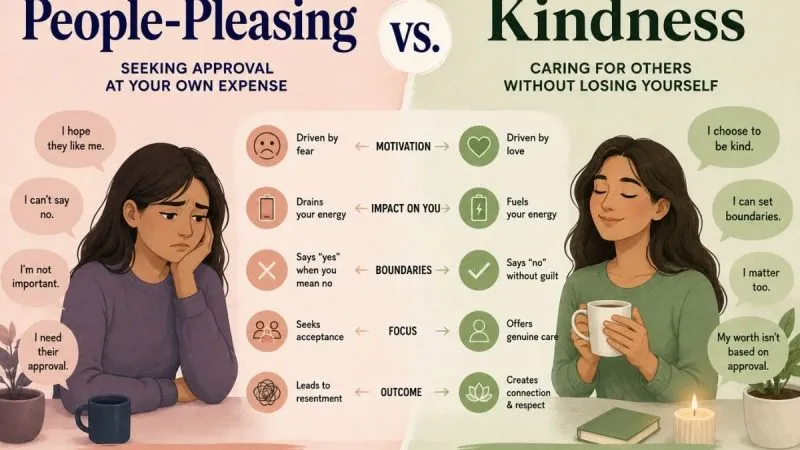
A mature woman understands that “no” is already a complete answer.
She may still give context when it is useful or when someone she genuinely cares about needs to understand her decision. But she no longer feels obligated to construct a courtroom-quality argument every time she declines an invitation, refuses a request, rejects an opportunity or chooses not to participate in something.
This is particularly powerful for women because many are taught to soften their boundaries. “I’m sorry, but…” becomes almost automatic. They feel guilty for disappointing people, so they add explanations until their refusal sounds less like a decision and more like a request for permission.
Eventually, she learns that a boundary does not become more legitimate because it contains five paragraphs of justification. She can be kind without being endlessly available.
2. Why They Need Time Alone
There comes a point when solitude stops feeling like something that needs defending.
A woman may love her partner, adore her friends, enjoy her family and still want an evening where nobody needs anything from her. She may want to sit with coffee, read, walk, watch something ridiculous, reorganize her room or simply stare out of the window without answering messages.
That does not automatically mean she is unhappy, antisocial or upset with somebody.
Emotionally mature women begin to understand the difference between loneliness and solitude. One is the absence of meaningful connection; the other can be a deliberate way of reconnecting with yourself.
She no longer panics when someone asks, “Why are you being so quiet?” Sometimes there is nothing wrong. She simply enjoys her own company.
3. Why They Changed Their Mind
Changing your mind is often treated as inconsistency, particularly when a woman has previously spoken confidently about what she wanted.
But people evolve.
The woman who wanted one career at 25 may discover something completely different at 32. The woman who once dreamed of marriage may reconsider what marriage means to her. Someone who used to love constant socializing may begin protecting her weekends. A woman who once tolerated certain behavior may eventually decide that she will not tolerate it anymore.
Maturity means accepting that new information can produce new decisions.
She does not need to remain loyal to an old version of herself simply because other people remember it. Growth sometimes looks like contradicting your younger self.
4. Why They Left
One of the most difficult things emotionally mature women learn is that closure does not always require a public explanation.
When a relationship ends, people often want the story. Friends want details. Relatives want reasons. Mutual acquaintances want to know who was responsible. Sometimes even strangers feel entitled to understand what happened.
But a woman who has processed her experience does not necessarily need everyone else to understand it.
She may explain what happened to the people directly involved or to the people she trusts. But she no longer feels compelled to turn her private pain into public evidence.
Sometimes leaving was the decision. Sometimes the details are complicated. Sometimes both people contributed to the breakdown. And sometimes the woman simply knows that continuing the relationship was no longer healthy for her.
She does not need a unanimous vote before moving on.
5. Why Their Life Does Not Look Like Everyone Else’s
There is enormous pressure to follow an invisible timetable.
Career by a certain age. Marriage by another. Children after that. House. Car. Holidays. Promotions. Investments. Social milestones. Photographs that make everything look perfectly synchronized.
Emotionally mature women eventually realize that adulthood is not a group project.
One woman may be building a business while another is raising children. Someone else may be travelling alone. Another may be caring for parents. Someone may be starting over at 40. Another may have achieved financial independence but have absolutely no interest in the lifestyle their friends consider successful.
The mature woman stops using other people’s timelines as evidence that she is behind.
She can admire someone else’s life without wanting to exchange lives with them.
6. Why They Are No Longer Available to Everyone
When a woman becomes more protective of her time, some people will notice.
The friend who used to call at midnight may wonder why she no longer answers. The relative who expected immediate responses may complain that she has changed. Someone who benefited from her constant availability may interpret her boundaries as attitude.
But availability is not the same thing as love.
Emotionally mature women understand that constantly rescuing, fixing, listening, replying and accommodating everyone can eventually leave very little energy for themselves.
They still care. They simply stop confusing care with unlimited access.
Their phone may ring unanswered sometimes. Their messages may wait. Their weekend may belong entirely to them.
And they no longer feel guilty about it.
7. Why They Chose Themselves
There is a particular kind of discomfort that appears when a woman makes a decision that benefits her but inconveniences somebody else.
She may take the promotion. Move cities. Leave the relationship. Start the business. Travel alone. Change her appearance. Spend money on something meaningful to her. Protect her weekends. Say no to family expectations.
Someone may call her selfish.
Emotionally mature women learn to examine that accusation instead of automatically accepting it.
Selfishness means disregarding other people’s legitimate needs for your own benefit. Self-respect is different. It means recognizing that your needs, ambitions and emotional wellbeing also belong in the equation.
She does not believe that being a good woman requires becoming an exhausted woman.
8. Why They Are Not Interested in Certain People
Maturity also changes the way a woman thinks about relationships.
She no longer needs to prove that she can get along with everyone. She does not need to force friendships simply because they have existed for years. She does not need to maintain intimacy with someone just because they share history.
Sometimes two people simply stop fitting into each other’s lives.
There does not have to be a dramatic betrayal.
Different values can be enough. Different priorities can be enough. Constant negativity can be enough. Feeling drained after every interaction can be enough.
She becomes more selective about who gets close to her, not because she thinks she is better than everyone else, but because she finally understands that relationships influence the emotional atmosphere of a life.
9. Why They Do Not Respond to Every Opinion
One of the clearest signs of emotional maturity is learning that being misunderstood is sometimes unavoidable.
Someone will think you are too ambitious. Someone else will think you are not ambitious enough. One person will dislike your clothes. Another will criticize your career. Somebody will have an opinion about your relationship. Someone will misunderstand something you said.
If you respond to every opinion, your life slowly becomes a collection of reactions.
Emotionally mature women become more comfortable letting some things sit unanswered.
They know the difference between useful criticism and random judgment. They listen when there is something worth learning, and they move on when there isn’t.
Not every comment deserves a seat at the table of your self-worth.
10. Why They Are Finally Happy With Themselves
Perhaps the biggest thing a woman eventually stops explaining is why she is comfortable with the person she has become.
She does not need to convince everyone that she is successful. She does not need to prove that her marriage is happy, that her career is meaningful, that her choices are correct or that her life looks good from the outside.
There is still ambition. There are still dreams. There are still things she wants to improve.
But her entire identity is no longer dependent on improvement.
She can look at herself and think, “I am still becoming, but I am already enough to deserve my own respect.”
That is a very different kind of confidence.
It does not need an audience.
The Quiet Power of Not Explaining Everything
There is something deeply liberating about reaching the stage of life where you can make a decision without immediately preparing a defense for it.
You still communicate. You still apologize when you are wrong. You still listen when someone has something meaningful to say. Emotional maturity is not refusing accountability.
It is knowing that accountability and over-explanation are not the same thing.
You can be misunderstood and remain peaceful. You can disappoint someone and still be a good person. You can change your mind without betraying yourself. You can leave without convincing everyone that leaving was justified.
And perhaps most importantly, you can build a life that makes sense to you even when it does not make sense to everybody else.
Sometimes growing up is not learning how to explain yourself better.
Sometimes it is finally realizing that you don’t have to.