London: The Real Shee Power Guide To The City That Rewards Slow Exploring
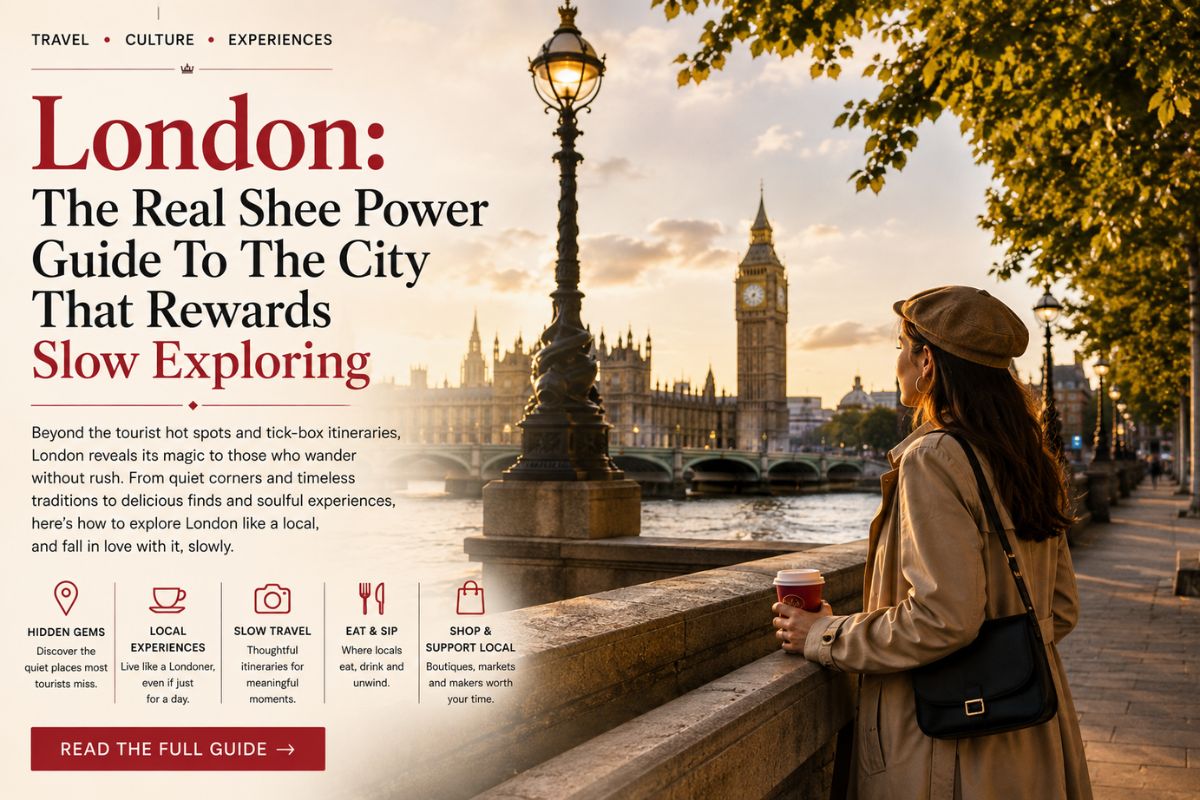
London has a reputation problem that works entirely in its favour once you actually arrive. Everyone assumes it will be expensive, grey, and overwhelming, and then discovers that some of its single best experiences, the British Museum’s eight million objects, the National Gallery’s Van Goghs, an entire afternoon spent simply walking the South Bank, cost absolutely nothing. It is a city built for compact, walkable exploring rather than constant transit, and it rewards a traveller willing to move slowly through it considerably more than one racing between five paid attractions in a single day.
What Indian Travellers Actually Need Before Booking Anything
Start here, because it changes your planning timeline. India is not on the UK’s visa-exempt list, which means Indian passport holders do not use the newer Electronic Travel Authorisation system that now covers American, European, and several other nationalities. Indian travellers still need a full UK Standard Visitor Visa, a single entry visa costing roughly £127 or a five year multiple entry option at £528, applied for online through the UK government’s official channel with biometrics submitted at a VFS Global centre. Processing typically takes up to three weeks, so this is genuinely the first thing to sort out, well before booking flights or accommodation, rather than an afterthought squeezed in during the final fortnight before departure.
Where To Actually Stay
For a first visit, the West End, and specifically Covent Garden, remains the most practical base, walkable to Trafalgar Square, the theatre district, and the British Museum, with excellent transit connections in every direction once you do want to range further out. Bloomsbury offers a quieter, slightly more affordable alternative within easy walking distance of the same core sights. South Kensington puts you within a short walk of the Natural History Museum, the Science Museum, and the V&A, three major free museums sitting almost on top of each other, useful if museum going is the centrepiece of your trip rather than an occasional stop.
The Free Sights That Genuinely Justify The Trip Alone
London’s headline advantage over most major European capitals is how much of its very best content costs nothing at all. The British Museum in Bloomsbury holds the Rosetta Stone, the Sutton Hoo helmet, and Egyptian mummies across ninety four galleries, entirely free, and remains the most visited museum in the United Kingdom for good reason. The National Gallery on Trafalgar Square holds over two thousand paintings including Van Gogh’s Sunflowers, also free. The Tate Modern on the South Bank, the Natural History Museum, the Science Museum, and the V&A round out a genuinely world class free museum circuit that alone could occupy several unhurried days.
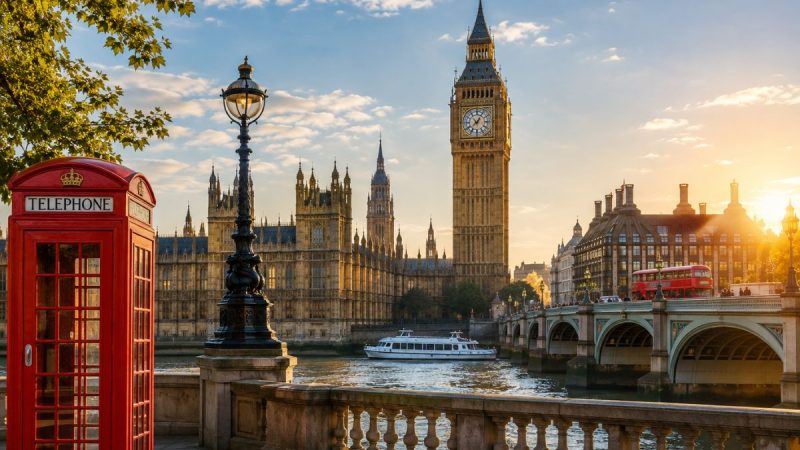
Beyond the museums, the classic central circuit, Buckingham Palace, where the Changing of the Guard happens at 11am, Westminster Abbey, Big Ben and the Houses of Parliament, Tower Bridge, and St Paul’s Cathedral, is compact enough to cover on foot, with the paid interiors of Westminster Abbey and the Tower of London worth budgeting for separately if history is a priority. Borough Market and Camden Market both offer a genuinely good, low cost way to eat well while soaking up two very different sides of the city’s character, one refined and food focused, the other loud, creative, and market stall driven.
Getting Around Without Overspending
London’s public transit runs on a contactless tap in, tap out system with a daily fare cap sitting around £8.50 for Zones 1 and 2, meaning a single contactless card or phone handles the entire trip without needing to buy passes in advance. The Elizabeth line has meaningfully improved cross-city journey times in recent years, cutting travel time between the East End and central London considerably. For a short visit, walking between nearby sights, Soho to the South Bank takes roughly twenty minutes on foot, is often genuinely faster than waiting for a train, and gives you a much better sense of how the city’s neighbourhoods actually connect to each other.
When To Go
There is no single correct season, only trade-offs. Late May, early June, or mid to late September tend to offer the best balance of decent weather and manageable crowds. January and February are the cheapest and quietest months by a wide margin, and since most of the city’s best museums are free year round regardless of season, a winter trip built around indoor culture rather than outdoor sightseeing can be a genuinely smart budget move. Summer brings longer daylight and a fuller events calendar, including Wimbledon and various open air festivals, at the cost of considerably heavier crowds and higher accommodation prices.
Day Trips Worth The Train Fare
London’s rail network puts several genuinely worthwhile destinations within easy same day reach. Bath, with its Georgian architecture and Roman baths, and Edinburgh, Scotland’s dramatic castle topped capital, are both reachable by train in under three hours, though Edinburgh is more realistically an overnight trip than a single day out. Greenwich, reachable within London’s own transit network, offers the Royal Observatory, the Prime Meridian line, and a noticeably slower, more villagey pace than central London, an easy half day addition to a longer itinerary.
A Natural Next Stop For Solo Travellers
London’s genuine walkability, excellent public transit, and consistently high safety rankings make it a strong fit for solo women travellers who want a major, culturally rich European capital without the logistical stress that can come with less predictable infrastructure. It pairs naturally with Real Shee Power’s own Solo Women’s Travel series, which has already walked through Ubud, Kyoto, and Lisbon as first-timer friendly solo destinations, and the foundational guide to international solo travel logistics is worth reading before departure regardless of which city you land in first, since the core planning habits, booking your first night in advance, sharing your itinerary before you land, apply just as directly to a week in London as they do anywhere else on that list.
The Honest Bottom Line
London’s reputation for expense is real but avoidable if you build a trip around what the city actually gives away for free rather than assuming every good experience comes with a ticket price attached. A well planned few days here, the British Museum in the morning, Borough Market for lunch, a slow walk along the South Bank into the evening, delivers a genuinely world class trip on a budget considerably smaller than most first time visitors expect, provided the visa paperwork gets handled early enough not to become the actual bottleneck.