Maa Behen: A Chaotic, Cathartic Ode to Women Who Refuse to Behave
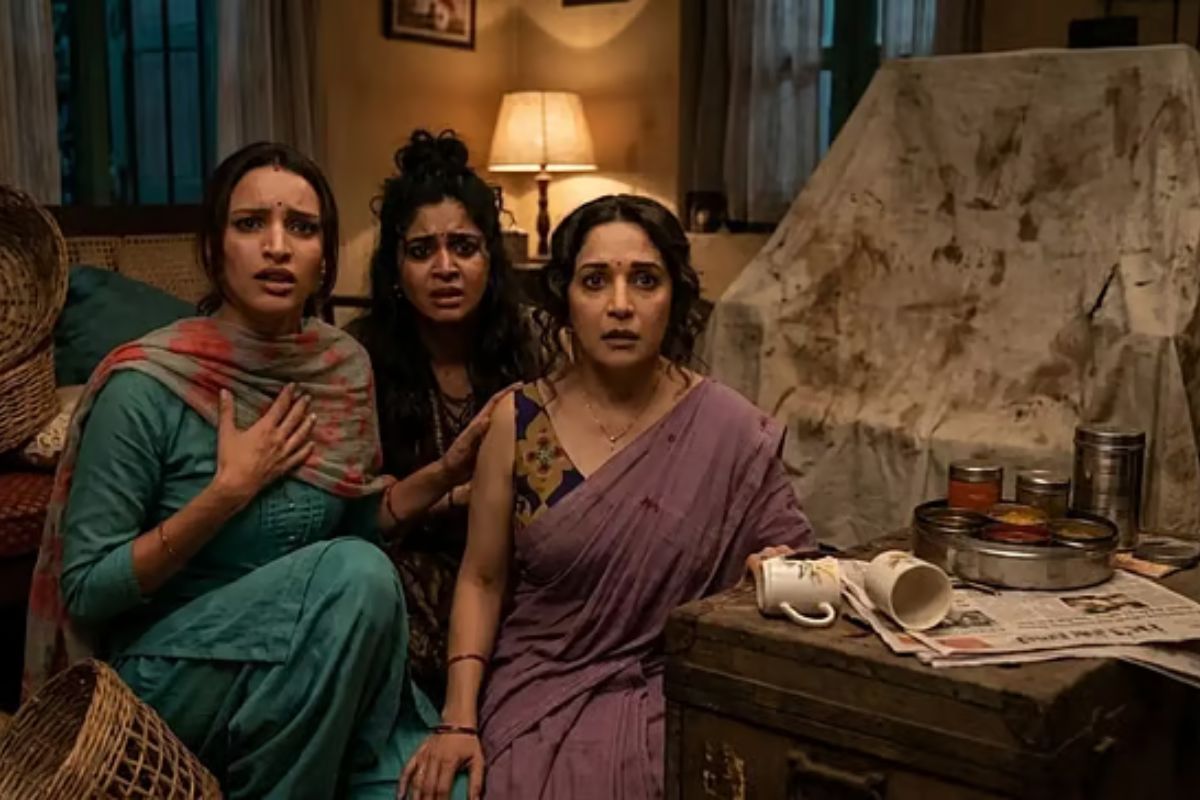
In the summer of 2026, Suresh Triveni’s Maa Behen landed on Netflix like a glitter bomb in a middle-class mohalla—loud, messy, unapologetic, and impossible to ignore. A black comedy-thriller built around a widowed mother (Madhuri Dixit as Rekha) and her two estranged daughters (Triptii Dimri as Jaya and Dharna Durga as Sushma) who find themselves covering up a crime in a nosy, judgmental colony, the film could have easily been another “women in crisis” story. Instead, it becomes something sharper: a sly dismantling of the very stereotypes Indian society has long imposed on single mothers, independent women, and those who dare to live life on their own terms.
The Nirma Callback: From Detergent Jingle to Cultural Mirror
One of the film’s most delightful and quietly devastating touches is its naming convention. Rekha, Jaya, and Sushma—the central trio—are not random choices. They are a deliberate, loving nod to the iconic 1970s-80s Nirma washing powder jingle: “Hema, Rekha, Jaya aur Sushma, sabki pasand Nirma.” That jingle, which once painted these names as the epitome of graceful, idealized Indian womanhood—smiling, saree-clad homemakers dancing in perfect domestic bliss—gets subverted here with surgical precision.
In Maa Behen, these women are anything but sanitized ideals. Rekha is a bold, grey-shaded widow who lost her husband young and refused to shrink into perpetual mourning. Jaya (Triptii) is a fed-up daughter navigating marital disillusionment and simmering resentment. Sushma brings chaotic younger-sister energy. They bicker, scheme, lie, and occasionally explode in ways that feel painfully, hilariously human. The Nirma reference lingers like an ironic underscore: society still expects its “Rekhas, Jayas, and Sushmas” to be spotless and docile, but real life and this film shows the stains, the sweat, and the stubborn refusal to be washed away.
This subtle callback isn’t just clever fanservice. It underscores how cultural symbols of “perfect womanhood” have always been marketing constructs. The film takes those constructs and joyfully trashes them, revealing the mess underneath.
Dismantling Stereotypes: Single Mothers, Attire, and the Male Gaze
At its core, Maa Behen is a film about perception specifically, how men (and by extension, a patriarchal society) perceive women who exist outside the traditional framework. A single mother in a conservative colony becomes fair game for gossip, speculation, and predation. Her attire, her laughter, her late nights, her relationships—all are dissected not as signs of agency but as evidence of moral looseness.
The film excels at showing the quiet violence of this scrutiny. The “nosy colony” functions as a microcosm of broader Indian society: aunties who weaponize concern, uncles who leer under the guise of “looking out,” and neighbors who equate a woman’s independence with invitation. When trouble knocks (literally, in the form of a crime that must be hidden), the women’s attempts to maintain normalcy expose how fragile their social standing is. One wrong move, one revealing outfit, one unfiltered emotion, and the narrative shifts from “respectable family” to “those women.”
This is where the film shines in its social commentary. It doesn’t preach; it satirizes. It shows how single mothers are simultaneously pitied (“bechari widow”) and feared (“too free, too bold”). Daughters inherit this burden—expected to be caretakers while resenting the emotional labor. The comedy arises from their defiance: they refuse to perform victimhood or sainthood. They are flawed, funny, furious, and fiercely loyal to each other in the end.
Particularly powerful is the exploration of how women’s attire and demeanor are policed. A saree worn “too boldly,” laughter that’s “too loud,” or a life lived without a man as chaperone—these become red flags in the eyes of men who view female autonomy as a threat to their control. Maa Behen flips the script, making the male gaze the ridiculous one, exposed through Ravi Kishan’s character and the colony’s collective hypocrisy.
Triptii Dimri: The Heart and Fire of Maa Behen
If the film belongs to anyone in spirit, it is Triptii Dimri as Jaya. She is nothing short of phenomenal easily one of the most compelling and versatile performances of recent years.
Triptii brings a restless, lived-in energy to Jaya that feels revolutionary. She is the fed-up elder daughter: sarcastic, burdened, quietly seething at the expectations placed on her. Yet she never descends into caricature. Her comic timing is razor-sharp, landing the film’s biggest laughs with effortless naturalism. She nails the heartland Hindi accent and the middle-class exasperation that many Indian women will recognize instantly.
What elevates her work from great to unforgettable are the emotional peaks. There’s a monologue—widely discussed—where she confronts her useless husband with raw, unfiltered rage. In that moment, Triptii doesn’t just act; she channels generations of suppressed female anger. It is loud, messy, cathartic, and utterly magnetic. The camera lingers on her face as years of resentment pour out—not in pretty tears, but in fierce, trembling defiance. She steals every scene she’s in, balancing the film’s chaotic comedy with its deeper undercurrents of pain and resilience.
Triptii’s beauty has often been the initial talking point in her career, but Maa Behen proves yet again that her real superpower is range. She is funny without trying too hard, vulnerable without fragility, and powerful without preachiness. She embodies the modern Indian woman navigating impossible expectations—torn between duty to family and the burning need for selfhood. In a film full of strong performances (Madhuri’s unapologetic Rekha is a force of nature), Triptii is the soul. She makes you laugh, then ache, then cheer. She is perfect in the role—nuanced, luminous, and fiercely alive.
Why Maa Behen Matters
In an era of sanitized content, Maa Behen feels like a breath of chaotic fresh air. It doesn’t offer easy resolutions or flawless heroines. Its women are grey, greedy for life, protective of their secrets, and ultimately unbreakable together. By invoking the Nirma ideal only to shatter it, the film reminds us how far we’ve come and how much further we have to go in letting women simply be.
It dismantles the stereotype not by making its characters superhuman, but by making them profoundly, relatably human. Single mothers aren’t saints or sinners; they are survivors with desires, flaws, and the right to laugh in the face of judgment. Women who wear what they want or live without male validation aren’t “asking for it”, they are asking for space, respect, and peace.
Triptii Dimri, with her incandescent performance, carries much of that emotional weight. She doesn’t just act in Maa Behen; she inhabits it, elevates it, and makes you believe every chaotic, beautiful second.
Watch it for the laughs, the thrills, the nostalgia callback. Stay for the quiet revolution: the one where maa and behen stop apologizing for existing loudly, messily, and on their own terms. In a colony full of secrets, their greatest rebellion is simply refusing to disappear.