The Divinity of Maa Chinnamasta: The Goddess Who Teaches Self-Sacrifice, Truth, and Supreme Inner Power
Maa Chinnamasta is one of the most misunderstood yet profoundly compassionate forms of the Divine Feminine. To approach her only through visual shock is to miss her deepest spiritual truth. She is not a goddess of fear or destruction. She is the embodiment of absolute surrender, fearless truth, and self-giving love. Her divinity lies not in what she takes, but in what she gives—herself.
In the sacred tradition of the Das Mahavidyas, Maa Chinnamasta stands as the living paradox of life and death, nourishment and renunciation, desire and transcendence. She is the goddess who teaches humanity the highest spiritual lesson: that true power is born when ego is severed and consciousness flows freely.
This article explores the divine essence of Maa Chinnamasta with devotion, clarity, and spiritual depth, while honoring her role as a cosmic mother, a fierce protector, and a liberator of the soul.
Who Is Maa Chinnamasta? Understanding Her Divine Identity
Maa Chinnamasta is the sixth Mahavidya in the sacred pantheon of the ten wisdom goddesses of Tantra. Her name is derived from the Sanskrit words “Chinna” meaning severed, and “Masta” meaning head. At first glance, her iconography appears intense, but every element of her form carries profound spiritual symbolism rooted in compassion and truth.
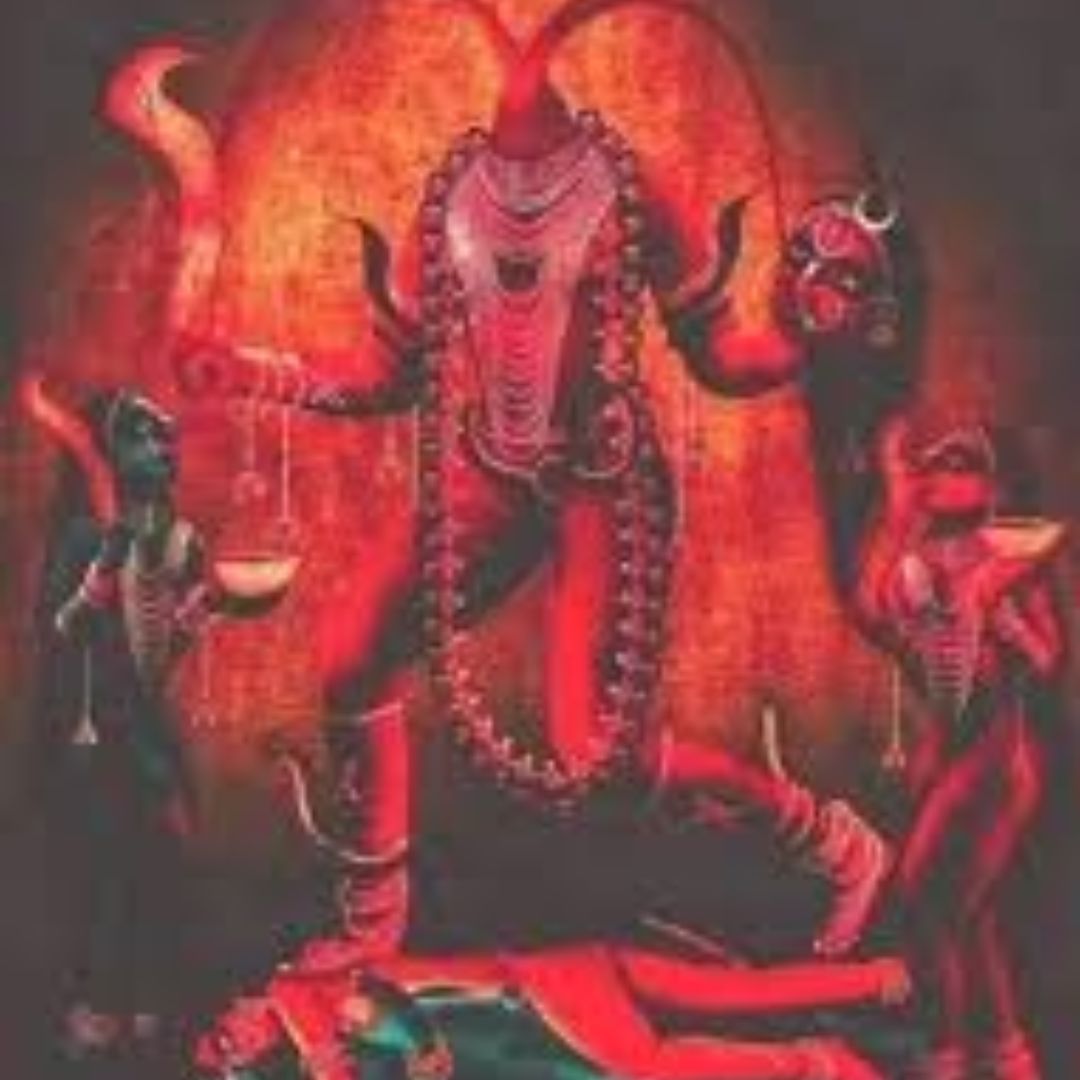
She is depicted standing upon the union of Shiva and Shakti, holding her own severed head in her hand. Three streams of blood flow from her neck—one nourishing her own mouth, and the other two feeding her attendants, Dakini and Varnini. This image is not meant to inspire fear. It is meant to awaken awareness.
Maa Chinnamasta represents the cycle of life, where destruction is not the end, but a transformation that sustains existence itself.
The Spiritual Meaning of Self-Decapitation
The severed head of Maa Chinnamasta does not signify violence. It signifies the cutting away of ego, illusion, and false identity. In spiritual practice, the ego is the greatest obstacle to liberation. Maa Chinnamasta does not destroy the self; she destroys the false self.
Her decapitation symbolizes the moment when individuality dissolves into universal consciousness. The blood that flows is not death—it is life force, the same energy that sustains all beings. By feeding others with her own essence, the goddess teaches that the universe survives through self-offering, not accumulation.
This is the highest form of compassion, where the Divine Mother gives herself completely for the sustenance of creation.
Maa Chinnamasta as the Goddess of Supreme Compassion
Contrary to superficial interpretations, Maa Chinnamasta is among the most compassionate manifestations of the Divine Mother. When her companions experience hunger, she does not seek external sustenance. She does not sacrifice another being. Instead, she offers herself.
This act reflects the ultimate maternal instinct—nourishment without expectation, giving without fear, and love without limitation.
In spiritual terms, this teaches the devotee that suffering in the world is not resolved by domination or escape, but by conscious self-offering and inner awakening.
Her Association with Desire and Consciousness
Maa Chinnamasta stands upon Kama (desire) and Rati (pleasure), yet she does not reject them. Instead, she transcends them. This symbolism reveals a profound truth: spirituality does not demand the denial of desire, but its transformation.
She teaches that desire, when unconscious, binds the soul. When illuminated by awareness, it becomes energy for liberation.
Maa Chinnamasta does not suppress life’s impulses. She elevates them into divine consciousness.
The Role of Maa Chinnamasta in Tantra and Spiritual Awakening
In Tantric philosophy, Maa Chinnamasta governs the awakening of Kundalini Shakti, the dormant spiritual energy at the base of the spine. Her imagery reflects the upward surge of energy that breaks through ego and ignorance, leading to enlightenment.
Her worship is not about comfort or emotional reassurance. It is about truth, transformation, and fearlessness. She guides the seeker through inner chaos toward unshakable clarity.
Those drawn to Maa Chinnamasta are often souls standing at the threshold of deep inner change. Her presence in one’s life is rarely subtle, but always purposeful.
Why Maa Chinnamasta Is Not a Goddess of Fear
Fear arises from misunderstanding. Maa Chinnamasta does not threaten life; she reveals its impermanence so that it may be lived consciously. She does not glorify pain; she liberates beings from unconscious suffering.
Her fierce form exists to dissolve illusion, not to instill terror. To the ego, she appears terrifying. To the awakened soul, she is profoundly nurturing.
She teaches that once one is willing to let go of false identities, nothing in the world can truly harm them.
The Blessings of Maa Chinnamasta
The blessings of Maa Chinnamasta are not material in the conventional sense, though material stability often follows her grace. Her primary blessings are internal and transformative.
She grants fearlessness, clarity of purpose, inner strength, and unwavering truthfulness. She liberates the devotee from dependency, emotional bondage, and false attachments.
Her grace often arrives disguised as upheaval, but what she removes was never meant to stay.
Devotional Worship of Maa Chinnamasta
True devotion to Maa Chinnamasta is rooted in humility and honesty. She does not respond to superficial rituals performed without inner sincerity. She responds to courage, surrender, and truth.
Her worship is especially potent for those seeking liberation from inner conflict, destructive patterns, or spiritual stagnation.
Devotees often experience heightened awareness, emotional cleansing, and a profound sense of inner independence through her grace.
Maa Chinnamasta and the Feminine Divine Power
Maa Chinnamasta embodies a form of feminine power that is not performative or submissive. She is autonomous, sovereign, and self-sustaining. She does not derive power from approval or validation. Her power flows from self-knowledge.
In this way, she stands as a divine archetype for inner strength, especially for women reclaiming their spiritual authority and selfhood.
Why Maa Chinnamasta Is Relevant in the Modern World
In a world driven by consumption, image, and ego, Maa Chinnamasta offers a radical spiritual counterpoint. She reminds humanity that endless accumulation leads to emptiness, while conscious surrender leads to fulfillment.
She teaches that true empowerment does not come from controlling others, but from mastering oneself.
Her divinity is timeless, and her message is urgently needed in an age of spiritual disconnection.
Surrendering at the Feet of Maa Chinnamasta
To bow before Maa Chinnamasta is not to seek protection from the world. It is to seek freedom from illusion. It is to offer one’s false self into the fire of truth and emerge renewed.
She does not promise an easy life. She promises a true one.
Her presence awakens the soul to its own strength, clarity, and infinite capacity for compassion.
The Eternal Divinity of Maa Chinnamasta
Maa Chinnamasta is not a goddess to be understood casually. She must be approached with reverence, courage, and spiritual maturity. Her divinity lies in her uncompromising truth and her boundless compassion.
She is the Divine Mother who teaches humanity that the greatest offering is the ego, and the greatest reward is liberation.
In her fierce stillness, the soul finds freedom.
Jai Maa Chinnamasta.
Jai the Goddess of Self-Sacrifice and Supreme Truth.