
Nirbhaya Fund: ₹3,300 Cr Allocated in Last 5 Years (2025 Update)
In the wake of one of India’s most harrowing tragedies—the brutal gang rape and murder of a 23-year-old physiotherapy intern in Delhi on December 16, 2012—the nation erupted in protests demanding justice and systemic change. The victim, pseudonymously known as Nirbhaya (“fearless”), became a symbol of the pervasive threats to women’s safety in public spaces. Her death not only exposed the vulnerabilities faced by women in urban India but also catalyzed a national reckoning with gender-based violence.Responding to this outcry, the Government of India announced the creation of the Nirbhaya Fund in the 2013 Union Budget. Envisioned as a non-lapsable corpus of ₹1,000 crore annually, the fund was dedicated to financing projects and schemes aimed at enhancing the safety, security, and empowerment of women and girls. Administered by the Department of Economic Affairs under the Ministry of Finance, with the Ministry of Women and Child Development (MWCD) serving as the nodal agency, the Nirbhaya Fund marked a pivotal shift toward proactive interventions.
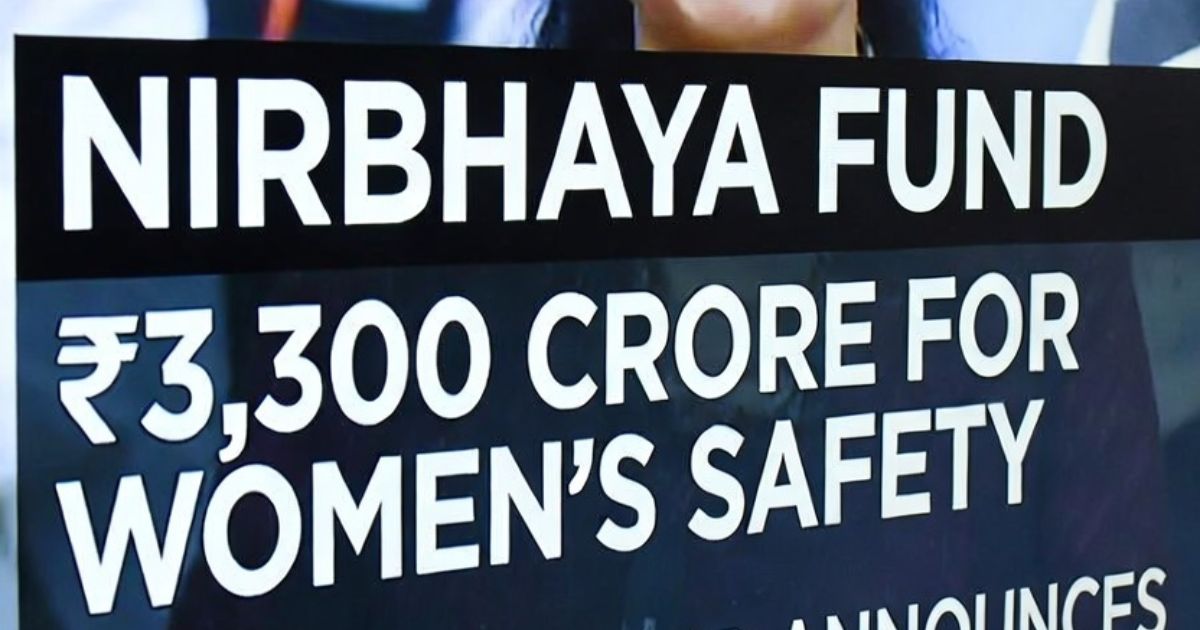
Over a decade later, on December 10, 2025, Minister of State for Women and Child Development Savitri Thakur informed the Rajya Sabha that more than ₹3,300 crore had been allocated from the Nirbhaya Fund in the last five years alone (2020-21 to 2024-25) to bolster women’s safety initiatives. This figure, part of a cumulative allocation exceeding ₹7,712.85 crore up to FY 2024-25, underscores the government’s sustained financial commitment. However, the story of the Nirbhaya Fund is one of ambition tempered by implementation hurdles, with utilization rates hovering around 76% overall but revealing stark disparities at state and scheme levels. This article delves into the fund’s origins, allocations, key initiatives, utilization patterns, and persistent challenges, drawing on official data and expert analyses to provide a comprehensive overview.
Table of Contents
Origins and Framework of the Nirbhaya Fund
The Nirbhaya Fund was born from the recommendations of the Justice J.S. Verma Committee, constituted in the immediate aftermath of the 2012 incident. The committee’s report, submitted in January 2013, advocated for a multi-pronged approach to combat sexual violence, including legal reforms, institutional strengthening, and dedicated funding. The fund was formalized through a framework that emphasized “projects specifically designed to improve the safety and security of women” in public and private spaces.
Key structural elements include:
- Non-Lapsable Corpus: Unlike typical budgetary allocations, unspent funds do not revert to the general pool, ensuring continuity.
- Empowered Committee (EC): Chaired by the Secretary of MWCD, the EC appraises proposals from central ministries, state governments, and Union Territories (UTs). Approved projects are recommended to the Department of Economic Affairs for funding.
- Demand-Driven Approach: Proposals must demonstrate direct impact on women’s safety, such as technology integration, judicial expediency, or community outreach. Ministries like Home Affairs (MHA), Justice, Road Transport and Highways, and Railways have been major recipients.
- Integration with Broader Schemes: Since 2021-22, the fund has been subsumed under ‘Mission Shakti‘, an umbrella program for women’s empowerment, aligning it with initiatives like ‘Sambal‘ (safety and security) and ‘Samarthya’ (empowerment).
By design, the fund prioritizes preventive and responsive measures, from emergency helplines to forensic labs, reflecting a holistic vision. Yet, its evolution has been marked by evolving budgetary priorities and external shocks like the COVID-19 pandemic, which delayed implementations.
Cumulative Allocations and the Recent Five-Year Surge
Since inception, the Nirbhaya Fund has seen progressive allocations, reflecting growing recognition of gender-based violence as a public health and rights crisis. As per MWCD data tabled in Parliament in March 2025, a total of ₹7,712.85 crore has been allocated up to FY 2024-25. This includes the initial ₹1,000 crore seed in 2013-14, with annual contributions scaling up amid advocacy from civil society and judicial interventions.The last five years (FY 2020-21 to 2024-25) represent a particularly robust phase, with over ₹3,300 crore disbursed, as highlighted by Minister Thakur. Breaking it down:
- 2020-21: ₹657.02 crore – Focused on pandemic-resilient initiatives like virtual helplines.
- 2021-22: ₹472.61 crore – Emphasis on judicial infrastructure amid rising POCSO cases.
- 2022-23: ₹481.90 crore – Boost for urban safety projects in high-crime cities.
- 2023-24: ₹686.17 crore – Expansion of anti-trafficking units.
- 2024-25: ₹586.52 crore – Integration with digital forensics and cyber safety.
| Financial Year | Allocation (₹ Crore) | Key Focus Areas |
|---|---|---|
| 2020-21 | 657.02 | Emergency response systems, victim compensation |
| 2021-22 | 472.61 | Fast-track courts, one-stop centers |
| 2022-23 | 481.90 | Safe city projects, women help desks |
| 2023-24 | 686.17 | Anti-human trafficking, cyber labs |
| 2024-25 | 586.52 | Forensic training, community outreach |
| Total | 2,884.22 | Women’s safety ecosystem |
(Note: The ₹3,300 crore figure cited by Thakur aggregates these with minor adjustments for supplementary grants, per Rajya Sabha records.)
State-wise, Uttar Pradesh leads with ₹699.12 crore, followed by Karnataka (₹490.71 crore) and Delhi (₹538.31 crore), reflecting urban-rural divides in proposal submissions. Jammu & Kashmir received ₹52.5 crore, while Ladakh got ₹20.03 crore, highlighting targeted interventions in conflict zones.
Key Initiatives Funded by the Nirbhaya Fund
The fund has catalyzed over 49 schemes across sectors, transforming women’s safety from rhetoric to infrastructure. Major initiatives include:
1. Emergency Response Support System (ERSS-112)
- Allocation: ₹364 crore.
- Impact: A pan-India helpline handling over 43 crore calls since 2015, integrating police, medical, and fire services. In FY 2024-25 alone, it processed 12 million distress calls from women, enabling rapid interventions.
2. One Stop Centres (OSCs or Sakhi Centres)
- Allocation: Part of ₹1,149.53 crore under MWCD schemes.
- Reach: 854 operational centres across 30 states/UTs as of October 2025, providing integrated services—medical aid, legal counselling, temporary shelter, and psycho-social support—to violence survivors.
- Milestone: Centres in Raipur and Lucknow received Nari Shakti Puraskar awards in 2018 and 2019 for empowering survivors.
3. Fast Track Special Courts (FTSCs)
- Allocation: ₹734 crore (up to FY 2023-24, extended to 2025-26).
- Deployment: 790 approved, with 745 operational, including 404 e-POCSO courts. These have disposed of over 306,000 cases related to rape and child sexual offences, reducing trial pendency by 40%.
4. Women Help Desks (WHDs) and Anti-Human Trafficking Units (AHTUs)
- WHDs: 14,658 desks in police stations (13,743 headed by women officers), serving as first-contact points for survivors.
- AHTUs: 827 units nationwide, preventing trafficking and supporting 50,000+ victims annually.
5. Safe City Projects and Cyber Safety
- Allocation: ₹1,434 crore for eight cities (Delhi, Mumbai, etc.), funding CCTV networks, pink toilets, and panic buttons in public transport.
- Cyber Initiatives: 33 forensic labs established; 24,264 personnel trained in handling online crimes against women.
6. Central Victim Compensation Fund (CVCF)
- Allocation: ₹200 crore one-time grant.
- Purpose: Supplements state schemes, compensating victims of rape, acid attacks, and trafficking with up to ₹10 lakh per case.
These initiatives, often converged with Mission Shakti, have handled millions of cases, from helpline calls to court disposals, fostering a safer ecosystem.

The R G Khar Medical College Case — Overview & Context
A serious incident that raised national attention and conversations about safety, justice and accountability. This article provides an informational overview of the case developments, legal context and broader societal implications.
→ Read MoreUtilization Rates: Progress and Disparities
Minister Thakur’s announcement aligns with March 2025 data: Of the ₹7,712.85 crore allocated, ₹5,846.08 crore (76%) has been released and utilized. This marks an improvement from 70% in FY 2023-24 (₹5,118.9 crore out of ₹7,212.8 crore). The Ministry of Home Affairs accounts for 74% of approvals (₹4,225.91 crore), with high utilization in ERSS (100%), while MWCD’s schemes like OSCs lag at 31% for Sambal in 2021-22.
However, granular data reveals inequities:
- Top Utilizers: Chhattisgarh (43% for MWCD schemes), Uttarakhand (35%).
- Laggards: Maharashtra, West Bengal, and Gujarat utilized less than 5%; six states/UTs (including Manipur, Meghalaya) spent zero under MHA allocations.
- Scheme-Wise: ERSS at 100%, but Women’s Helpline (181) saw zero utilization in Karnataka and Madhya Pradesh.
The COVID-19 disruptions, approval delays, and staggered implementations explain some gaps, but overall, 76% utilization signals maturing mechanisms.
Criticisms and Challenges:
Underutilization and BeyondDespite gains, the Nirbhaya Fund faces trenchant critiques. Oxfam India’s 2021 report highlighted a “circular logic” of underutilization leading to reduced budgets—e.g., Sambal’s allocation dropped from ₹587 crore to ₹562 crore after 31% spending in 2021-22. By 2024, only 24% of approved projects were fully utilized, per analyses, with 57% of funds concentrated in five states.
Key challenges include:
- Transparency Deficits: Lack of real-time monitoring; funds often rebranded without crediting Nirbhaya (e.g., ERSS marketed for disasters).
- Implementation Bottlenecks: Slow state proposals, bureaucratic hurdles, and poor convergence with health/urban ministries. The Supreme Court has intervened multiple times, terming underuse a “national shame.”
- Patriarchal Gaps: Critics argue the fund’s focus on “exceptional” violence ignores everyday threats like marital rape or workplace harassment. Only 12% goes to MWCD, prioritizing tech over care-based interventions.
- Political Will: Reports from Accountability India (2023) note MWCD’s 30% utilization of released funds (₹217.42 crore out of ₹736.57 crore), undermining its nodal role.
Parliamentary committees, including the Standing Committee on Home Affairs in February 2025, lambasted “inefficiency,” noting two-thirds unspent in key heads like prison modernization tied to women’s safety.
Impact and Future Directions
The fund’s tangible impacts are undeniable: Millions of helpline interactions, faster justice via FTSCs, and safer public spaces in pilot cities. Crime data shows a 20% rise in reported cases (due to better reporting), but conviction rates have improved by 15% in FTSC jurisdictions. Yet, with 33 crimes against women every hour (NCRB 2024), the fund’s ₹3,300 crore infusion over five years must evolve.Looking ahead, UN Women’s October 2025 call for a gender audit of Nirbhaya schemes emphasizes field-level efficacy and mainstreaming. Recommendations include mandatory state utilization targets, digital dashboards for transparency, and root-cause focus (e.g., education on consent). As India eyes Viksit Bharat by 2047, Minister Thakur’s announcement reaffirms commitment, but true “fearlessness” demands bridging allocation to action.
In Nirbhaya’s legacy, the fund stands as both beacon and cautionary tale—a ₹7,700+ crore promise that, when fully realized, could redefine women’s safety in India.

Punishments Under the Nirbhaya Act — Complete Guide
A clear and comprehensive overview of the punishments prescribed under the Nirbhaya Act — strengthened criminal law provisions enacted after the 2012 Delhi case. This article explains the legal framework, penalties, and how the Act impacts justice for survivors.
→ Read More
A Look at Women’s Rights in India
An informative overview of women’s rights in India — covering legal protections, key milestones, major laws and continuing challenges. Learn how the legal system supports women’s empowerment and what still needs to be done.
→ Read More







)