The Assassination of Charlie Kirk: A Tragic Loss and the Alarming Celebration of Political Violence
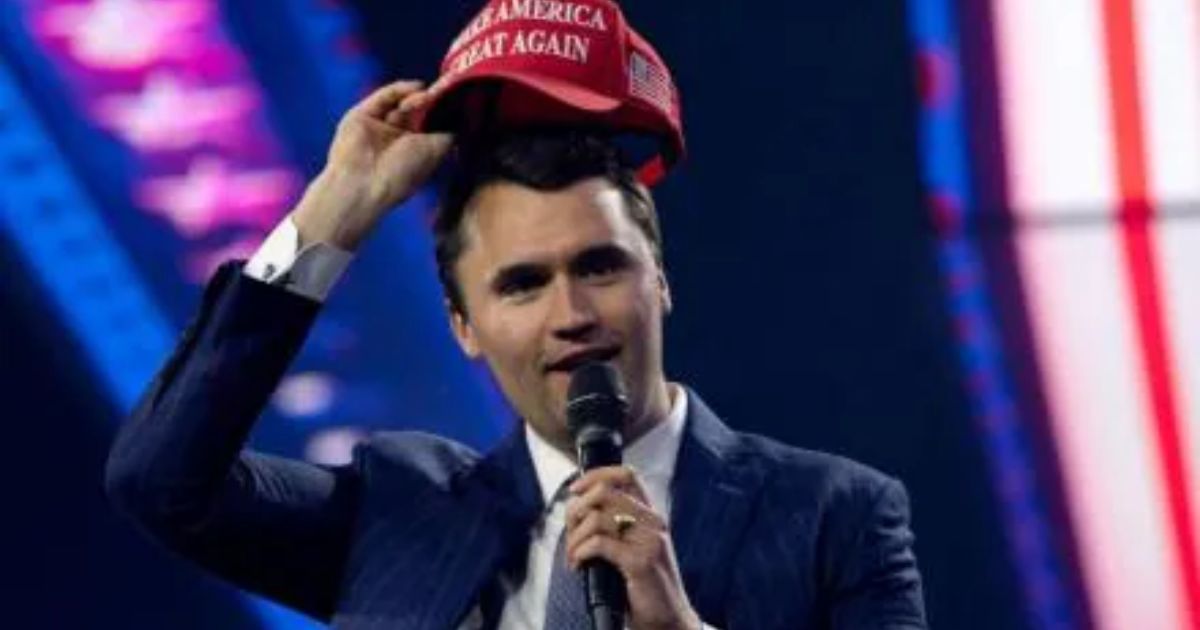
In a nation already scarred by a surge in political violence, the assassination of Charlie Kirk on September 10, 2025, stands as a grim milestone. The 31-year-old conservative activist and co-founder of Turning Point USA (TPUSA) was fatally shot in the neck during a speaking event at Utah Valley University (UVU) in Orem, Utah. The incident, described by Utah Governor Spencer Cox as a “political assassination,” has not only unified leaders across the political spectrum in condemnation but has also exposed a deeply disturbing trend: the gleeful celebration of his death by some young, left-leaning individuals online. This reaction, far from isolated, reveals the toxic undercurrents of ideological extremism, where calls for equality and justice mask a willingness to dehumanize and even endorse violence against dissenters. As the manhunt for the shooter continues, this article delves into Kirk’s life, the details of his murder, the shocking online responses, and the broader ideological forces at play particularly the convergence of left-wing radicalism and certain interpretations of Islam that prioritize conformity over pluralism.
Charlie Kirk: From Teenage Activist to MAGA Powerhouse
Charlie Kirk’s rise was nothing short of meteoric. Born on October 14, 1993, in Arlington Heights, Illinois, Kirk dropped out of community college to pursue political activism full-time. At just 18, he co-founded TPUSA in 2012 with William Montgomery, aiming to counter what he saw as liberal indoctrination on college campuses. Under Kirk’s leadership, TPUSA grew into a multimillion-dollar organization with chapters on over 3,000 campuses, mobilizing young conservatives and playing a pivotal role in Donald Trump’s 2016 and 2024 presidential campaigns. Kirk’s efforts helped secure 45% of the youth vote for Trump in 2024, according to exit polls from Edison Research.
Kirk was a media juggernaut, hosting The Charlie Kirk Show, a podcast and radio program that reached millions weekly, and streaming Turning Point Live. His rhetoric was unfiltered and often provocative, championing Christian nationalism, opposing DEI (diversity, equity, and inclusion) programs, and criticizing what he called the “woke left.” He famously called the Civil Rights Act of 1964 a “mistake” in a 2023 interview, argued that Martin Luther King Jr. was “overrated,” and questioned the qualifications of Black pilots in viral clips. Kirk was also outspoken on Islam, framing it as incompatible with Western values. In a May 2025 episode of his show, he declared, “Islam is not compatible with the West,” labeling it a “tyrannical system” that promotes “conquest values.” He linked Muslim politicians to extremism, tweeting in June 2025 about New York City mayoral candidate Zohran Mamdani: “24 years ago a group of Muslims killed 2,753 people on 9/11. Now a Muslim Socialist is on pace to run New York City.”
Critics accused Kirk of racism, Islamophobia, and spreading conspiracy theories, including false claims about the 2020 election and George Floyd’s death. His “Professor Watchlist,” which exposed liberal academics, was decried as harassment by groups like the American Association of University Professors. Yet, to his supporters, Kirk was a fearless defender of free speech and traditional values, a bridge between the MAGA base and establishment Republicans. As President Trump eulogized him, “No one understood or had the Heart of the Youth in the United States of America better than Charlie.”
Kirk’s influence extended globally; he was invited to Israel by Prime Minister Benjamin Netanyahu just weeks before his death, praised as a “lion-hearted friend of Israel.”
At the time of his death, Kirk was a father of two young children and married to Erika Kirk, whom he often credited for grounding him. His final public appearance was the kickoff of his “American Comeback Tour,” a series of campus events aimed at rallying post-election conservative youth.
The Assassination: A Calculated Strike Amid Rising Political Tensions
The shooting occurred around 12:20 p.m. local time during a Q&A session at UVU’s outdoor event tent, attended by about 3,000 people. Kirk was responding to a question about transgender mass shooters, “Do you know how many transgender Americans have been mass shooters over the last 10 years?” when a single shot rang out from a rooftop approximately 200 yards away. Video footage captured the moment: Kirk clutching his neck, collapsing as screams erupted and attendees fled in panic. He was rushed to a nearby hospital but was pronounced dead shortly after.
Authorities recovered a bolt-action rifle in nearby woods, along with three unfired rounds engraved with antifascist and transgender-related phrases, suggesting a possible ideological motive. The FBI, led by Director Kash Patel, described it as a “targeted attack” and offered a $100,000 reward for information leading to the arrest of the suspect, believed to be a college-aged individual. CCTV footage shows the shooter fleeing the rooftop, and facial recognition efforts are underway. As of September 12, no arrests have been made, though two people were briefly detained and released.
The assassination fits into a disturbing pattern of U.S. political violence. It follows the 2017 Congressional baseball shooting, the January 6, 2021, Capitol attack, the 2022 hammer assault on Paul Pelosi, two 2024 attempts on Trump’s life, the 2025 arson at Pennsylvania Governor Josh Shapiro’s residence, and the murders of Minnesota legislator Melissa Hortman and Israeli embassy staffers in Washington, D.C. Governor Cox, in a press conference, lamented, “This is a dark day for our state… Is this what 250 years has wrought on us?” President Trump ordered flags lowered to half-staff and announced Kirk would receive the Presidential Medal of Freedom posthumously. Bipartisan leaders, including former President Barack Obama and Vice President Kamala Harris, condemned the violence, with Obama stating, “This kind of despicable violence has no place in our democracy.”
Yet, the event was swiftly politicized. Trump blamed the “radical left” for inciting violence through Nazi comparisons of conservatives. Far-right figures like Alex Jones called it “war,” while others demanded retribution. On the left, some urged gun control discussions, with author Stephen King tweeting that it stemmed from America’s lax laws.
The Shocking Trend: Youthful Glee and Online Celebrations
If the assassination itself was horrifying, the aftermath has been equally revelatory. Within hours, social media platforms like X (formerly Twitter), BlueSky, and TikTok lit up with posts from young, left-leaning users celebrating Kirk’s death. One TikToker mock-cried to a dramatic song, captioning it: “Charlie Kirk got s**t?” Another wrote, “I’m not saying Charlie Kirk deserved to be shot, but I think enablers to pedophiles should be shot, too,” referencing unfounded accusations against Kirk. Comparisons to Adolf Hitler were rampant, with users suggesting Kirk “deserved” his fate for his views on race and Islam.
This glee wasn’t limited to anonymous accounts. An assistant dean at Middle Tennessee State University was fired after posting celebratory content. Colorado’s Suicide Prevention Coordinator, Jazmin Murguia, faced calls for dismissal after justifying the killing. A Las Vegas realtor, Mark Sivek, was expelled from his board for offensive posts. Even San Francisco’s DNA Lounge promoted a “Neck Shot” cocktail special in mockery, later rebranding it amid backlash. An anonymously run site, “Charlie’s Murderers,” doxxed alleged celebrants, leading to death threats and job losses.
The National Consortium for the Study of Terrorism and Responses to Terrorism (NCRI) described these reactions as evidence of an “emerging assassination culture,” where political violence is normalized in digital echo chambers. Senior advisor Alex Goldenberg noted viral BlueSky posts celebrating Kirk’s death as a father, linking it to rising left-wing violent rhetoric. A 2022 PNAS study found that while right-wing extremists commit more violence, left-wing rhetoric can foster hostility toward opponents. Elon Musk decried it as the “party of murder,” while Piers Morgan called the left “repulsive.”
This trend is particularly alarming among youth, whom Kirk sought to inspire. Posts from college students and young influencers reveal a desensitization to violence, often framed as “justice” against perceived oppressors. As one X user noted, “Nobody’s celebrating, we’re all just tired… we don’t feel bad for him.” Yet, the volume of gleeful content suggests otherwise, amplified by algorithms that reward outrage.
The Hypocrisy of Left-Wing Ideology: Equality or Elimination?
At its core, modern left-wing ideology professes equality, tolerance, and social justice. Yet, the celebration of Kirk’s death exposes a profound hypocrisy: a readiness to endorse violence against those who dissent. Kirk’s critics often branded him a fascist or Nazi for his views on race, gender, and religion, rhetoric that, as Trump noted, dehumanizes conservatives. This mirrors a broader pattern where left-leaning activists call for “equality” while targeting dissenters with cancellation, doxxing, or worse. The engraved bullets at the scene, referencing antifascist ideology, underscore how such rhetoric can inspire action.
This intolerance is detrimental, eroding civil discourse and fostering a culture where disagreement equals existential threat. As former Congresswoman Gabrielle Giffords, a shooting survivor, stated, “Violence solves nothing.” The left’s premise of equality rings hollow when applied selectively, ignoring the humanity of opponents like Kirk, a young father and activist.
The Left-Islam Convergence: A Binary Worldview of Conformity and Violence
Kirk’s assassination also highlights a perceived alignment between far-left extremism and radical Islamism, rooted in a shared “with us or against us” mentality. Kirk frequently criticized Islam as a threat, drawing parallels to European far-right figures like Geert Wilders. His comments, while inflammatory, resonated amid rising concerns over Islamist violence.
A stark example is the 2015 Charlie Hebdo massacre in Paris, where two al-Qaeda-affiliated brothers killed 12 people for cartoons depicting the Prophet Muhammad. The attackers enforced a religious taboo through violence, shouting “We have avenged the Prophet.” Editor Charb, like Kirk, defended free speech, stating, “I’d rather die standing than live on my knees.” The left’s response was mixed: while many rallied with “Je Suis Charlie,” some equivocated, blaming the cartoons as Islamophobic and “punching down” at marginalized Muslims. Philosopher Emmanuel Todd called the solidarity marches hypocritical, masking anti-Muslim bias.
This pattern persists: the left defends Muslim communities against discrimination—a noble goal—but often excuses Islamist extremism under anti-imperialist guises. French philosopher Pascal Bruckner coined “Islamo-leftism” to describe this alliance, where leftists view Islamists as allies against Western capitalism, sacrificing values like free speech and gender equality. The 1979 Iranian Revolution exemplifies this: leftists supported Islamists against the Shah, only to be purged by Khomeini’s regime.
Both ideologies, in their extremes, demand conformity. Radical Islamists deem blasphemy a death sentence (e.g., Quran 5:33 interpretations by jihadists), while far-left activists label dissenters “fascists” deserving exclusion or violence. The Hebdo attackers’ binary worldview—”insult Muhammad, face death”—echoes online leftists cheering Kirk’s murder for his “hate speech.” This “gel,” thrives on rejecting pluralism: dissenters are enemies to be eliminated, not debated.
Not all leftists or Muslims endorse this; most condemn violence. Yet, the silence or equivocation from some progressives emboldens extremists. As in Hebdo, where AQAP’s Inspire magazine targeted cartoonists, Kirk’s provocative stance on Islam may have painted a bullseye. The left’s reluctance to confront Islamism fearing “Islamophobia” accusations mirrors its defense of Kirk’s celebrants, conflating criticism with bigotry.
Conclusion: Dismantling Extremism to Reclaim Democracy
Charlie Kirk’s assassination is a wake-up call. His life embodied passionate dissent; his death, the perils of a polarized America. The youthful glee online mocking a murder reveals how left-wing ideology, when radicalized, devolves into hate, contradicting its equality ethos. The left-Islam convergence, exemplified by Charlie Hebdo, shows how shared absolutism fosters violence: conform or perish.
To heal, we must dismantle this extremism. Prosecute violence unequivocally, protect free speech without fear, and reject dehumanization. As Governor Cox urged, “Look in the mirror and find a better angel.” Kirk’s legacy demands we choose dialogue over death, ensuring no more lives are lost to ideological rage. America can and must do better.