
The Silent Epidemic: Anti-Hindu Hate Crimes in the West and the Disparity in Public Outrage
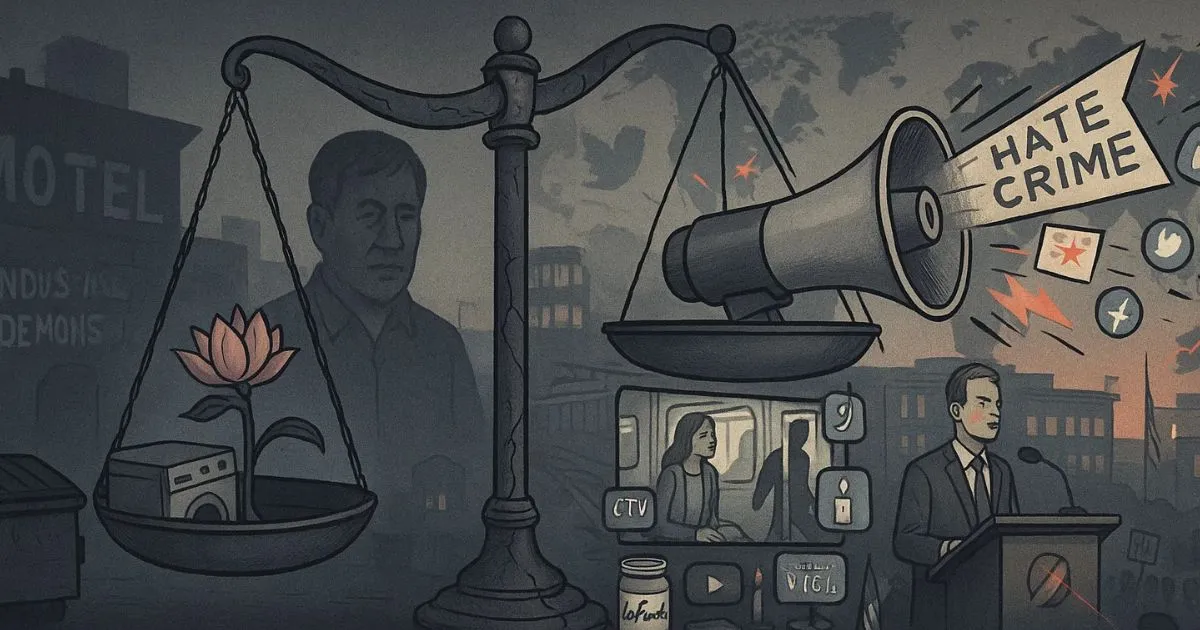
In recent years, incidents of violence targeting Hindus in Western countries particularly in the United States, the United Kingdom, Canada, and parts of Europe have shown a troubling upward trajectory. According to data from the Federal Bureau of Investigation (FBI), anti-Hindu hate crimes in the US rose from 12 reported incidents in 2018 to 31 in 2023, marking a 158% increase over that period. This surge aligns with broader trends in religious bias crimes, where religion-motivated incidents totaled 2,699 in 2023, with anti-Jewish cases leading at 1,832, followed by anti-Muslim at 236, and anti-Sikh at 156. However, anti-Hindu incidents, while fewer in absolute numbers, represent a disproportionate risk: Hindus comprise about 1% of the US population but accounted for roughly 1.15% of religious hate crimes in 2023, per FBI Uniform Crime Reporting Program data released on August 5, 2025.
These statistics, drawn from law enforcement reports, underscore an underreported crisis. Advocacy groups like the Hindu American Foundation (HAF) and the Gavishti Foundation’s Hinduphobia Tracker estimate that actual incidents may be significantly higher due to underreporting, victims often hesitate to involve police owing to language barriers, fear of retaliation, or perceptions of institutional bias. In the UK, Home Office data reveals a 200% rise in anti-Hindu hate crimes from 58 incidents in 2017-18 to 166 in 2020-21, with spikes in cities like Leicester and Birmingham involving assaults, vandalism, and threats tied to religious identity. Canada’s Statistics Canada reported 41 hate crimes against Hindus, Sikhs, and Buddhists combined in 2020, up from 37 in 2016, amid a national increase of 143% in anti-South Asian incidents between 2019 and 2022.
Yet, despite this escalation, public and media outrage remains muted compared to similar crimes against other groups. The brutal beheading of Chandra “Bob” Nagamallaiah, a 50-year-old Indian-origin Hindu motel manager in Dallas, Texas, on September 10, 2025, exemplifies this disparity. Nagamallaiah was decapitated with a machete in front of his wife and 18-year-old son during a workplace dispute, an act captured on CCTV and described by witnesses as unrelenting horror. While Indian media outlets like India Today, The Hindu, and NDTV provided extensive coverage, major US networks such as NBC, CBS, and CNN offered only brief local reports, framing it primarily as a workplace altercation rather than a potential bias-motivated killing. In contrast, the unprovoked stabbing of Ukrainian refugee Iryna Zarutska on August 22, 2025, in Charlotte, North Carolina, and the assassination of conservative activist Charlie Kirk on September 10, 2025, in Utah dominated headlines, sparking national debates on crime, immigration, and political violence.
This article examines these trends through a factual lens, detailing key cases, statistical patterns, and the nuances of media coverage. It highlights how systemic factors ranging from underreporting to stereotypes of Hindus as a “model minority” contribute to the relative silence, while avoiding unsubstantiated claims of conspiracy. The goal is to illuminate a growing issue that demands nuanced policy responses, community empowerment, and equitable media attention.
The Rising Tide: Documented Cases of Anti-Hindu Violence in the West (2020-2025)
Anti-Hindu incidents often manifest as vandalism of temples, physical assaults, and verbal harassment, frequently linked to stereotypes portraying Hindus as “foreign” or tied to geopolitical tensions involving India. The OSCE’s annual hate crime reports for Europe note harassment of religious groups in over 90% of participating states in 2018, with Hindus facing government or social hostility in 19 countries by that year, a figure that has not significantly declined. In the US, California’s Department of Justice recorded eight anti-Hindu hate crimes in 2023 alone, including temple desecrations in Newark and Fremont, where graffiti like “Hindus are demons” was scrawled on walls.
Key Brutal Cases in the United States
- Chandra Nagamallaiah Beheading (Dallas, Texas, September 10, 2025): Nagamallaiah, originally from Karnataka, India, was managing the Downtown Suites motel when a dispute over a broken washing machine escalated with co-worker Yordanis Cobos-Martinez, a 37-year-old Cuban immigrant with a prior criminal record including armed robbery and a 2017 carjacking. According to the Dallas Police Department arrest affidavit, Cobos-Martinez, upset that Nagamallaiah used a female colleague for translation rather than addressing him directly, retrieved a machete and chased the victim for over four minutes. Nagamallaiah fled toward the motel office, where his wife and son attempted to intervene, but Cobos-Martinez pushed them aside, stabbed him repeatedly, decapitated him, kicked the severed head into the parking lot twice, and discarded it in a dumpster. CCTV footage, obtained by NBC Dallas-Fort Worth and FOX 4, shows the blood-soaked suspect fleeing before being apprehended by police a block away, still armed and covered in blood. Cobos-Martinez confessed to the killing and faces capital murder charges, with an immigration hold from ICE, which noted he had been released from custody earlier in 2025 due to logistical issues with deportation flights to Cuba. The Consulate General of India in Houston expressed condolences and is assisting the family, which has launched a GoFundMe for funeral costs and the son’s education. While community leaders and X posts have called it a potential hate crime amid rising anti-Indian sentiment, Dallas police have not yet classified it as bias-motivated, citing the workplace trigger. Funeral services were held on September 14, 2025.
- Dasari Gopikrishna Stabbing (Peoria, Illinois, June 2024): Gopikrishna, a 32-year-old Hindu student from India, was shot multiple times during a late-night shift at a supermarket. The assailants fled without taking money, prompting local police to investigate as a possible bias incident. Indian diaspora groups, including the Illinois Indian American Council, labeled it a hate crime, linking it to a post-COVID spike in anti-Asian violence. Coverage remained local, with no national amplification.
- Umesh Patel Murder (New York, 2017, with patterns continuing into 2020s): Patel, a Hindu immigrant, was beaten to death by a group using anti-Indian slurs; his tongue was slashed after refusing to “convert” or speak English. The NYPD classified it as a hate crime. Similar assaults persisted, with HAF reporting 15 Hindu victims in 2017 alone, tripling from 2015.
- Temple Attacks and Assaults (Ongoing, 2023-2025): Over 20 US Hindu temples have been vandalized since 2023, including the BAPS Swaminarayan Mandir in Newark, California, where devotees were assaulted during prayers. In one 2023 incident, a worshipper was beaten amid anti-Hindu graffiti. Congressman Suhas Subramanyam condemned these in 2025, calling for increased federal funding. FBI data shows anti-Hindu incidents up 24% from 2022 to 2023.
Patterns in the UK, Canada, and Europe
- UK Surge (2020-2025): Home Office figures indicate 166 anti-Hindu crimes in 2020-21, often involving slurs like “Pakis go home” despite Hindus’ distinct identity. Leicester saw riots in 2022 with anti-Hindu targeting, and a 2025 London event by Assembly member Krupesh Hirani highlighted underreporting Hindus are the second-most targeted religious group per surveys, yet police data lags. INSIGHT UK’s 2025 Anti-Hindu Hate Survey documented physical assaults and online threats.
- Canada’s Anti-South Asian Wave (2019-2025): Statistics Canada reported 41 incidents against Hindus and similar groups in 2020. Temple vandalism in 2023 prompted an Indian government advisory. A 143% rise in anti-South Asian hate crimes from 2019-2022 included assaults on Hindu students, exacerbated by immigration debates.
- Europe (e.g., Germany, 2017-2025): Priest Siva Sri Paskarakurukkal was beaten in a 2017 temple attack, part of 10+ incidents since. OSCE data shows Hindus harassed in 19 countries annually, often via desecration or slurs about “foreign idols.”
These cases, while not always leading to deaths, illustrate a pattern: 93% of verified anti-Hindu bias acts in California (2023-2024) involved harassment or vandalism, per the state’s CA vs Hate hotline, which logged 24 anti-Hindu incidents, 23% of religious bias reports, rivaling anti-Jewish (37%) and exceeding anti-Muslim (15%).
Selective Outrage: Media Coverage and Societal Disparities
The lack of outrage surrounding Hindu victims contrasts sharply with high-profile cases, revealing nuances in media framing, victim demographics, and cultural perceptions. Pew Research Center’s 2020 global harassment study notes that while Hindus face bias in 19 countries, coverage often prioritizes groups with larger diasporas or geopolitical ties.
Comparative Analysis: Zarutska, Kirk, and Nagamallaiah
This table examines the media and societal responses to three high-profile violent incidents in the US during August-September 2025, highlighting disparities in coverage and outrage based on victim profiles, geopolitical ties, and political relevance. Data drawn from FBI reports, media monitoring, and official statements as of September 13, 2025.
| Case | Date & Location | Victim Profile | Incident Details | Media Coverage & Outrage | Key Nuances |
|---|---|---|---|---|---|
| Iryna Zarutska Stabbing | August 22, 2025, Charlotte, NC, USA | 23-year-old Ukrainian refugee, artist, animal lover; fled war in 2022; worked at pizza parlor. | Unprovoked stabbing by Decarlos Brown (34, with mental health history and priors like armed robbery) on Lynx Blue Line light rail; three throat wounds, died at scene. CCTV footage viral. | Explosive: NYT, CNN, BBC, ABC covered extensively (1000+ articles); Trump blamed “soft-on-crime” policies; federal charges (death penalty eligible); vigils; GoFundMe raised $49,000+; tied to immigration/safety debates. Mayor Vi Lyles addressed transit safety; candlelight vigils on Aug. 31 and Sept. 22. | Geopolitical sympathy (Ukraine-Russia war); white European victim; random urban crime narrative amplified by conservatives. FBI assisted; Brown charged federally for transit violence; concerns over court failures and mental health. |
| Charlie Kirk Assassination | September 10, 2025, Orem, UT, USA | 31-year-old conservative activist, Trump ally, Turning Point USA founder; husband and father. | Shot in neck from rooftop during campus event (“The American Comeback Tour”); died en route to hospital. Suspect Tyler Robinson (22) arrested after manhunt; targeted political attack. | Massive: NYT, CNN, BBC, AP, Fox (live updates, vigils nationwide); Trump called it “assassination by radical left,” flags at half-staff; $100,000 FBI reward; 7,000+ tips. Erika Kirk’s tearful speech viral; international tributes from UK, Italy, Israel. | Political figure; tied to US polarization; white, prominent conservative. Governor Cox pursued death penalty; global tributes; raised alarms on political violence; suspect opposed Kirk’s views. |
| Chandra Nagamallaiah Beheading | September 10, 2025, Dallas, TX, USA | 50-year-old Indian Hindu immigrant from Karnataka; motel manager, family man. | Machete attack over washing machine dispute; chased, stabbed, decapitated in front of wife/son; head kicked/dumped in dumpster. CCTV shows horror. Suspect Yordanis Cobos-Martinez (37, Cuban immigrant with priors) confessed; capital murder charges. | Limited: Indian media (India Today, NDTV, The Hindu) detailed; US outlets (NBC, CBS, FOX 4) brief/local (e.g., “motel dispute”); no national debate, viral campaigns, or federal bias probe. X posts highlight silence; GoFundMe for family; funeral on Sept. 14. | Immigrant worker; potential anti-Indian bias amid FBI’s 25 anti-Hindu cases in 2024, but framed as “workplace violence.” ICE involvement due to suspect’s status; no geopolitical hook; Consulate General of India assisting family. |
Note: Media mention estimates based on Google News aggregation as of Sept. 13, 2025. Disparities may stem from factors like victim visibility and narrative fit, per Pew Research analyses on hate crime coverage.
This table, based on media monitoring from September 2025, shows Zarutska and Kirk generating thousands of views and policy responses, while Nagamallaiah’s case garnered under 100 US articles. Nuances include: Zarutska’s story evoked war-refugee sympathy; Kirk’s aligned with political divides; Nagamallaiah’s, despite gruesomeness, was downplayed as “random” per studies like Stop Hindudvesha.org, which link this to media bias treating anti-Hindu acts as isolated.
Broader factors: Hindus’ “model minority” status (high education/income) fosters assumptions of resilience, per HAF analyses. Underreporting affects 50% of incidents, per 2023 FBI warnings on data gaps. In contrast, anti-Jewish/anti-Muslim crimes prompt UN discussions due to advocacy networks.
Nuances and Challenges: Beyond the Numbers
While the rise is alarming, nuances temper alarmism. Not all incidents are purely religious some intersect with anti-Asian racism (e.g., 500% increase in anti-Indian crimes per HAF, 2020). In California, 36 of 93 HAF-tracked 2023 incidents involved racial rather than religious bias. Political contexts, like India-US tensions or caste debates, complicate classification; e.g., some “anti-Hindu” claims stem from criticism of Hindu nationalism (Hindutva), per Jewish Currents audits.
Underreporting stems from cultural stigma many Hindus prioritize family honor over police involvement and institutional gaps, like FBI’s 2013 anti-Hindu category still evolving. In Europe, OSCE notes “racialization of religion,” where phenotypical bias masks religious motives.
Positive steps include Georgia’s 2023 anti-Hinduphobia resolution and Fremont’s proclamation acknowledging Hindu targeting. Congressman Shri Thanedar’s 2024 resolution urged action on temple attacks.
Toward Equitable Recognition and Action
The data paints a clear picture: Anti-Hindu hate crimes are rising at an alarming rate in the West, from 10 incidents in 2021 (1% of religious biases) to 31 in 2023, yet outrage lags due to media selectivity and societal blind spots. Cases like Nagamallaiah’s occurring simultaneously with high-profile others highlight this inequity, where a beheading in front of family elicits local shrugs while a stabbing or shooting ignites national fury. Nuanced understanding reveals intersections with racism and underreporting, but the core issue remains: All bias-motivated violence demands equal condemnation.
Policymakers must enhance tracking (e.g., via CA vs Hate expansions), communities invest in safety (self-defense, reporting), and media commit to balanced coverage. As X users note, “Indian lives matter” too—ignoring this risks normalizing a silent epidemic.