10 Home Plants for Love, Romance and Positive Energy
Can a plant really bring more love into your home? Not literally, perhaps, but some plants have been associated for centuries with love, romance, harmony and emotional wellbeing…

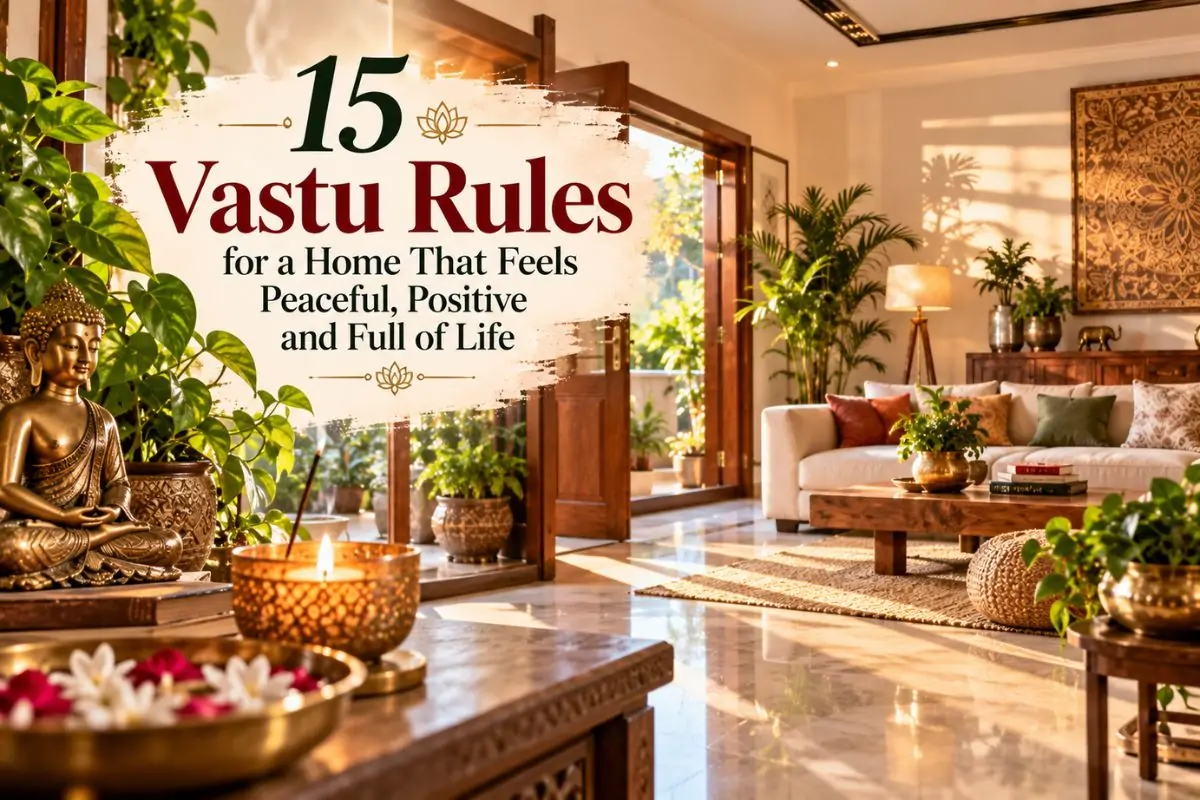
Your home isn’t just four walls, furniture and a collection of things you’ve accumulated over the years. It is where you wake up, rest, argue, laugh, work, eat and return after a difficult day.
That is why the ancient Indian architectural tradition ofVastu Shastrapays so much attention to how a home is arranged.
Vastu is traditionally concerned with directions, spatial arrangement, natural elements and the relationship between a building and its surroundings. While its energetic claims are matters of tradition rather than established science, many of its principles can also inspire thoughtful, uncluttered and comfortable interiors.
Here are 15 Vastu principles worth knowing.
In Vastu, the main entrance is traditionally considered an important point through which energy enters the home.
Keep the area clean, well-lit and free from unnecessary shoes, broken objects and piles of clutter.
Even without the Vastu angle, a welcoming entrance can immediately make a home feel more organised.
The north-east direction, traditionally known asIshan, has a particularly important place in Vastu.
It is often associated with clarity, spirituality and positive energy.
Many Vastu practitioners recommend keeping this area relatively open, clean and uncluttered.
Your bedroom should feel restful.
Avoid allowing boxes, unused furniture, piles of clothes and miscellaneous objects to slowly take over the space.
Vastu traditions associate clutter with stagnant energy, while from a practical perspective, a less cluttered bedroom can simply feel calmer.
Traditional Vastu recommends placing the bed so that the sleeper’s head is generally toward the south or east.
The idea is connected to directional principles within Vastu Shastra.
Regardless of whether you follow the tradition literally, positioning your bed away from doors and creating a comfortable sleeping environment can make the room feel more secure.
One of the most recognisable Vastu recommendations concerns mirrors.
Traditionally, having a mirror directly reflecting the bed is discouraged.
If your bedroom has a large mirror facing the bed and you find the reflection distracting at night, moving it or covering it before sleep is an easy experiment.
Plants can make an interior feel fresher and more alive.
Vastu traditions often recommend certain plants for particular areas of the home, including plants such as money plant, bamboo and tulsi.
The practical rule is even simpler: choose healthy plants suited to the light and humidity your home actually receives.
A dying plant is unlikely to make any room look better.
This is one of those Vastu suggestions that also happens to make perfect household sense.
Broken clocks, cracked mirrors, damaged furniture, leaking taps and appliances that haven’t worked for months tend to remain in homes because we keep telling ourselves we’ll repair them “someday.”
Vastu traditions often associate broken objects with stagnant energy.
Your home may simply feel better once the broken things are finally dealt with.
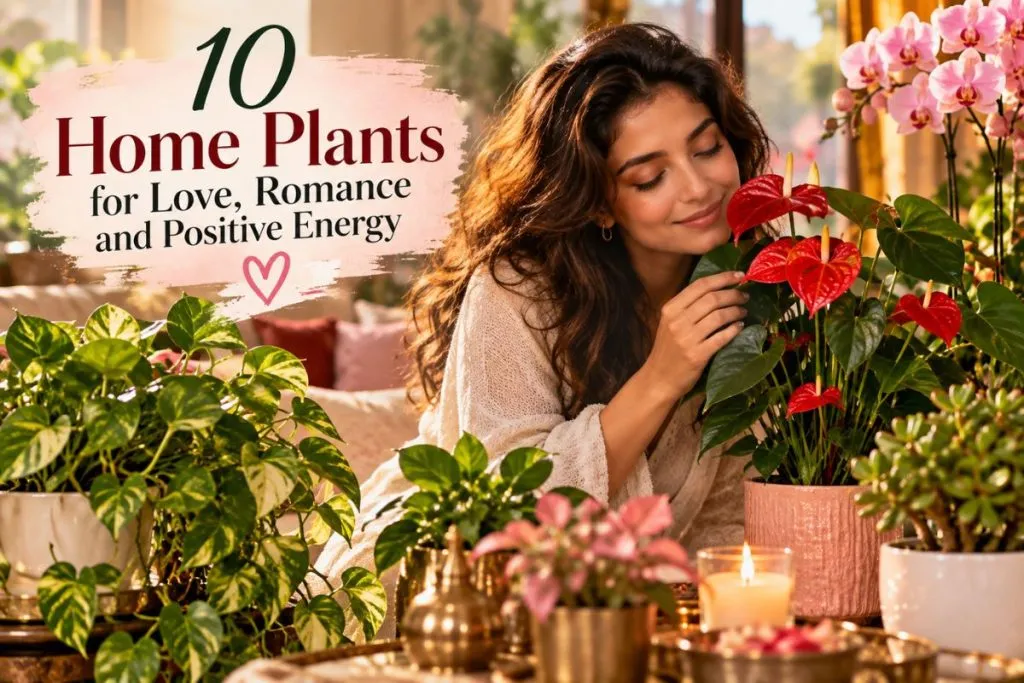
Can a plant really bring more love into your home? Not literally, perhaps, but some plants have been associated for centuries with love, romance, harmony and emotional wellbeing…
The kitchen is associated with thefire elementin Vastu.
Traditional recommendations often place importance on the location of the kitchen and the arrangement of cooking appliances.
At the everyday level, keeping the stove, counters and storage areas clean can make one of the busiest rooms in your home considerably more pleasant.
Shoes naturally accumulate near the door.
But when they become an enormous pile, the entrance immediately feels chaotic.
Use a closed shoe cabinet or an organised rack and keep only frequently used footwear easily accessible.
This is one Vastu-inspired change that can improve the appearance of your home almost instantly.
Dark, neglected corners are traditionally considered undesirable in Vastu.
Instead of allowing parts of your home to remain permanently gloomy, use natural light wherever possible.
For darker areas, warm artificial lighting can make the space feel significantly more inviting.
Vastu traditions often discuss colours in relation to different directions and rooms.
For a modern home, you don’t necessarily have to eliminate dark colours.
Instead, balance them.
A deep wall colour can look beautiful when paired with sufficient natural light, lighter furnishings and appropriate accent pieces.
The central area of a home has special importance in traditional Vastu and is sometimes associated withBrahmasthan.
Many Vastu practitioners recommend keeping this area open and relatively uncluttered.
In practical interior design, an open central space can also improve movement and make a home feel larger.
Your surroundings influence your everyday experience.
Photographs of loved ones, artwork, travel memories and objects with personal meaning can make a house feel like your own.
Vastu traditions also pay attention to the symbolism of paintings and decorative objects.
The simplest principle is to avoid displaying imagery that consistently makes you feel uncomfortable or unhappy.
A dripping tap might seem insignificant, but it can waste water, damage surfaces and become an annoying background problem.
Vastu traditions sometimes attach symbolic significance to leaking water and financial loss.
You don’t need to accept the symbolism to appreciate the practical lesson:
Fix the leak.
Perhaps the most useful principle of all is not about a particular direction, plant or object.
Your home should support the life you actually live.
Keep it clean. Let in light. Remove unnecessary clutter. Create comfortable corners. Bring in things you genuinely love. Make space for rest.
Vastu can offer a traditional framework for thinking about these choices, but your home doesn’t need to become a rigid checklist of rules.
The most beautiful home isn’t necessarily the one that follows every Vastu rule.
It is the one that feels calm when you walk through the door, comfortable when you wake up, and completely yours when the rest of the world becomes too loud.