Algorithms Predict Desires Before We Consciously Form Them

How Invisible Systems Learn Your Mind Faster Than You Do
You didn’t decide to want that product.
You didn’t plan to click that video.
You didn’t intend to feel insecure after scrolling.
And yet, it happened.
Not by accident.
Welcome to the age where algorithms quietly anticipate your needs, shape your emotions, and guide your choices before your conscious mind even catches up.
This is not science fiction. This is daily life.
Table of Contents
The Silent Shift: From Responding to Predicting
Early technology waited for commands.
Modern technology anticipates.
Today’s systems do not merely react to your actions. They analyze patterns across billions of users, learn behavioral rhythms, and predict what you will likely do next.
Every swipe, pause, like, search, and scroll feeds massive machine-learning models operated by companies such as Google, Facebook (Meta), and OpenAI.
These platforms don’t just store data.
They model human psychology at scale.
The result?
Systems that often know:
- When you’re bored
- When you’re lonely
- When you’re vulnerable
- When you’re likely to buy
- When you’re emotionally receptive
…sometimes before you realize it yourself.
This is not personalization anymore.
This is behavioral prediction.
How Algorithms Learn Your Desires
Let’s be precise.
Algorithms don’t “read minds.” They do something more powerful: they identify probabilistic patterns across massive populations and apply them to individuals.
Here’s what they track:
- Time spent on content
- Micro-pauses while scrolling
- Repeated searches
- Purchase history
- Location data
- Device usage
- Emotional signals inferred from interaction style
From this, predictive models estimate:
What will this person most likely want next?
Not philosophically.
Statistically.
Your feed is not chronological.
Your ads are not random.
Your recommendations are not neutral.
They are optimized outcomes.
Designed to maximize engagement, retention, and conversion.
You are not the customer.
Your attention is.
Desire Engineering: When Choice Stops Being Free
Here’s the uncomfortable truth:
Most modern platforms are not built to serve your wellbeing.
They are built to keep you inside the system.
Algorithms learn which content makes you stay longer. Which images trigger comparison. Which headlines spark outrage. Which products exploit emotional gaps.
Over time, they begin nudging:
- What you find attractive
- What you fear
- What you aspire to
- What you believe is “normal”
This is called choice architecture.
You feel autonomous.
But your options are being quietly curated.
Psychologists call this soft coercion.
You think you discovered something organically.
In reality, it was placed in front of you at the exact moment your behavior pattern suggested susceptibility.
That is not coincidence.
That is computation.
Emotional Targeting: The New Marketing Frontier
Traditional advertising targeted demographics.
Modern algorithms target states of mind.
They don’t ask:
“Is this user female, 25–35?”
They ask:
“Is this user tired, insecure, nostalgic, or seeking validation right now?”
This is why ads appear when you feel low.
Why motivational videos surface after late-night scrolling.
Why luxury products show up when your confidence dips.
Your emotional data is inferred.
Then monetized.
We have entered the era of predictive vulnerability.
The Cultural Cost: Identity Shaped by Code

Algorithms don’t just predict desires.
They manufacture norms.
Beauty standards are filtered.
Success is aestheticized.
Happiness is curated.
Young people grow up comparing themselves to algorithm-selected highlights of other people’s lives. Creativity becomes trend replication. Opinions become engagement bait.
Even identity is optimized for visibility.
You start performing instead of living.
And slowly, subtly, your sense of self begins aligning with what gets rewarded digitally.
This is not accidental.
Platforms optimize for behavior that keeps users engaged.
Human authenticity does not always perform well.
When Machines Know You Better Than You Know Yourself
The most unsettling aspect isn’t surveillance.
It’s prediction accuracy.
In many documented cases, algorithms have identified:
- Pregnancy before families knew
- Depression before diagnosis
- Relationship breakdowns before conversations happened
Not through magic.
Through pattern recognition.
Machines don’t understand emotions.
They understand correlations.
And correlations, at scale, become eerily precise.
Your future behavior becomes a forecastable dataset.
You become predictable.
That’s power.
The Ethical Crisis We Are Not Ready For
We are building systems that:
- Influence elections
- Shape mental health
- Redirect consumer behavior
- Amplify social divisions
- Centralize informational power
Yet regulation lags years behind innovation.
Most users do not understand how recommendation engines work. Most governments lack technical literacy. Most corporations prioritize growth over responsibility.
We are letting invisible systems guide human evolution without public consent.
That is historically unprecedented.
So What Can We Do?
This isn’t about abandoning technology.
It’s about reclaiming agency.
Start with awareness:
- Question why content appears
- Limit passive scrolling
- Disable unnecessary tracking
- Diversify information sources
- Practice intentional digital consumption
Individually, these are small acts.
Collectively, they matter.
Because the future of humanity should not be decided solely by engagement metrics.
Final Thought: The Most Dangerous Algorithm Is the One You Don’t See
Algorithms predicting desires before we consciously form them is not just a technical milestone.
It is a philosophical turning point.
We are outsourcing intuition.
Delegating curiosity.
Allowing machines to pre-shape human experience.
Technology should serve human consciousness.
Not replace it.
If we don’t actively participate in shaping this digital future, we risk becoming optimized users in systems we never agreed to live inside.
And that is a price far higher than convenience.
MUST READ
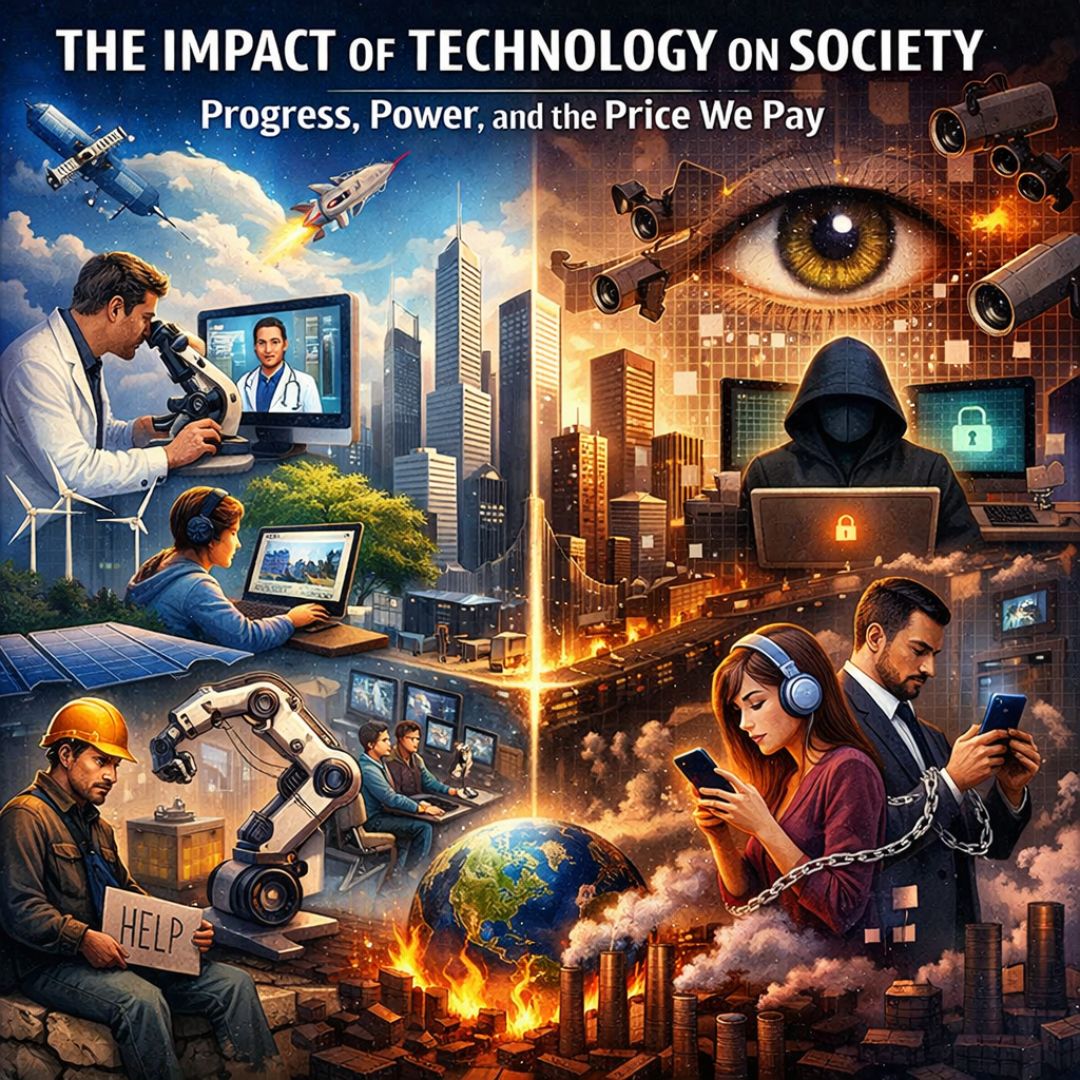
The Impact of Technology on Society
Explore how rapid technological advancements are reshaping culture, communication, work, and daily life — the benefits, challenges, and future trends.
Read Full Article →