Ancient Indian Rituals Still Practiced for Healing, Wholeness and the Sacred Feminine
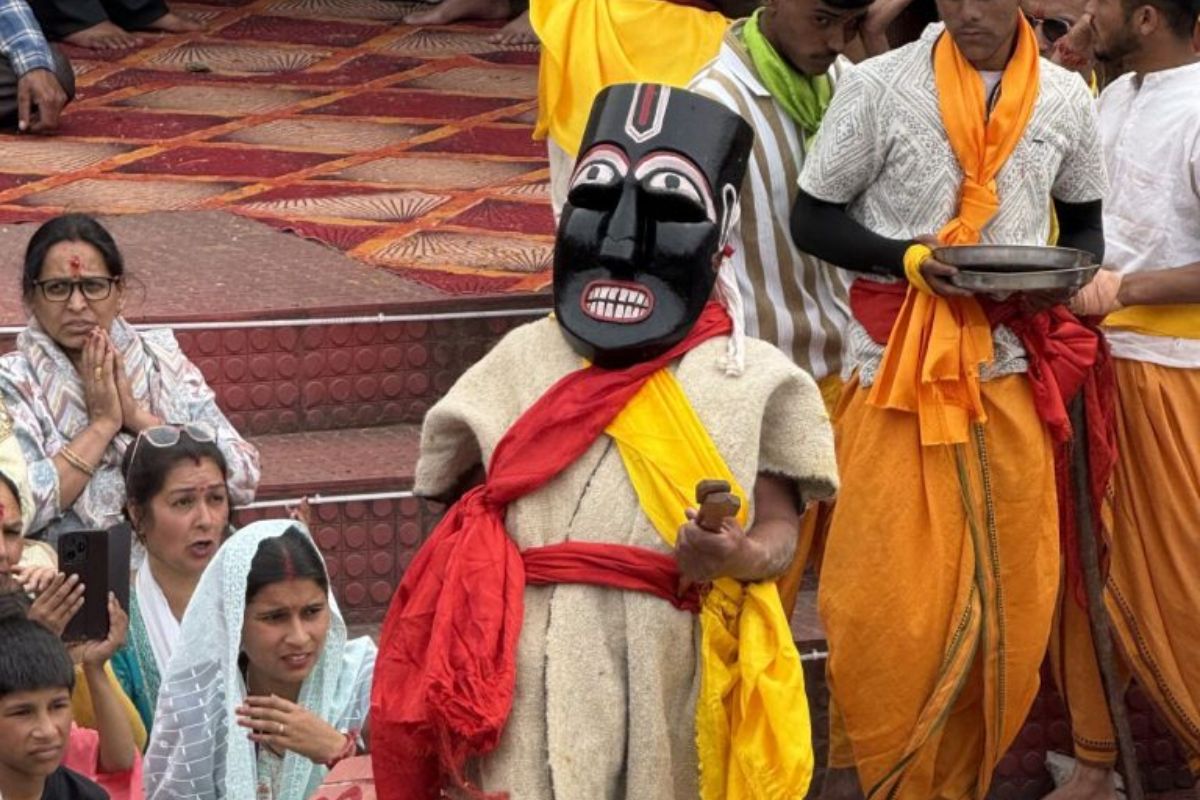
There is a kind of knowledge that never made it into textbooks.
It did not need to. It travelled differently. Through hands placed on foreheads at the right moment. Through chants learned before the alphabet. Through the particular way a woman sits beside a fire at a certain hour and does something with ash and intention that her grandmother taught her and her grandmother’s grandmother taught her and nobody has ever written down because writing it down would miss the point entirely.
This knowledge is still alive in India.
Not in museums. Not in academic papers. Not in YouTube documentaries with dramatic background music and expert commentary.
In villages. In specific families. In the hands and voices and memories of people who are still here, still practicing, still holding something open that the modern world has been trying to close for decades.
This article is about those people. And about the rituals they carry. And about why women specifically need to know that this world exists, not as a tourist attraction or a spiritual trend, but as evidence that there are ways of understanding the human body, the grieving mind, and the searching soul that predate every therapy modality, every wellness retreat, every self help framework that modern life sells us.
Some of these rituals are gentle. Some are fierce. Some will make you sit quietly for a long time afterward. All of them are real.
The Jagir of Kumaon: When the Deity Arrives
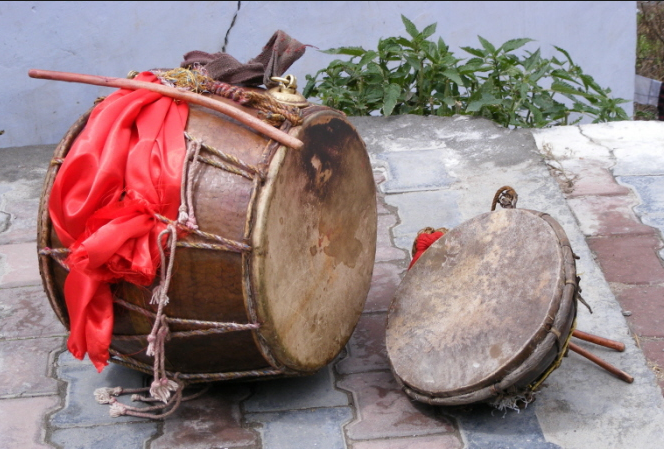
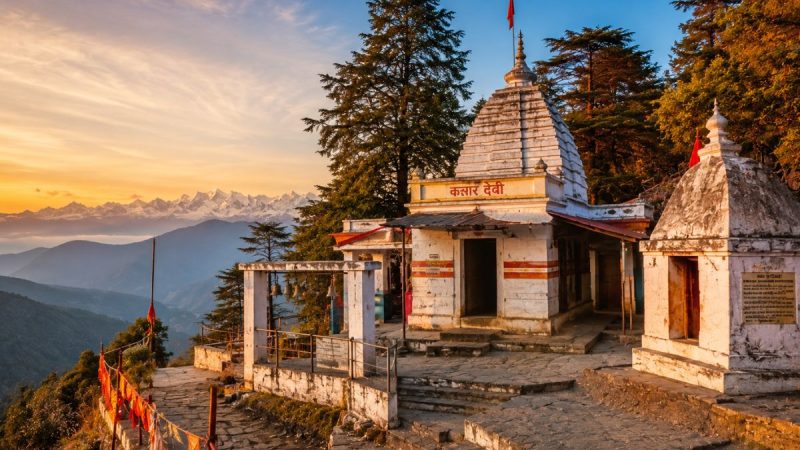
In the villages of Kumaon in Uttarakhand, there is a ceremony called jagir that most Indian travel writing has never described accurately because the people who write travel content have usually not sat inside one.
Jagir is not a performance. It is not a cultural show for visitors. It is a living, functioning spiritual practice in which the village deity is called down from the divine realm and invited to speak through a chosen human vessel. The drums begin. A specific rhythm, not random, not decorative, but a precise sequence that the drummers have inherited and that serves a specific energetic function. The tempo builds across minutes that feel longer than they are. The air in the gathering changes in a way that people who have witnessed it describe differently but consistently. Something shifts.
The deity arrives in the body of the chosen person. And when they speak, they speak as the deity. They address the community. They answer questions that families have carried for months or years. They identify illness. They prescribe remedies. They settle disputes. They name things that have been unnamed.
For women in these communities, the jagir is one of the few spaces where the most pressing and unspoken things get addressed publicly. Questions about a daughter’s marriage. About a child’s persistent fever that medicine has not touched. About a feeling in the household that something is wrong without anyone being able to say what. The deity hears all of it. And the community witnesses the hearing. There is a collective exhale in that witnessing that functions as its own healing.
The drums stop. The vessel returns to themselves slowly. The ceremony closes. And the village goes back to being a village, except that something has been addressed that could not have been addressed any other way.
Jagir happens in remote Kumaon villages particularly around significant seasonal and lunar moments. If you are traveling these areas and your homestay host mentions one happening in a nearby village, ask gently if attendance is welcome. Many communities will include respectful visitors. Sit at the edge. Stay quiet. Do not photograph. Just witness.
It will stay with you.
If the Kumaon traditions called something in you, read our complete guide to the offbeat temple villages of Uttarakhand where these rituals still live
The Doli That Moves at Night: Kaali Maa in Uttarakhand and Himachal
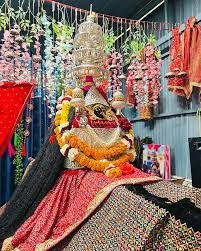
In dozens of villages across Uttarakhand and parts of Himachal Pradesh, the local people know which roads belong to the goddess after dark.
The doli is a palanquin, a covered litter traditionally carried on shoulders. In the living spiritual geography of these mountain communities, certain goddesses, Kaali Maa most prominently, are understood to travel between their shrines at night in this form. The routes are known. The timing is known. And the villages that sit along these routes observe a practice of clearing those roads after dusk that is not superstition but something older and more specific than that word allows.
The healing dimension of this practice is in what it creates in the community. A shared understanding that certain spaces are sacred at certain times. A collective agreement to make room for the divine rather than assuming human movement takes precedence. A practiced humility that is daily and physical rather than theoretical.
Women in these communities speak of the doli routes with a familiarity that makes clear this is not mythology for them. They will tell you matter-of-factly: do not walk that path after nine. Not because something bad will happen to you, necessarily. But because that path is not yours at that hour. It belongs to her.
For women travelers in these regions, this understanding changes how you move through the landscape. You begin to read the geography not just as terrain but as a living map of presences and obligations. That shift in perception is itself a form of healing because it reminds you that you are not the only thing that matters in a landscape. That the world contains more than human concerns. That stepping aside is sometimes the most intelligent and the most sacred thing you can do.
Ramman: The Mountain Ritual That UNESCO Noticed
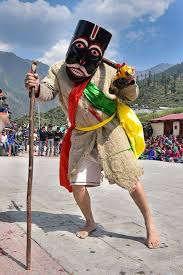
High in the Saloor-Dungra villages of the Chamoli district in Uttarakhand, there is a ritual called Ramman that has been performed continuously for centuries and that UNESCO recognised in 2009 as an Intangible Cultural Heritage of Humanity.
Ramman honors the deity Bhumiyaldevta through song, dance, and masked performances in which every caste plays a specific role, preserving both spiritual and social unity simultaneously. The masked characters represent deities, demons, and heroes drawn from Hindu mythology but filtered through the specific local folklore of that particular mountain community. No two villages perform Ramman identically. It is not a standardised ritual. It is a living conversation between a community and its sacred history that has been evolving for as long as the community has existed.
What makes Ramman significant for healing is what the masks do. When a performer puts on a deity mask, they are understood by the community to become temporarily inhabited by that energy. The boundary between representation and presence dissolves. The deity walks among the people. And the people receive that presence not as spectacle but as medicine for whatever the community is collectively carrying at that moment.
For women specifically, Ramman contains feminine divine energies that are expressed through the masked tradition in ways that are specific to each village. The goddesses represented are not decorative. They are fierce, active, interventionist presences who have specific relationships with the families of that village going back generations.
Visiting Saloor-Dungra during Ramman season, which falls in April or May, requires planning and a genuine intention to be respectful rather than simply present. This is not a festival designed for outsiders. But communities that feel a visitor’s sincerity tend to be generous with it.
Mudiyettu of Kerala: The Goddess Defeats the Demon Every Year
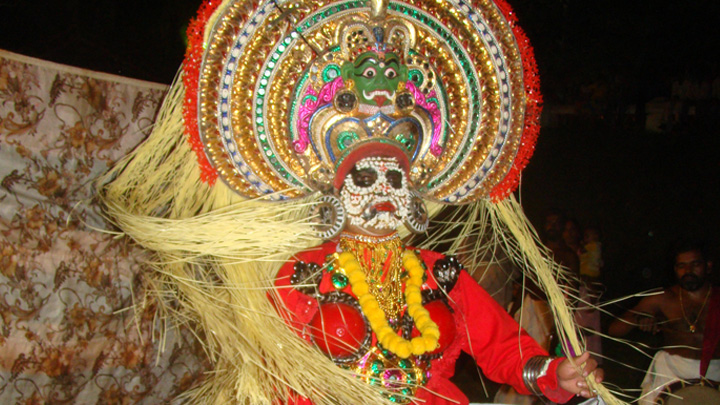
In the temple villages of central Kerala, Mudiyettu is a sacred enactment of Goddess Kali’s victory over the demon Darika that transforms the entire temple into a ritual theatre, with whole villages participating in ways that reinforce unity and transmit moral and spiritual values across generations.
What no description of Mudiyettu adequately captures is the physical intensity of the preparation. Participants undergo elaborate fasting and spiritual observance before they even put on their costumes. The performers do not simply dress as the goddess. They prepare their bodies and minds across days to become a worthy vessel for that energy. The distinction matters. This is not acting. It is a different kind of embodiment that the Malayalam tradition has developed and refined across centuries.
The ritual happens at night. The temple torches. The percussion builds to something that is felt in the chest before it is heard by the ears. And then Kali arrives in the form of the performer and defeats Darika in a confrontation that the village has seen every year for generations and that does not become routine because it is not meant to be routine. It is meant to be felt freshly each time. The goddess wins again. And the village breathes again.
Kerala also holds within it a parallel healing tradition through the Mannan community, hereditary healers whose ancient and ancestral methods include both medicines and rituals, and whose knowledge of midwifery and childhood ailments is considered so reliable that even elite Brahmin physicians consult them when their own children fall ill.
This layering of feminine knowledge, the goddess who defeats darkness in the public ritual and the women healers who manage the private crises of birth and childhood, is Kerala’s particular genius. The sacred and the practical have never been separated here. They are understood as the same thing approached from different angles.
These rituals live in the shadow of some of India’s most powerful sacred sites. For women called to visit the goddess at her most ancient addresses, read our complete guide to India’s most powerful Shakti Peethas.
The Women-Only Hunt of the Oraon Tribe: Jani Shikar
Every twelve years, Oraon women in the remote hills of Jharkhand, Chhattisgarh, and Odisha transform into hunters. Dressed as men, armed with bows, arrows, and spears, they head into the forest while the men stay home. Called Jani Shikar or Mukka Sendra, this ritual is at once a raw celebration of female strength and a plea to the spirits for good harvests. The ritual begins at dawn with priestly blessings at the village akhara.
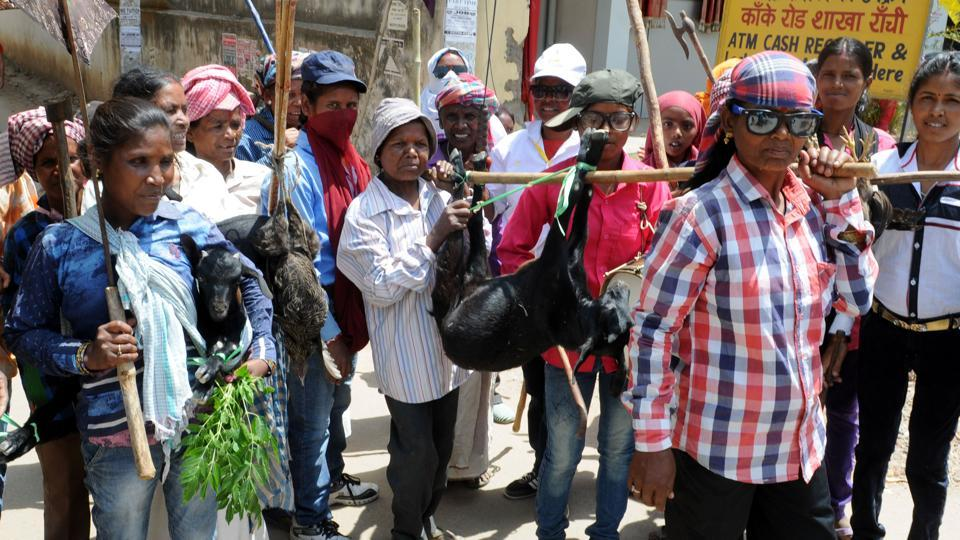
For a RealShePower reader, this ritual deserves a long pause.
Twelve years. Once every twelve years, the women of this tribal community take their bows and go into the forest together and the men stay home. Not as a festival in the modern sense. Not as a cultural event with a stage and a PA system. As a sacred obligation. As a thing the women do because the community’s relationship with the forest spirits requires it of them specifically and the men’s presence would disrupt something essential.
The inversion is total and intentional. For those days, the women occupy the forest space that is ordinarily considered male. They hunt. They make decisions. They perform the ritual that keeps the community’s relationship with the land fertile and intact. And the men wait.
This is not feminism imported from the outside. This is an indigenous understanding, thousands of years old, that certain kinds of sacred power are specifically feminine and that the community’s survival depends on that power being honored and exercised on its own terms.
The next Jani Shikar cycle can be tracked through contact with tribal cultural organizations in Jharkhand. Witnessing it requires relationships and trust built over time. It is not a drop-in experience. But knowing it exists, understanding what it means, changes something in how you think about what ancient India understood about women that we have been busy forgetting.
Mayong, Assam: The Village That Heals with Knowledge
Assam’s tiny Mayong village has long been called India’s capital of black magic, but this description misses what Mayong actually is, which is a repository of healing knowledge so old and so specific that modern pharmacology has only recently begun to take it seriously.
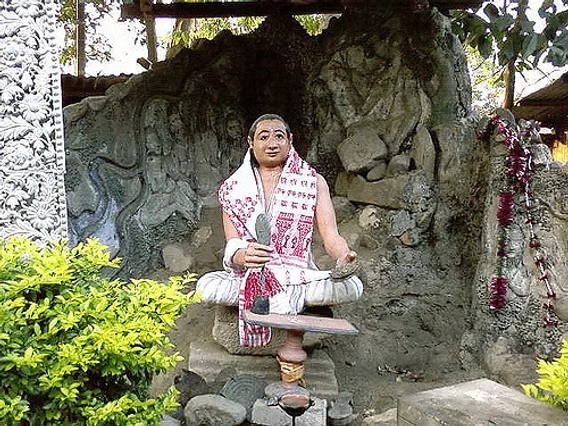
Mayong sits near the Brahmaputra river in Morigaon district and its healers, called baidyas, practice a form of tantric healing that combines specific herbs, specific chants, and specific ritual sequences in combinations that are hereditary and oral. The knowledge does not transfer through books. It transfers through apprenticeship within families across generations.
Women healers in Mayong specifically hold knowledge of reproductive health, of difficult pregnancies, of postpartum conditions, and of mental and emotional disturbances that the community calls spirit-related but that a psychologist would recognize as trauma, grief, dissociation, and anxiety. The names are different. The understanding that something has gone wrong in the relationship between a person’s inner world and the outer one is the same.
What Mayong offers the curious traveler is not a magic show. It is contact with a completely different epistemology. A way of understanding illness and healing that begins from different premises than modern medicine and arrives at outcomes that modern medicine sometimes cannot explain and sometimes quietly replicates in its own language.
Approach Mayong with genuine curiosity and zero sensationalism. The village has been written about in ways that reduce it to spectacle and the community is understandably guarded as a result. Come as a learner. Leave the camera in the bag.
Hodopathy of Jharkhand: The Unsystematized Treasure
In Jharkhand, Hodopathy is a treasure trove of knowledge held by the Oraon and Gond tribal communities, practiced across generations as an unsystematized gem that stands as a bridge between ancestral wisdom and the relentless march of modernity.
Hodopathy is the collective term for the healing practices of the Ho tribe and related communities. It encompasses herbal medicine, ritual healing, bone-setting practices that village practitioners perform with a precision that orthopedic surgeons have documented with surprised respect, and a system of understanding mental health through the lens of community relationship and spiritual balance rather than individual pathology.
The Ho understanding of mental illness is particularly relevant for urban Indian women reading this article. In Hodopathy, what we call depression or anxiety is often understood as a disruption in the relationship between a person and their community or their ancestors. The treatment therefore is not individual. It is communal. It involves the healer, the family, and sometimes the wider village. It involves ritual restoration of relationships that have been broken or neglected.
For women who have experienced the particular loneliness of modern Indian life, the sense of being surrounded by people and yet profoundly unseen and uncontained, this understanding of healing as a communal rather than individual project is not just interesting. It is pointed.
The Bhopa Healers of Maharashtra and Rajasthan
In Maharashtra, traditional healers known as Bhopas or Bhagats serve as custodians of age-old wisdom, treating physical and spiritual ailments through a practice that involves rituals, prayers, and herbal medicines in a harmonious integration of the natural and spiritual realms.
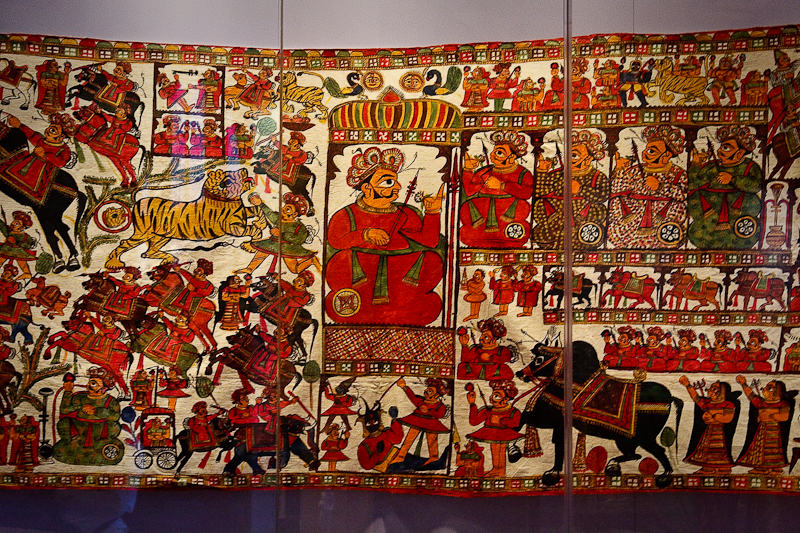
In Rajasthan, the Bhopa tradition takes a specific form through the Pabuji ki Phad, a painted scroll storytelling tradition in which the Bhopa healer unrolls a large cloth painting of the deity Pabuji and sings the deity’s epic through the night while his wife holds the lamp that illuminates the painting. The ritual is both healing ceremony and community gathering. The sick person for whom the ceremony is performed sits before the scroll. The story is sung. And within the story, within its specific sequence and its specific songs, something shifts for the person sitting before it.
This is narrative healing in its most ancient and complete form. The understanding that humans are healed by story, by being placed within a larger story than their own suffering, is at the heart of the Bhopa tradition. Every therapy modality that uses storytelling as a healing tool is, whether it knows it or not, working in the shadow of something the Bhopa tradition has been doing for a thousand years.
The Ladakhi Oracle Tradition: The Body as Channel
In the remote villages of Ladakh, Amchi healers offer traditional pulse readings in which healers assess circulation and energy before suggesting personalised guidance on diet and lifestyle, and travelers can consult Ladakhi oracles, revered spiritual figures who enter a trance to answer questions and offer blessings of health and good fortune.
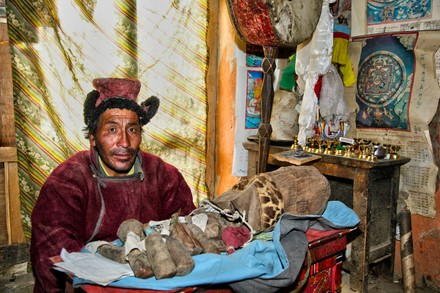
The oracle tradition in Ladakh is connected to the Tibetan Buddhist framework but carries local variations specific to each valley and each village. The oracle, called a lhamo or lhapa depending on the region and gender, enters an altered state through specific ritual preparation and becomes a channel for divine guidance. Questions about health, about direction, about relationships, about unresolved grief are addressed through the oracle in a way that the community accepts as authoritative.
What is significant for women is that female oracles, lhamos, are not rare in Ladakh. In several villages, the oracle tradition is specifically feminine. The village’s relationship with the divine is maintained through the body and the voice of a woman who has been identified as having this capacity, often from childhood, and who has been prepared for it through years of spiritual training.
This is a tradition in which women’s bodies are understood as having a specific spiritual capacity that serves the entire community. Not as a burden. As a gift that the community honors and protects.
What This All Means for the Modern Indian Woman
You may be reading this from a city. From a flat with sealed windows and a screen that has been demanding your attention since you woke up. You may be tired in a way that sleep has stopped fixing. You may have tried the apps and the journaling and the therapy sessions and the yoga retreats and still feel that something essential is missing in the way you understand yourself and your place in the world.
The rituals in this article are not prescription. They are not a suggestion that you abandon modernity and move to a village. They are evidence.
Evidence that for thousands of years, in dozens of traditions across this country, human beings understood that healing requires community. That the body holds things the mind cannot name. That the divine is not an abstraction but a presence that can be called, can arrive, can speak, can heal. That certain kinds of knowledge live in specific bodies and specific lineages and cannot be replicated by a search engine or a streaming service. That women’s bodies have always been understood, in the deepest traditions of this land, as sacred channels rather than problems to be managed.
That understanding did not disappear. It went into the villages. It went into the families that kept the drums. Into the women who learned the chants from their mothers who learned them from theirs. Into the hands of the Bhopa unrolling his painted scroll in the dark. Into the voice of the oracle answering questions the community cannot answer for itself.
It is still there.
India keeps its oldest knowledge in its most overlooked places. And if you go there, and go quietly, and go with genuine respect rather than the hunger of a tourist, it will show you something about yourself that no amount of city living could have surfaced.
The villages remember what we forgot. That is the whole of it.
✦ RealShePower Travel Genie
Never approach any of these rituals as a spectator sport. The single most important thing you can bring to a village ritual is genuine humility and zero agenda. Ask your homestay host or a trusted local contact about what is happening in nearby villages during your visit and follow their guidance on what is appropriate to attend. Carry a simple cotton dupatta to cover your head when entering any sacred space. Do not photograph ceremonies unless explicitly invited to do so and even then, ask yourself honestly whether the photograph serves the moment or interrupts it. If you witness something that moves you deeply, sit with it before you share it. Some experiences are yours to keep rather than post. The most healing thing about these rituals is not the ritual itself. It is the reminder that you live in a country whose villages are still holding open a door to something ancient and real. You do not have to understand it fully to be changed by it.
RealShePower — World’s Best Women Empowerment Portal
RealShePower. Because the oldest wisdom in this land was always meant for you.