The DIY Hair Mask for Fast Hair Growth in 3 Weeks. Try It Now
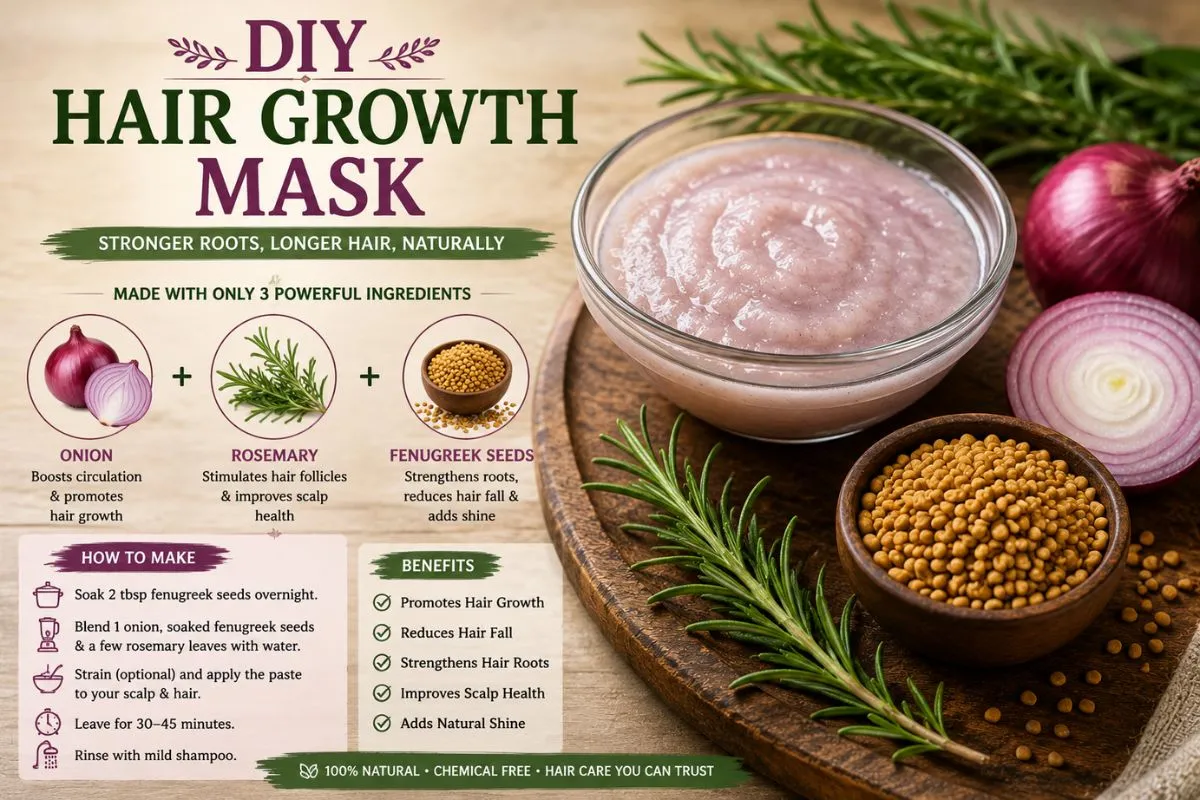
- Rosemary oil has real clinical backing: a 2015 randomized trial found it produced hair count improvements statistically comparable to 2% minoxidil over 6 months, with less scalp itching.
- Onion’s sulfur compounds support keratin production and improve circulation to follicles, backed by a small controlled study on regrowth.
- Be honest about the timeline: by week 3, expect less shedding and a calmer, healthier scalp. Visible new hair growth genuinely takes 3 to 6 months, since that’s how the hair growth cycle actually works.
- This mask supports healthy follicles. It cannot restore follicles that have already closed from long-term pattern hair loss, that needs a doctor, not a mask.
Every few months, a new hair mask goes viral promising total regrowth in an implausibly short window, and every few months, a wave of people quietly stop using it because their hair didn’t transform overnight. This isn’t going to be that. What it is: a genuinely evidence-informed mask, built from three ingredients with real research behind them, and an honest explanation of what “results in 3 weeks” actually looks like on a real scalp.

Why Rosemary, Onion, and Fenugreek Specifically
🧞♀️ Genie’s Take: I don’t recommend a mask because it’s trending. I recommend one when the ingredients have actually been tested against something real. This one has.
Rosemary oil is the standout here. A well-designed 2015 randomized controlled trial published in SkinMed compared rosemary oil directly against 2% minoxidil, the pharmaceutical gold standard for pattern hair loss, in 100 patients over six months. Both groups showed statistically comparable increases in hair count by month six, and the rosemary group reported significantly less scalp itching than the minoxidil group. Rosemary works by improving microcirculation to the scalp, delivering more oxygen and nutrients to each follicle, and by mildly inhibiting the enzyme that produces DHT, the hormone most responsible for follicle miniaturization in pattern hair loss.
Onion contributes sulfur compounds that support keratin production, the protein your hair is actually made of, along with quercetin, which helps calm the follicle inflammation that often accompanies thinning. A small controlled study found that participants who applied onion juice to the scalp twice daily for six weeks saw significantly more regrowth than a plain water control group.
Fenugreek (methi) rounds the mask out with mucilage that conditions the scalp and hair shaft, plus proteins and nicotinic acid that traditional and early formulation research both associate with supporting the hair growth environment, even though its evidence base is less rigorous than rosemary’s.
Together, these three address circulation, inflammation, and the raw material hair actually needs, which is a meaningfully different approach than a single trending oil doing one job on its own.
The Mask: What You’ll Actually Need
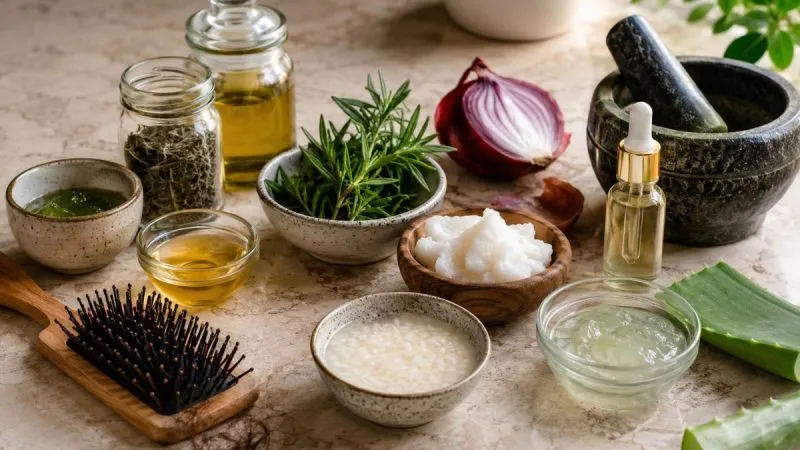
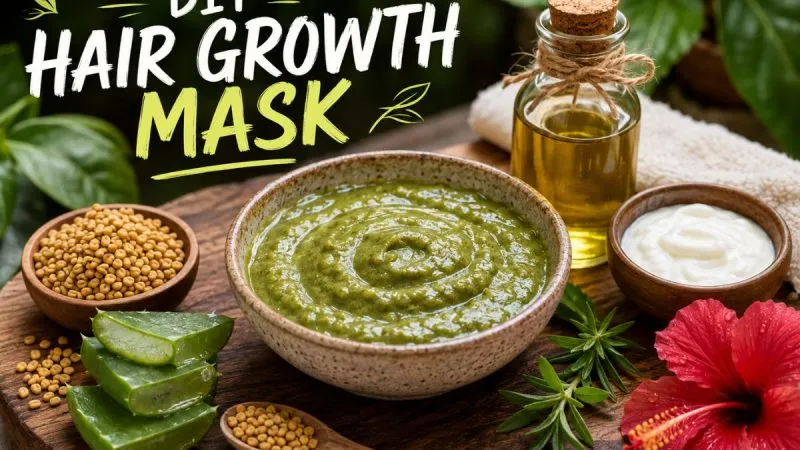
- 2 tablespoons fenugreek (methi) seeds, soaked overnight in water and blended into a smooth paste
- 1 small onion, juiced and strained (a garlic press or cheesecloth makes this far less messy than it sounds)
- 1 tablespoon castor oil, for slip and additional conditioning
- 5 to 6 drops rosemary essential oil, always diluted into the carrier oil, never applied directly to the scalp undiluted
Mix the fenugreek paste, onion juice, castor oil, and rosemary oil into a single consistent blend.
How to Apply It Properly
Part your hair into sections and apply the mask directly to the scalp first, working it in with your fingertips in small circular motions to encourage circulation, then pull the remainder through the mid-lengths. Leave it on for 30 to 45 minutes, covered with a shower cap if you want to avoid drips. Rinse thoroughly with a gentle, sulfate-free shampoo. The onion smell is genuinely the biggest complaint people have with this mask, and a few drops of the rosemary oil plus a thorough double rinse manages it well for most people.
Frequency: twice a week, consistently, is what the underlying research protocols actually used. Once a week will still help, but it will simply take longer to notice a difference.
What Actually Happens by Week 3, Honestly
This is the part most viral hair mask content skips entirely, and it’s the part that matters most. Hair grows in cycles, roughly 90% of your follicles are in an active growing phase at any given time, and the remaining 10% are resting or shedding. A new hair mask, however good, cannot instantly convert a resting follicle into a fully grown strand within three weeks. That’s not how hair physically works, regardless of what a product label promises.
What genuinely, realistically happens by week 3 of consistent use:
- Noticeably reduced shedding when you brush or wash, since improved circulation and reduced scalp inflammation calm the follicles that were being pushed into premature shedding
- A visibly healthier, less flaky, less irritated scalp
- Fine, soft new baby hairs appearing along the hairline and part, the first visible sign that dormant follicles are being nudged back toward active growth
- Hair that feels stronger and breaks less during styling, thanks to the keratin-supporting effect of the onion and the conditioning from castor oil and fenugreek
What genuinely takes longer: hair that’s visibly thicker, longer, or fuller in a way other people notice. The clinical trial behind rosemary’s headline results ran for six full months, not three weeks, and that timeline reflects biology, not a lack of product effectiveness. Anyone promising dramatically longer hair in three weeks flat is selling you a marketing timeline, not a biological one.
When a Mask Isn’t Enough, and That’s Important to Know
This mask is genuinely well-suited to stress-related shedding, inflammation-driven thinning, and early pattern hair loss where follicles are still functional but underperforming. It is not going to restore hair in areas where follicles have already closed from long-term, untreated pattern hair loss, and if your scalp looks visibly smooth and shiny in a thinning patch, that’s usually a sign topical treatment alone won’t be enough.
Our deep dive on beauty from within makes the same point about hair health generally: nobody needs twelve new products before checking whether an underlying deficiency, like low ferritin or a thyroid issue, is actually driving the shedding in the first place. If your hair loss has been going on for months, is patchy rather than diffuse, or comes with other symptoms like fatigue or irregular periods, a hair mask is worth adding to your routine, not worth relying on as your only plan. A simple blood panel is sometimes the actual answer a dozen products can’t be.
Frequently Asked Questions
Will this mask really regrow hair in 3 weeks? It will meaningfully reduce shedding and improve scalp health within that window for most people, which is a genuine, visible result. Fuller visible regrowth that other people notice generally takes 3 to 6 months of consistent use, in line with the actual clinical research behind rosemary oil.
Can I use this if I’m already using minoxidil? Many people do use rosemary oil alongside minoxidil rather than instead of it, since they work through overlapping but not identical mechanisms. Check with a dermatologist before combining active treatments, particularly if you have a sensitive scalp.
Is onion juice really necessary, or can I skip it? It’s the ingredient doing the most for keratin support and inflammation, so skipping it will noticeably reduce the mask’s effectiveness. If the smell is the barrier, a thorough rinse and a few extra drops of rosemary oil manage it for most people.
A note on this piece: This article is educational and not a substitute for medical advice. If hair loss is sudden, patchy, or accompanied by other symptoms, please see a dermatologist or doctor rather than relying on home remedies alone.
Related reading
- Glow Is Not A Product. It Is A Report Card. The Complete Guide To Beauty From Within
- Best Hair Masks For Dry And Damaged Hair In India (2026): 12 Tried And Tested Picks
- We Tried Olaplex No. 8, Here’s What Really Happened
- Your Hormones Are Not The Problem. Ignoring Them Is.
Sources
- Panahi et al., “Rosemary Oil vs Minoxidil 2% for the Treatment of Androgenetic Alopecia: A Randomized Comparative Trial,” SkinMed, 2015 (PubMed)
- PMC review, “Social Media Trends for Hair Growth: Rosemary and the Evidence Behind It”
- Satthwa, “Onion Oil for Hair Growth: The Science Behind Why It Works”
- Smytten, “Hair Growth Ingredients FAQ”