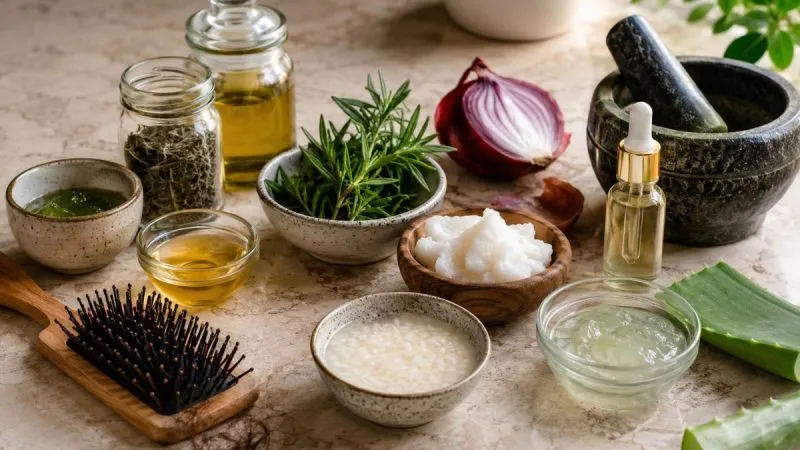
Rajiv Dixit’s Hair Growth Remedies: The Traditional Recipes He Taught For Decades

- Rajiv Dixit was an Indian social activist and swadeshi advocate who spent decades teaching Ayurveda and natural living through thousands of public lectures.
- His hair remedies center on replacing chemical shampoos with traditional cleansers like reetha, shikakai, and amla, plus curry leaves, onion, and methi for growth.
- These are traditional, widely circulated home remedies, not clinically tested pharmaceutical treatments. Some ingredients (onion, for instance) do have real supporting research elsewhere.
- For hair loss that’s sudden, patchy, or ongoing for months, see a dermatologist alongside trying any home remedy.
Rajiv Dixit spent much of his life arguing that Indian households already had the answers modern advertising was busy selling back to them at a markup. Born in 1967 and active until his death in 2010, Dixit founded the Azadi Bachao Andolan and later worked alongside Baba Ramdev on the Bharat Swabhiman movement, combining his economic message against foreign multinationals with public advocacy for yoga and Ayurveda. Delivered through thousands of recorded speeches, his lectures on natural living covered everything from diet to disease prevention, and hair care was a recurring, popular topic, largely because his core argument there was simple: your kitchen already has what a shampoo bottle is charging you for.
The Philosophy Behind the Remedies
Before the recipes themselves, it’s worth understanding the framing Dixit consistently used, since it explains why his remedies look the way they do. He was deeply critical of commercial shampoos containing sulfates and synthetic chemicals, arguing they strip the scalp’s natural oils and disrupt its pH over years of regular use, contributing to the hair fall people then bought more products to fix. His remedies almost always substitute a traditional, plant-based alternative for a modern commercial one, consistent with the swadeshi philosophy that shaped his entire public career.
The Core Cleanser: Reetha, Shikakai, and Amla
This trio is the foundation most commonly associated with Dixit’s hair care teachings, and it remains one of the most widely circulated Ayurvedic hair remedies in India today, well beyond just his own followers.
How it’s traditionally made: Soak dried reetha (soapnut), shikakai pods, and amla (Indian gooseberry) pieces in water overnight. Boil the mixture the next morning until the water reduces and turns dark, then mash the softened ingredients and strain the liquid. This strained liquid is used as a natural shampoo substitute.
What each ingredient is believed to do: Reetha creates a gentle, natural lather without stripping the scalp’s oils the way sulfates do. Shikakai works as a mild conditioner while helping clear dandruff and buildup. Amla, rich in vitamin C, is traditionally credited with strengthening hair roots and slowing premature greying.
Curry Leaves in Coconut Oil, for Growth and Premature Greying
This is one of the specific remedies Dixit returned to repeatedly in his lectures on hair care, particularly for premature greying, a concern he discussed often.
How it’s traditionally made: Simmer a handful of fresh curry leaves in coconut oil on low heat until the leaves turn crisp and the oil darkens slightly. Let it cool, strain out the leaves, and massage the infused oil into the scalp two to three times a week, ideally left in for at least an hour before washing.
Curry leaves are traditionally believed to nourish hair follicles and slow premature greying, a claim that’s more folk wisdom than clinical evidence at this point, though the oil massage itself has a real, separate benefit: consistent scalp massage genuinely improves circulation to hair follicles, regardless of which oil is used.
Onion Juice for Hair Fall
Onion juice is one of the more commonly cited remedies in this tradition, and unlike some of the others, it actually has some real research behind it. Separate from Dixit’s own teachings, a small controlled study found that participants who applied onion juice to the scalp twice daily for six weeks experienced meaningfully more regrowth than a plain water control group, likely due to the sulfur compounds onions contain, which support keratin production, the protein hair is made of.
How it’s traditionally made: Grate or blend a small onion, strain the juice through a cloth, and apply it directly to the scalp. Leave it on for 20 to 30 minutes before washing thoroughly with a mild, natural cleanser like the reetha-shikakai-amla rinse above.
Methi (Fenugreek) Paste
Methi is another staple across Dixit’s natural remedy teachings, valued for its mucilage content, which conditions the scalp and hair shaft.
How it’s traditionally made: Soak two tablespoons of fenugreek seeds overnight, then blend them into a smooth paste the next morning. Apply directly to the scalp, leave for 30 to 40 minutes, then rinse thoroughly.
Diet and Lifestyle Advice Alongside the Remedies
Consistent with his broader teaching style, Dixit rarely presented hair remedies as standalone fixes. He regularly connected hair health back to diet and daily habits: adequate water intake, minimizing refined sugar and maida (refined flour), and including natural sources of protein and healthy fats in daily meals, arguing that topical remedies alone can’t compensate for what the body isn’t getting internally. That particular instinct, treat the root cause rather than just the symptom, holds up well against modern dermatological advice too, even where the specific home remedies remain unproven by clinical standards.
An Honest Note on What’s Folk Wisdom and What’s Evidence-Based
This matters enough to say directly: these remedies come from oral tradition and widely circulated recordings, not peer-reviewed clinical trials, and they should be understood that way. Onion’s benefit for hair has some genuine research support. Reetha, shikakai, curry leaves, and methi are long-standing traditional remedies with real anecdotal support across generations of Indian households, but limited formal clinical testing behind the specific claims made about them.
None of that makes them worthless. Gentle, natural cleansing and consistent scalp massage are genuinely good habits regardless of the specific ingredient, and many people do find real improvement in shedding and scalp health using this kind of routine. What it does mean is that if hair loss is sudden, patchy, or has been ongoing for months, a home remedy is worth trying alongside a proper diagnosis, not instead of one. Our deep dive on rosemary, onion, and fenugreek covers the more clinically studied side of this same territory, including what a realistic timeline for visible results actually looks like.
Frequently Asked Questions
Are Rajiv Dixit’s hair remedies scientifically proven? Some individual ingredients, particularly onion, have real supporting research. Others, like curry leaves for premature greying, are long-standing traditional claims without strong clinical backing yet. Treat these as traditional home remedies worth trying, not medical treatments.
How often should these remedies be used? Most are traditionally used two to three times a week, consistently, over several months, since hair growth cycles genuinely take months to show visible change regardless of which remedy is used.
Can these replace a dermatologist for serious hair loss? No. They’re a reasonable complement to a healthy routine, but sudden, patchy, or prolonged hair loss deserves a proper medical evaluation alongside any home remedy.
A note on this piece: This article describes traditional home remedies commonly associated with Rajiv Dixit’s public teachings on natural living. It is educational, not medical advice. If you’re experiencing significant or ongoing hair loss, please consult a dermatologist.
Related reading
- The DIY Hair Mask That Could Regrow Your Hair in 3 Weeks
- Glow Is Not A Product. It Is A Report Card. The Complete Guide To Beauty From Within
- Best Hair Masks For Dry And Damaged Hair In India (2026): 12 Tried And Tested Picks
Sources
- Wikipedia, “Rajiv Dixit” (biographical background)
- Widely circulated public lecture recordings and Ayurvedic home remedy content attributed to Rajiv Dixit
- Satthwa and Smytten reporting on onion juice and hair growth research