Laughing All the Way to the Brand Bank: How New and Challenger Brands Are Riding India’s Stand-Up Comedy Boom
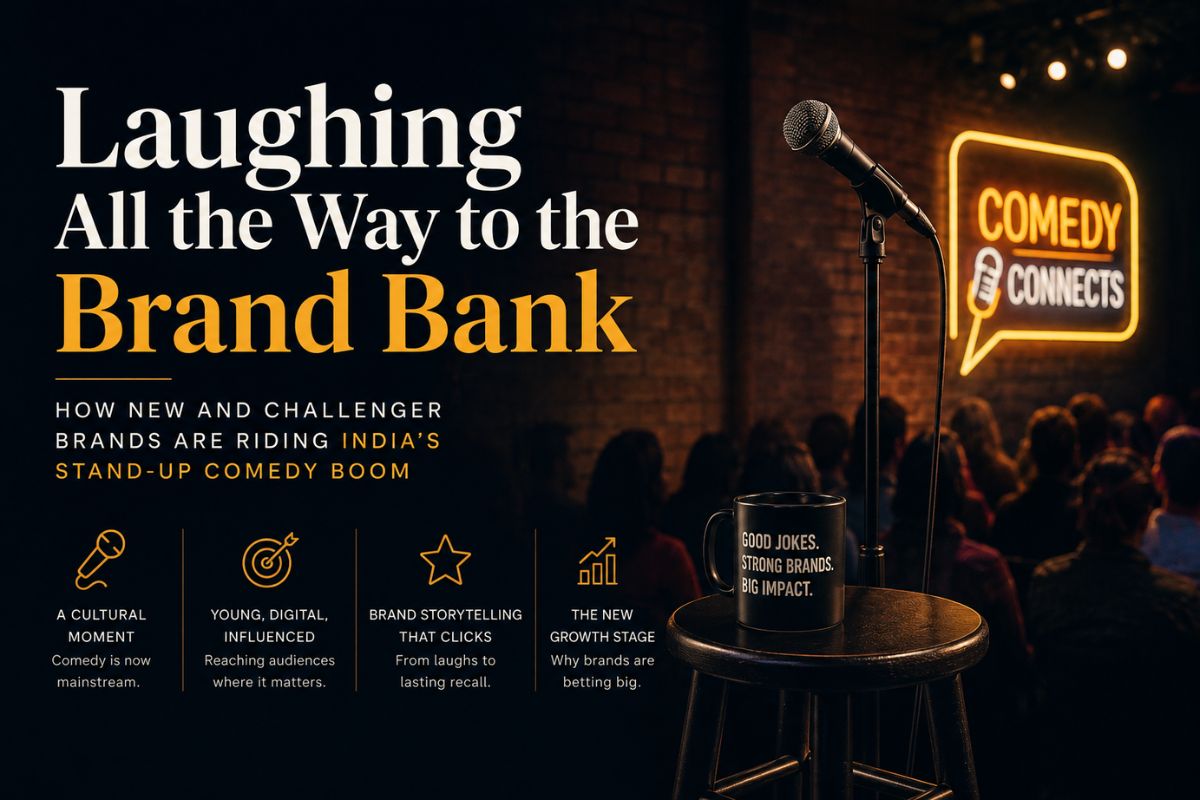
Stand-up comedy in India has transformed from a niche club circuit in the early 2010s into one of the country’s most vibrant and commercially powerful entertainment forms. What began with small open-mic nights in Mumbai, Delhi, and Bengaluru now fills arenas, sells out multi-city tours, generates millions of views on YouTube and Instagram, and commands premium brand fees once reserved for film stars. Parallel to this cultural explosion, a new wave of brands—especially direct-to-consumer (D2C), fintech, wearables, personal care, quick-commerce, and lifestyle startups—has discovered that sponsoring comedians’ gigs, tours, digital shows, and social content offers an unusually effective route to authenticity, cultural relevance, and Gen Z/millennial attention.
In the Indian context, comedy sponsorships have become a strategic growth channel rather than a novelty marketing tactic.
The Explosive Growth of Indian Stand-Up
Industry estimates put the broader Indian comedy ecosystem (live tickets, digital ad revenue, brand deals, corporate shows, and related content) at roughly ₹1,500 crore in recent years, with live comedy forming a substantial and fast-growing share of the country’s expanding live events market. Audience sizes have scaled dramatically: typical shows that once drew 50–100 people now regularly attract hundreds to several thousand, and top acts pack venues of 5,000-plus. Tier-II and Tier-III cities have embraced the form with equal enthusiasm.
Pioneers such as Vir Das, Zakir Khan, Biswa Kalyan Rath, Kenny Sebastian, and the early digital collectives helped professionalise the scene. Platforms like Amazon Prime Video and Netflix invested heavily in exclusive specials, while YouTube and Instagram turned clips and full sets into mass entertainment. The pandemic accelerated digital consumption; the post-pandemic period turbocharged live demand. Management companies such as Only Much Louder (OML) and production outfits like TribeVibe (linked to BookMyShow) professionalised touring, talent management, and brand integrations.
Today, leading comedians earn substantial income from ticketed shows, corporate gigs, and brand work. Top acts can generate crores annually, with brand collaborations and social content forming a meaningful portion of earnings. Instagram Reels alone have become a multi-crore advertising channel for comedy creators.
Why Brands—Especially Newer Ones—Are Flooding In
Traditional advertising faces rising costs, ad fatigue, and declining trust among younger consumers. Comedy cuts through because it feels conversational, self-aware, and culturally fluent. Audiences, particularly Gen Z and younger millennials, respond to humour that mirrors their lived experiences—family dynamics, dating, work stress, social media absurdities, and everyday Indian quirks.
Newer and challenger brands lack the decades of equity enjoyed by legacy giants. Aligning with comedians lets them appear witty, contemporary, and human. Live comedy environments and digital formats offer intimate settings for product sampling, experiential activations, and highly shareable content. Brands gain not just impressions but cultural association and organic virality. Comedy content often delivers higher engagement than other genres, and successful partnerships have driven measurable sales lifts and brand discovery.
Sectors actively participating include ride-hailing and food delivery (Uber, Zomato, Swiggy, Blinkit), wearables and audio (boAt), used-car and mobility platforms (Spinny), apparel and fashion (Vastrado, SNITCH, XYXX), personal care and men’s grooming (Boldcare, Deconstruct), fintech (POP UPI, CRED), beverages (BroCode), protein and nutrition (Avvatar), and even traditional categories seeking youth relevance (Cadbury, Flipkart, Motorola).
How Sponsorships Actually Work in the Indian Scene
Sponsorship takes several forms:
- Tour and live show title or presenting sponsorships: Brands attach to multi-city tours or major solo shows, gaining on-stage mentions, venue branding, sampling, ticket giveaways, and co-created social content.
- Digital IP and format-show sponsorships: Comedians create their own YouTube or multi-platform shows (talent hunts, roast series, game formats). Brands sponsor entire series or individual episodes, often with integrated product placement written into the humour rather than bolted on.
- Social content and Reels: Single Instagram Reels or short-form series command fees ranging from several lakhs for mid-tier creators to ₹15–75 lakh for top names. Samay Raina has been quoted at the high end of that spectrum.
- Experiential and on-ground activations: Sampling at shows, branded zones, father-son ticket giveaways, or metaverse experiments (as seen in earlier brand experiments).
- Longer-term ambassadorships or creative partnerships: Comedians help shape campaigns or even co-create product lines in some cases.
Creative freedom is often a key selling point. Brands that allow comedians to roast the product or weave it into their natural observational style tend to perform better than those insisting on rigid scripts.
Standout Indian Examples
Samay Raina and India’s Got Latent
This format-driven talent-show-style series became a phenomenon, racking up tens of millions of views per episode. Brands including Spinny (used-car platform), POP UPI (fintech), WokTok, and later integrations with AI+ Nova smartphones, Flipkart Minutes, and Avvatar protein drinks sponsored episodes or wove products into the dialogue and segments. The show demonstrated how a comedian-led IP can deliver both massive reach and business results—Spinny and others reported increased discovery and sales impact. Even after controversies, the model of brands backing edgy, high-engagement digital comedy persisted.
Zakir Khan’s tours and Papa Yaar
Zakir Khan’s large-scale national tours, including the extensive Papa Yaar run covering dozens of cities, have attracted title and co-powered sponsors such as SNITCH (fashion) and Grameen Kulfi (new-age kulfi brand). These partnerships go beyond logo placement to include ticket experiences (e.g., father-child giveaways), social content, and cultural alignment around family and everyday Indian life. Earlier associations and collaborations with brands like Roadster further illustrate how storytelling-driven comedy pairs naturally with lifestyle and consumer brands seeking emotional connection.
BroCode and roast series
The beverage brand partnered with comedians including Aashish Solanki for multi-episode roast content, explicitly encouraging creators to roast the brand itself. This willingness to embrace self-deprecating humour reflects a broader shift toward authentic creator-led storytelling.
Wearables, personal care, and quick commerce
boAt has worked with multiple comedians, including Ravi Gupta, to address perceptions and connect with youth. Personal care and men’s health brands such as Boldcare and Deconstruct use podcast-style or banter-heavy Reels. Quick-commerce and delivery platforms frequently collaborate with rising or viral comedians emerging from shows like India’s Got Latent.
Broader rate cards and volume
Top comedians such as Abhishek Upmanyu, Anubhav Singh Bassi, Ravi Gupta, Harsh Gujral, and others command significant Reel fees. Mid-tier and emerging acts also benefit as brands look beyond the absolute top tier for cultural fit and cost efficiency. Management firms report that brands across D2C, FMCG, and BFSI are actively exploring comedy collaborations.
Benefits for New Brands and Comedians Alike
For challenger brands, comedy sponsorships deliver cultural fluency at a fraction of the cost (and risk of inauthenticity) of traditional celebrity endorsements. They generate shareable content that lives far beyond the initial campaign window, drive discovery among hard-to-reach younger audiences, and often produce measurable lifts in consideration or sales. Live integrations create memorable experiences that digital ads alone cannot match.
For comedians and producers, brand money subsidises higher production values, larger tours, and experimental formats that might otherwise struggle to break even. It expands income streams beyond ticket sales and allows mid-level acts greater visibility. The virtuous cycle is clear: more brand investment supports more content and bigger shows, which in turn attract larger audiences and further brand interest.
Risks and Realities
The relationship is not risk-free. Comedy’s edge can lead to controversy, prompting some brands to pull back or carefully manage associations (as seen around certain high-profile digital shows). Authenticity remains paramount—overly forced product placements can alienate audiences who value a comedian’s independent voice. Legal and contractual frameworks around edgy content, prize giveaways, and brand safety have become standard. Not every partnership delivers equal ROI; success depends on genuine creative alignment rather than mere reach.
Looking Ahead
India’s stand-up scene continues to professionalise and expand geographically. Larger tours reaching smaller cities, more comedian-owned IPs, regional-language growth, and deeper integration of live and digital will create additional sponsorship inventory. New brands will keep experimenting with formats that feel native to comedy culture—roasts, observational bits, format shows, and experiential activations—rather than treating comedians as mere talking heads.
In the Indian market, laughter has become serious business. For new and ambitious brands seeking to build cultural capital quickly, sponsoring stand-up gigs, tours, and digital comedy content has emerged as one of the most effective ways to earn attention, trust, and relevance in a noisy marketplace. The punchlines are landing, and the brands that understand the joke are the ones getting the last laugh.