
How the Mumbai Underworld Captured Bollywood (1980s–1990s)
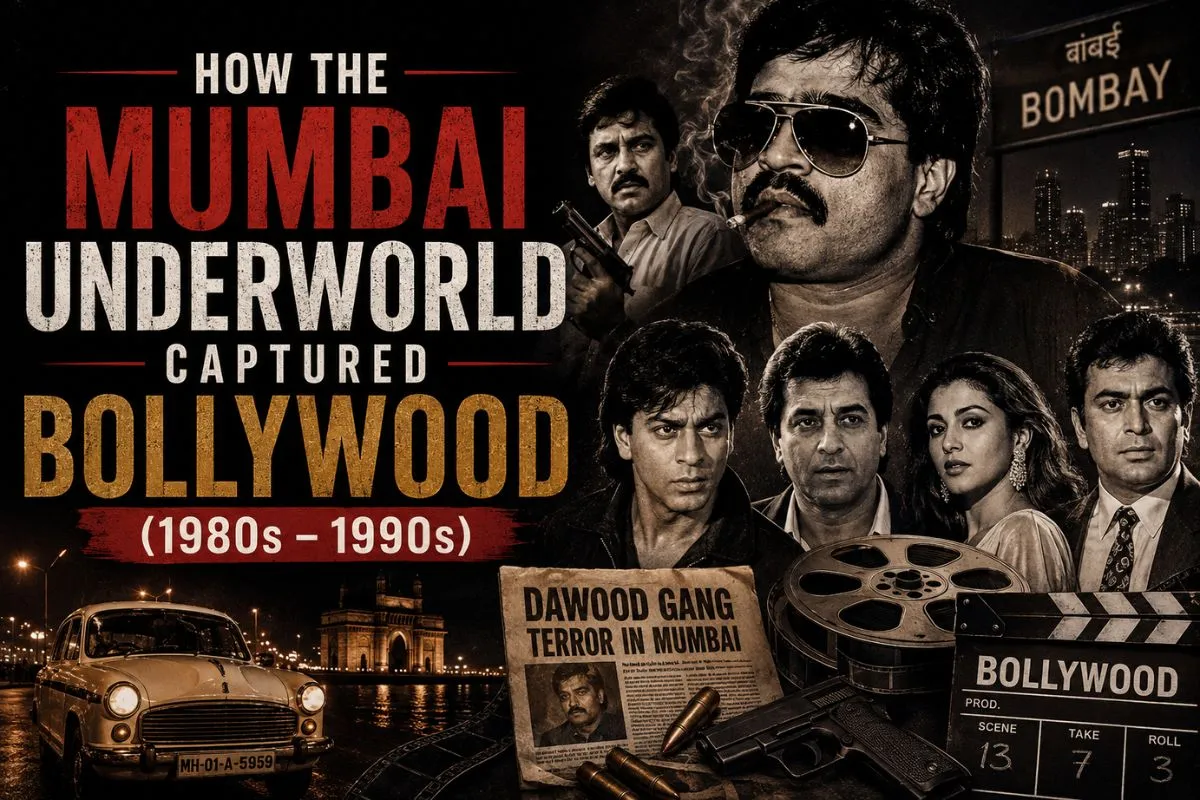
For decades, Indian cinema projected dreams of romance, heroism, and justice. Yet behind the shimmering surface of Hindi cinema lay one of the most complex, lucrative, and dangerous alliances in modern pop culture history:the nexus between the Mumbai underworld and Bollywood.
Throughout the 1980s and 1990s, criminal syndicates transformed from glamour-seeking dons into shadowy shadow bosses who financed blockbusters, enforced casting calls, and extorted producers at gunpoint.
Phase 1: The Pre-1980s Roots (Glamour & Black Money)
The connection between organised crime and film financing originated decades before the violence reached its peak:
- The Financial Vacuum:Until the turn of the millennium, the Indian government treated the film industry as a high-risk gamble rather than a legitimate commercial venture. Indian banks were strictly prohibited from lending money to filmmakers. Producers turned to private moneylenders, politicians with unaccounted wealth, and underworld figures seeking avenues formoney laundering.
- The “Celebrity Don” Era:Early mobsters likeHaji MastanandKarim Lalaviewed cinema as a status symbol. Mastan produced movies to launch fledgling actors, hobnobbed with A-list actors, and attended premier parties. During this era, the relationship was largely transactional and friendly—the underworld provided cash, and Bollywood provided social legitimacy.
               1970s–1980s FINANCIAL NEXUS
  ┌────────────────┐                    ┌──────────────────┐
  │  Underworld    │─── Black Money ───>│   Filmmakers     │
  │  (Smuggling)   │                    │ (No Bank Credit) │
  └────────────────┘                    └──────────────────┘
          ▲                                      │
          │                                      │
          └──────── Social Legitimacy ───────────┘
Phase 2: The 1980s Shift (D-Company & Sharja Suites)
By the mid-1980s, the old guard of Mastan and Lala was displaced byDawood Ibrahimand his syndicate,D-Company.Unlike his predecessors, Dawood realized that cinema was not just a vanity project—it was a global goldmine.
- Sharjah Cricket VIP Boxes:Photographers captured images of leading stars, directors, and actors mingling with Dawood Ibrahim in VIP corporate boxes during international cricket matches in Sharjah.
- Controlling Overseas Distribution:D-Company systematically took over theoverseas distribution rightsfor Hindi films. In regions like the Middle East, the UK, and North America—where Indian expatriate populations were booming—bootleg VHS tapes and theater distribution were directly controlled by mob fronts.
- Coercive Casting:Gangsters began dictating script choices, music rights, and casting. High-profile casting decisions were often made following middle-of-the-night phone calls from Dubai or Karachi threatening directors if specific actors were not given main roles.
Phase 3: The 1990s Reign of Terror (Extortion & Assassinations)
Following the 1993 Mumbai serial bomb blasts, Dawood Ibrahim fled India, operating remotely alongside lieutenants likeChhota Rajan,Chhota Shakeel, andAbu Salem.The relationship devolved from mutual back-scratching into widespread, bloody extortion.
┌─────────────────────────────────────────────────────────────────┐
│               Key Underworld Escalations (1990s)                │
├───────────────────┬─────────────────────────────────────────────┤
│ 1993              │ Sanjay Dutt arrested over illegal weapons   │
│                   │ supplied via 1993 blast conspirators.       │
├───────────────────┼─────────────────────────────────────────────┤
│ August 1997       │ T-Series founder Gulshan Kumar assassinated  │
│                   │ outside a temple in Mumbai.                 │
├───────────────────┼─────────────────────────────────────────────┤
│ 1997–1999         │ Directors Rajiv Rai and Subhash Ghai target │
│                   │ with extortion and hit squads.              │
├───────────────────┼─────────────────────────────────────────────┤
│ January 2000      │ Rakesh Roshan shot after refusing to yield  │
│                   │ overseas rights to 'Kaho Naa... Pyaar Hai'. │
└───────────────────┴─────────────────────────────────────────────┘
1. The Murder of Gulshan Kumar (1997)
On August 12, 1997,Gulshan Kumar, founder of T-Series music label, was shot and killed outside a temple in Jeet Nagar, Mumbai.D-Company hitmen executed the contract after Kumar refused to pay extortion demands or surrender music rights.The assassination sent shockwaves through the industry, proving that no one was safe.
2. The Shooting of Rakesh Roshan (2000)
In January 2000, filmmakerRakesh Roshandelivered a massive blockbuster withKaho Naa… Pyaar Hai, launching his son Hrithik Roshan.Days after the release, D-Company operatives demanded a percentage of the international box-office profits.When Roshan refused, hitmen shot him twice outside his Santacruz office.Roshan survived the attack, but the event exposed how brazen extortion had become.
3. High-Profile Targets & Exile
Producers likeRajiv Rai(Tridev,Mohra,Gupt) survived assassination attempts by armed hitmen, leading Rai to leave India to reside abroad permanently.Security details became standard accessories for directors, producers, and top actors.
The Turning Point: “Industry Status” and Police Crackdowns
The era of underworld dominance came to an end due to structural reforms and targeted law enforcement actions:
- Granting of Industry Status (2000):The Indian government officially designated filmmaking as an“Industry”in May 2000. This allowed producers to secure legitimate, low-interest bank loans, corporate backing, and insurance policies, cutting off the underworld’s primary entry point.
- TheChori Chori Chupke ChupkeCase (2001):Central law enforcement seized the master prints of the filmChori Chori Chupke Chupkeafter discovering it was financed by financier Bharat Shah alongside D-Company lieutenantChhota Shakeel. The case marked the first time the government seized a major film’s assets due to mafia funding.
- Mumbai Police Encounter Squads:Specialized police officers (known as “Encounter Specialists”) systematically dismantled gang networks across Mumbai, neutralizing key hitmen and enforcing MCOCA (Maharashtra Control of Organised Crime Act).
- Corporatization of Cinema:Global studios and corporate production houses (such as Yash Raj Films, Dharma Productions, and international distributors) entered the market, standardizing accounting, contracts, and talent management.
The Legacy in Cinema
While the mafia lost its financial grip on the film industry, the dark glamour of the 1980s and 1990s gave rise to theMumbai Noir genre. Classics likeParinda(1989),Satya(1998),Company(2002),Shootout at Lokhandwala(2007), andOnce Upon a Time in Mumbaai(2010) drew direct creative inspiration from the real-life figures, gang wars, and police encounters that defined this era.






)