
Khakee: The Bengal Chapter – A Review: A Familiar Tune in a New Setting
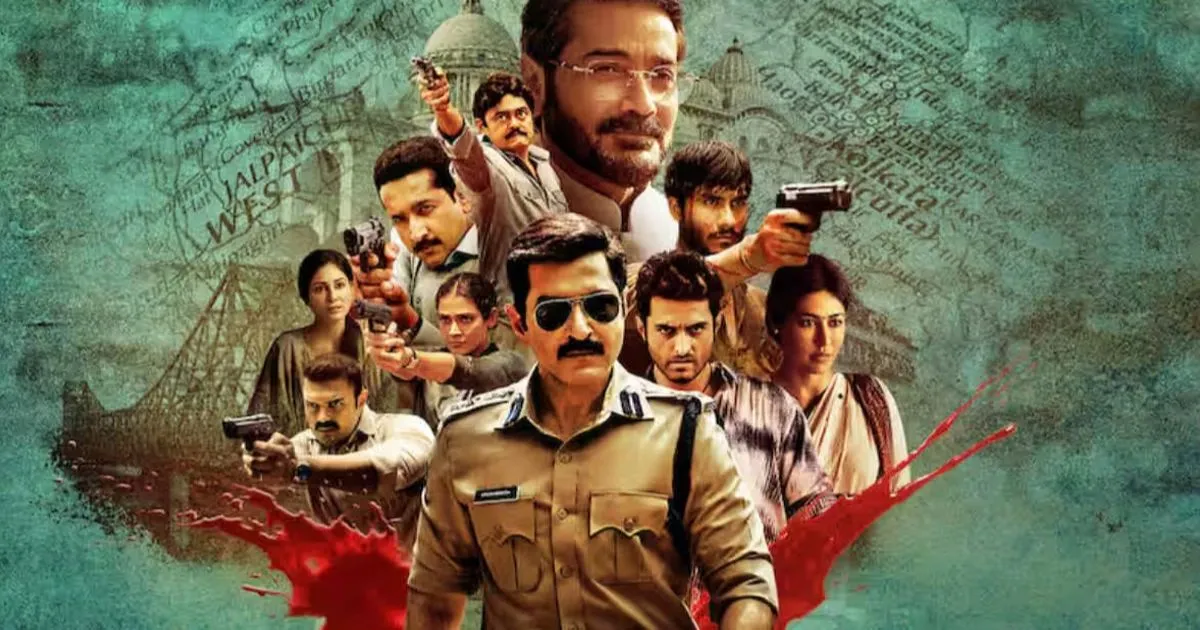
When Khakee: The Bihar Chapter premiered on Netflix in November 2022, it struck a chord with audiences, blending gritty realism, high-stakes drama, and a compelling cat-and-mouse chase between a determined IPS officer and a ruthless criminal gang. Created by Neeraj Pandey, the series spent over five months in Netflix India’s Top 10, a testament to its gripping narrative and strong performances. Naturally, expectations were sky-high for its standalone sequel, Khakee: The Bengal Chapter, which shifts the action from Bihar’s dusty plains to the chaotic underbelly of early 2000s Kolkata.
Released on March 20, 2025, this second installment promised a fresh yet equally intense exploration of crime, corruption, and justice. But does it live up to the legacy of its predecessor? The answer is a mixed bag—engaging yet frustratingly formulaic, ambitious yet oddly repetitive.
The Premise: A Cop vs. Corruption Saga
Khakee: The Bengal Chapter follows IPS officer Arjun Maitra (played by Bengali cinema star Jeet), who steps into a Kolkata teetering on the edge of lawlessness after the death of a respected officer. Set against the backdrop of a politically turbulent West Bengal, where the Communist Party’s long reign faces challenges from rising dissent, the series dives into the symbiotic relationship between gangsters, politicians, and a compromised police force.
The central conflict ignites with a botched kidnapping: two small-time criminals, Kulfi and Chondon, accidentally abduct the grandson of a powerful minister, setting off a chain reaction. Enter Bagha, a feared don (played by Saswata Chatterjee), and his political ally Barun Roy (Prosenjit Chatterjee), who scramble to contain the fallout. Meanwhile, Arjun, alongside another officer, Saptarshi Sinha (Parambrata Chattopadhyay), takes on the Herculean task of dismantling this nexus.
The setup is classic Neeraj Pandey—high stakes, morally gray characters, and a relentless cop battling a broken system. But where The Bihar Chapter thrived on its raw authenticity and tight pacing, The Bengal Chapter struggles to carve out a distinct identity, often feeling like a reheated version of the same dish with a sprinkle of regional flavor.
The Good: Stellar Cast and Visual Grit
One of the series’ undeniable strengths is its ensemble cast, a who’s-who of Bengali cinema royalty. Jeet, making his OTT debut, brings a stoic intensity to Arjun Maitra. His portrayal of an “anti-establishment” cop—upright yet burdened by the weight of his mission—is serviceable, though it lacks the nuance that made Karan Tacker’s Amit Lodha so memorable in Season 1.
Prosenjit Chatterjee, as the manipulative politician Barun Roy, is the standout, exuding quiet menace and calculated charm. His scenes with Saswata Chatterjee’s Bagha—a volatile gangster with a hair-trigger temper—crackle with tension, showcasing two veterans at the top of their game. Parambrata Chattopadhyay and Chitrangda Singh round out the leads with solid, if underutilized, performances, while Ritwik Bhowmik and Adil Khan add youthful energy as supporting players.
Visually, the series captures Kolkata’s chaotic essence without pandering to tourist clichés. The cinematography—credited to a team of four (Tushar Kanti Ray, Arvind Singh, Tarashree Sahoo, and Souvik Basu)—avoids postcard shots of Howrah Bridge and yellow taxis, instead plunging viewers into dimly lit alleys, smoky political offices, and blood-soaked crime scenes. The muted color palette and frenetic camera work enhance the sense of a city unraveling, even if the execution occasionally feels derivative of Pandey’s earlier works like Special 26 or Baby.
The Bad: A Predictable Plot and Wasted Potential
Where Khakee: The Bengal Chapter falters most is in its writing. Co-scripted by Neeraj Pandey, Debatma Mandal, and Samrat Chakraborty, and directed by Mandal and Tushar Kanti Ray, the series leans heavily on tropes that Pandey has mined to death: the righteous cop, the corrupt politician, the volatile gangster, and the inevitable betrayal. The kidnapping plot kicks things off with promise, but the narrative quickly settles into a predictable rhythm. Key twists—like the rift between Bagha’s henchmen Ranjit and Sagor—are telegraphed early and resolved with little surprise. The screenplay spends too much time rehashing events the audience already understands, draining momentum from what could have been a taut thriller.
At over six hours across its episodes, the runtime feels bloated. Scenes of violence—slaughter after slaughter—replace subtlety, and the dialogue, laden with expletives, often substitutes grit for depth. While Season 1 balanced personal stakes (Amit Lodha’s family life) with the larger crime story, Season 2 sidelines Arjun’s inner world, leaving him as a one-note crusader. The lack of a strong regional flavor is another misstep. Despite its Kolkata setting, the series feels like a Hindi imposition, with Bengali culture reduced to superficial nods rather than a lived-in texture. This generic quality undermines the premise’s potential to explore West Bengal’s unique political and criminal landscape.
The Comparison: Falling Short of Season 1
It’s impossible to review The Bengal Chapter without measuring it against The Bihar Chapter. The first season excelled because it was grounded in the real-life exploits of IPS officer Amit Lodha (chronicled in his book Bihar Diaries), offering a visceral look at Bihar’s caste-crime nexus. The performances—Karan Tacker, Ashutosh Rana, Avinash Tiwary—were electric, and the pacing kept viewers hooked. By contrast, Season 2’s fictional narrative lacks that anchor, drifting into melodrama and repetition. Where Bihar felt authentic, Bengal feels staged, as if Pandey and his team prioritized star power over substance.
Fan reactions on platforms like X reflect this divide. Some praise the series’ binge-worthy thrills and Jeet’s commanding presence, while others lament its lack of intensity and originality compared to its predecessor. This split underscores a broader truth: The Bengal Chapter is watchable but rarely remarkable.
The Verdict: A Middling Sequel
Khakee: The Bengal Chapter isn’t a failure—it’s too competently made for that. The cast delivers, the action satisfies, and moments of political intrigue hint at what could have been. Yet, it’s hard to shake the feeling that Neeraj Pandey, once celebrated for inventive thrillers like A Wednesday, is coasting on autopilot. The series entertains in spurts but lacks the freshness and emotional heft to match its ambitions or its predecessor’s impact.
For fans of cop dramas or Bengali cinema, it’s worth a stream, especially to see Prosenjit and Saswata shine. But if you’re expecting the same pulse-pounding brilliance as The Bihar Chapter, temper your hopes. This is a serviceable crime thriller that plays it safe when it could have dared to innovate. On a scale of 1 to 5, I’d give it a 3—decent, but a missed opportunity to reclaim Pandey’s former glory.
Khakee: The Bengal Chapter is streaming now on Netflix. Watch it for the performances and the chaos, but don’t expect it to rewrite the rulebook.