
Sleep Paralysis Explained: What It Means, How It Happens, and Why You Experience It
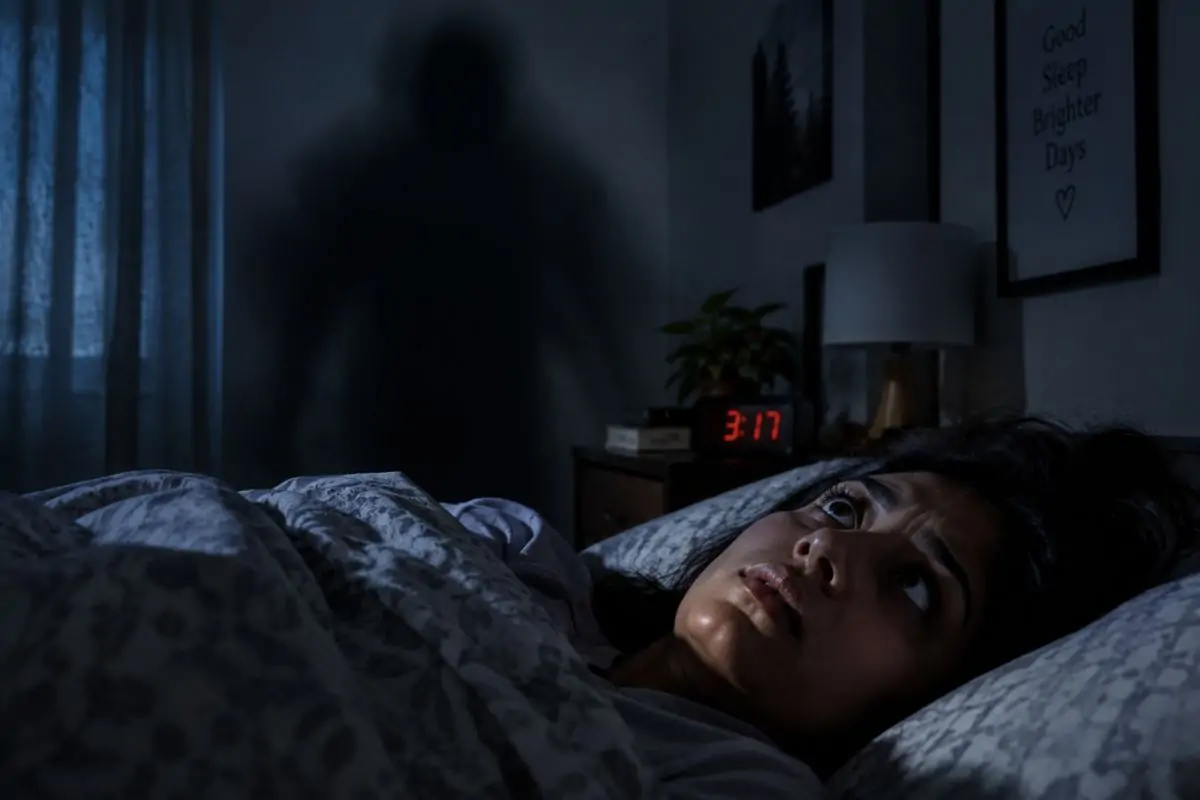
Sleep paralysis is one of the most unsettling experiences a person can have. You wake up or start to drift off and suddenly realize your body will not move. Your eyes may open. Your mind feels fully alert. Yet your arms, legs, and even your voice stay locked in place. Sometimes a heavy pressure sits on your chest. Sometimes shadowy figures appear in the room. The fear can feel absolute, as if something has stolen your ability to escape.
This phenomenon is not a dream in the ordinary sense, nor is it a sign of madness. It is a temporary glitch in the natural process of falling asleep or waking up. Understanding what it means, how it works, and why it happens can turn a moment of pure terror into something far less mysterious.
Quick Summary
- What it means: Sleep paralysis (also called dream paralysis) is a temporary state where your mind becomes aware while your body stays locked in the natural muscle paralysis of REM sleep.
- How it happens: It occurs when the brain wakes up or starts falling asleep at the wrong moment, leaving the protective paralysis signals still active. This often brings vivid hallucinations and a strong sense of fear.
- Why it happens: Common triggers include sleep deprivation, irregular sleep schedules, high stress, sleeping on your back, and conditions like narcolepsy. Genetics and disrupted REM cycles also play a role.
- Key point: Episodes usually last only seconds to a couple of minutes and are harmless, though they can feel terrifying. Better sleep habits often reduce how often they occur.
What Sleep Paralysis Actually Means
Sleep paralysis is a state in which the mind becomes aware while the body remains in the temporary paralysis that normally occurs during rapid eye movement (REM) sleep. During healthy REM sleep the brain floods the body with signals that keep the muscles still. This prevents you from acting out your dreams and potentially hurting yourself. In sleep paralysis that protective mechanism stays switched on a little too long, or switches on a little too early. Consciousness returns, but the body does not follow.
The experience usually lasts from a few seconds to a couple of minutes, though it can feel much longer. Many people report a strong sense of presence in the room, the feeling of being watched, or vivid hallucinations that can be visual, auditory, or tactile. Some feel as if they are floating or being pulled out of their body. Others sense a crushing weight on the chest that makes breathing seem difficult, even though the lungs continue to work.
These episodes are often called dream paralysis because the boundary between waking and dreaming becomes blurred. The mind is partly awake and partly still generating dream imagery. The result is a hybrid state that feels more real than any ordinary nightmare.
How Sleep Paralysis Happens
Sleep is not a single uniform state. It moves through cycles that include light sleep, deep sleep, and REM sleep. REM is the stage most strongly linked with vivid dreaming. In this stage the brain is highly active, almost as active as when you are awake, while the body enters a natural paralysis known as muscle atonia.
Normally the transition into and out of REM is smooth. The brain releases the paralysis signals as consciousness returns, and you wake up able to move. In sleep paralysis the timing slips. Consciousness returns while the paralysis signals are still active. The brainstem continues to inhibit motor neurons, so the large muscles of the body remain limp. Smaller muscles that control the eyes and breathing are usually spared, which is why many people can open their eyes and feel their heart racing even though they cannot call for help or sit up.
Hallucinations arise because the dreaming brain is still partially online. The same neural circuits that create dream characters and environments continue to fire while the senses begin receiving real input from the room. The brain tries to make sense of the mixed signals and often settles on threatening interpretations: an intruder, a demon, or a crushing force. Fear intensifies the experience, releasing adrenaline that heightens every sensation and makes the paralysis feel even more dangerous.
Episodes can occur at sleep onset (hypnagogic) or upon waking (hypnopompic). They are more common when the body is sleep-deprived or when the sleep schedule is irregular, because these conditions disrupt the orderly progression of sleep stages.
Why People Experience Sleep Paralysis
Several factors increase the likelihood of an episode. The most common is simply disrupted sleep. Staying up late, shifting work schedules, jet lag, or chronic insomnia can throw off the delicate timing of REM transitions. Stress and anxiety also play major roles. When the mind is racing or the nervous system is on high alert, the brain becomes more prone to incomplete awakenings.
Genetics appear to contribute as well. Sleep paralysis runs in some families, suggesting a hereditary component in how the brain regulates muscle atonia. Certain sleep disorders raise the risk dramatically. People with narcolepsy, for example, experience frequent and often severe episodes because their REM regulation is fundamentally unstable. Other conditions such as sleep apnea can fragment sleep and create more opportunities for the paralysis mechanism to misfire.
Age and lifestyle matter too. Sleep paralysis is most common in teenagers and young adults, a period when sleep patterns often become irregular and stress levels can be high. It can appear at any age, however. Sleeping on the back seems to increase the chance of an episode for many people, possibly because this position makes the sense of chest pressure more noticeable or alters airway dynamics slightly.
Cultural and psychological factors shape how the experience is interpreted. Across history and around the world, people have described the same core sensations yet given them different names and meanings. In some traditions it is the work of a night hag or evil spirit. In others it is linked to supernatural visitation or spiritual attack. These interpretations do not cause the paralysis, but they can intensify the fear and make future episodes more likely through anticipatory anxiety.
Living with the Experience
Most people who encounter sleep paralysis do so only a few times in their lives. For a smaller group the episodes become recurrent and can lead to significant anxiety about going to bed. The good news is that understanding the mechanism often reduces the terror. Knowing that the body is simply stuck in a normal protective state, and that the figures in the room are products of the dreaming brain, can make the experience more tolerable even while it is happening.
Practical steps can lower the frequency of episodes. Keeping a consistent sleep schedule, managing stress through exercise or relaxation techniques, and avoiding stimulants late in the day all help stabilize REM transitions. Some people find that sleeping on their side rather than their back reduces occurrences. If episodes are frequent or severely distressing, a doctor or sleep specialist can rule out underlying disorders and, when appropriate, recommend treatment.
Sleep paralysis is a reminder of how finely tuned the boundary between waking and dreaming really is. For a few moments that boundary dissolves, leaving the mind aware inside a body that will not obey. The experience can be frightening, yet it is also a window into the remarkable systems that protect us every night. Once those systems are understood, the grip of paralysis often loosens, replaced by curiosity and a quieter kind of respect for the strange machinery of sleep.