Breaking Down the VFX techniques DNEG in Nitesh Tiwari’s Ramayana
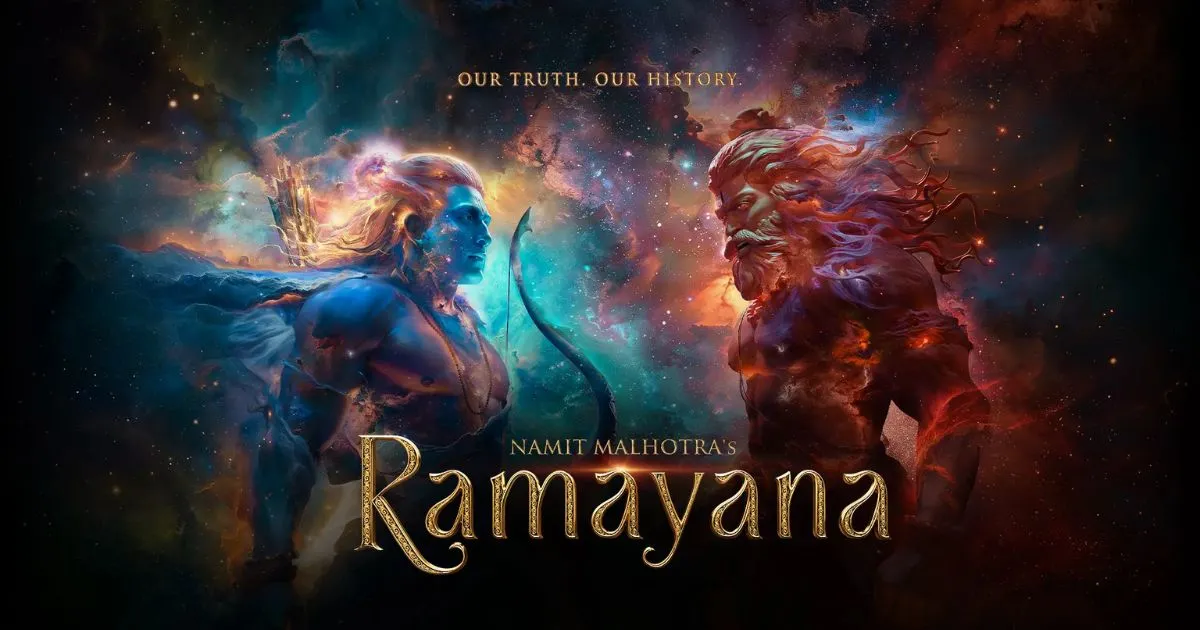
For Nitesh Tiwari’s Ramayana, DNEG (under the leadership of Namit Malhotra) is deploying a suite of tools typically reserved for $250 million+ Hollywood tentpoles. The goal is to move away from the “cartoonish” CGI often seen in previous mythological adaptations and toward a photorealistic, immersive experience.
Here are the four core technologies anchoring the production.
1. Virtual Production & LED Volumes
Following the “Volume” model pioneered by The Mandalorian, DNEG is using massive LED walls to render environments in real-time.
- The Tech: Unreal Engine 5 serves as the backbone, rendering backgrounds like the forests of Dandakaranya with high-fidelity lighting.
- The Benefit: Traditional “Green Screen” often results in unnatural lighting on the actors’ skin. With LED volumes, the light from the digital “sun” or “forest fire” actually hits the actors, creating a seamless blend between physical performers and digital vistas.
2. High-Fidelity Performance Capture
For complex characters like Ravan (Yash) or Hanuman (Sunny Deol), the studio is moving beyond simple motion capture to Performance Capture.
- The Process: Actors wear high-resolution head-mounted cameras (HMC) that track thousands of micro-expressions.
- The Goal: Every nuance of Yash’s performance is mapped onto the digital Ravan. This ensures the character doesn’t just look like a monster, but carries the specific emotional weight and subtle tics of the actor.
3. Procedural World Building
Creating the scale of Ayodhya and Lanka requires more than just manual modeling. DNEG is using procedural generation for architectural density.
- Massive Scale: Software like Houdini is used to generate thousands of unique, historically inspired buildings, ensuring that the “Golden Lanka” looks like a functioning, lived-in city of millions rather than a static 3D model.
- Water & Fire Sims: Given the epic battles and the burning of Lanka, DNEG’s proprietary fluid simulation engines are being used to handle complex elemental interactions at a massive scale.
4. AI-Driven “De-Aging” and Enhancement
To ensure the cast fits the timeless, ageless aesthetic of the deities, DNEG is utilizing AI-assisted cosmetic and structural enhancement.
- Digital Double Integration: For high-intensity action sequences, AI-driven digital doubles are swapped in. These aren’t just 3D models; they use machine learning to mimic the specific muscle movements and gait of the lead actors.
The “Global First” Strategy: This is the first Indian production where the VFX is not an “add-on” in post-production. Instead, VFX artists were present from day one of pre-production, designing the shots alongside Nitesh Tiwari to ensure the “physics of the divine” feels grounded.