Why Hinduphobia Reigns Unchecked: From British Caliphate Appeasement to Modern Media Silence
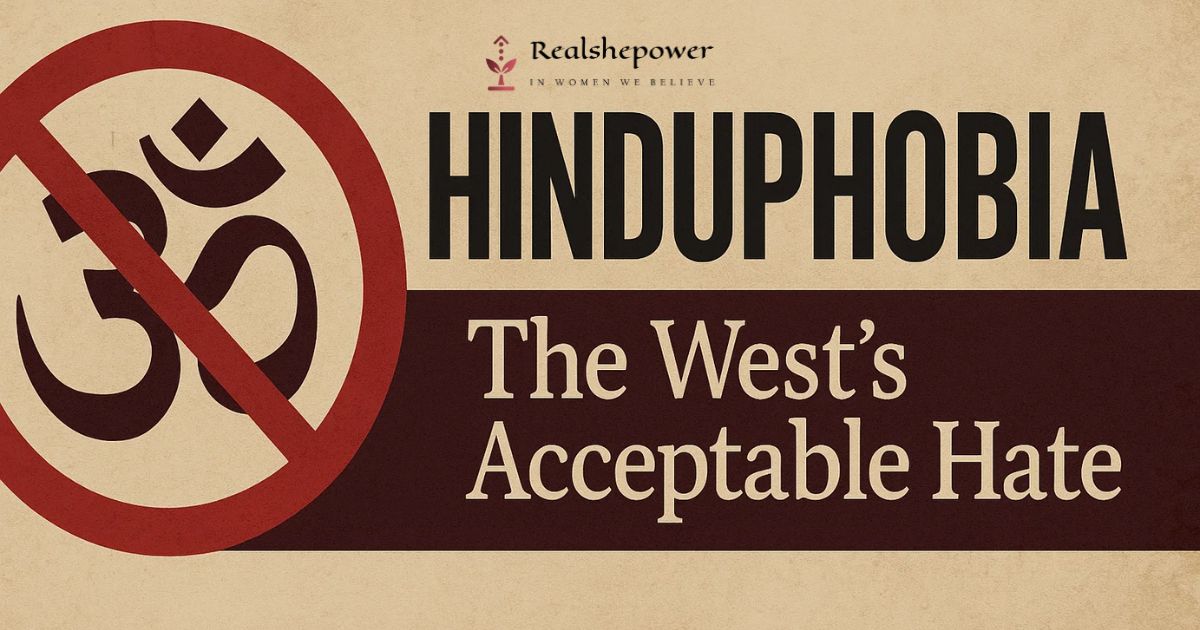
In the global discourse on religious prejudice, Islamophobia has become a household term, evoking immediate condemnation from governments, media, and civil society in the West. High-profile incidents, from the 2015 Charlie Hebdo attacks to the 2021 U.S. Capitol riot’s undercurrents of anti-Muslim rhetoric, have spurred legislative responses, awareness campaigns, and billions in funding for counter-extremism initiatives. Yet, a parallel phenomenon—Hinduphobia, the systemic disdain, stereotyping, and marginalization of Hindus and Hinduism—operates with far less scrutiny. Western media outlets routinely dissect Hindu nationalism in India as “fascist” or “theocratic,” while academic critiques of caste or gender in Hinduism flow unchecked, often without equivalent self-reflection on Christianity’s historical sins. This disparity is not accidental; it stems from a historical calculus of power, fear, and pragmatism that dates back to the British Empire’s colonial playbook. The West, it seems, can afford to hate Hindus—portraying them as exotic, regressive, or complicit in their own oppression—because alienating them carries minimal geopolitical or domestic risk. Muslims, however, represent a volatile force: a 1.9 billion-strong global ummah with a history of unified resistance that the British learned to dread, and that echoes in today’s terrorism fears.
This article delves into the historical roots of this asymmetry, tracing how the British Empire’s calculated deference to Muslim sentiments—exemplified by its reluctant support for the Ottoman Caliphate—foreshadowed modern Western caution. It then examines contemporary manifestations, where Hinduphobia thrives in media and academia while Islamophobia, though rampant, is aggressively policed. Far from mere cultural bias, this dynamic reveals a strategic omnipotence of Hinduphobia: it is not just tolerated but instrumentalized, allowing the West to critique non-Abrahamic faiths freely while navigating Islam with kid gloves.
Table of Contents
Colonial Foundations: The British Empire’s Muslim Calculus
The British Raj, spanning 1858 to 1947, was a masterclass in divide-and-rule, but its approach to India’s religious communities was anything but equal. Hindus, comprising the demographic majority (around 80% of the population), were often cast as the “effeminate” natives in need of British “civilizing” influence—a stereotype rooted in Orientalist scholarship like James Mill’s History of British India (1817), which dismissed Hindu philosophy as superstitious and stagnant. This intellectual disdain facilitated policies that systematically undermined Hindu institutions, from temple land grabs to the promotion of English education that portrayed Sanskrit learning as backward. In contrast, the British went to extraordinary lengths to court Indian Muslims, not out of affection, but out of terror at their potential for pan-Islamic mobilization.
The Ottoman Caliphate, as the symbolic head of Sunni Islam, loomed large in this equation. By the late 19th century, the Ottoman Empire’s decline had ignited pan-Islamic sentiments among Indian Muslims, who viewed the Caliph as their spiritual sovereign. The British, aware of this, actively propagated the Ottoman sultan’s caliphal authority to secure Muslim loyalty. During the 1857 Indian Rebellion (or Sepoy Mutiny), the British leveraged Ottoman Sultan Abdulmejid I to issue a fatwa urging Indian Muslims to support the Crown, framing rebellion as un-Islamic. This was no ad hoc ploy; it was policy. British officials, including Viceroy Lord Canning, corresponded with Istanbul to ensure the Caliph’s pronouncements aligned with imperial interests, effectively outsourcing control over 60 million Indian Muslims.
This deference peaked during and after World War I. Indian Muslims had loyally supported Britain’s war effort, enlisting over 400,000 soldiers and funding the Allied cause, under explicit promises that the Ottoman Caliphate would be preserved. Yet, the 1920 Treaty of Sèvres—imposed by Britain and its allies—dismembered the Ottoman Empire, stripping the Caliph of temporal power and ceding holy sites like Medina to non-Muslim control. The betrayal ignited the Khilafat Movement (1919–1924), a mass pan-Islamic agitation led by figures like the Ali Brothers (Muhammad and Shaukat Ali), Abul Kalam Azad, and Hasrat Mohani. What began as petitions evolved into boycotts, strikes, and the Hijrat (mass migration to Afghanistan), drawing millions and briefly allying with Gandhi’s Non-Cooperation Movement for Hindu-Muslim unity.

The British response was a blend of panic and pragmatism, revealing their deep-seated fear of alienating Indian Muslims. Initial negotiations, including a 1920 delegation to London, were dismissed as “quixotic,” but the Empire treaded carefully to avoid escalation. Viceroy Lord Chelmsford’s administration offered concessions, like vague assurances on the Caliph’s spiritual role, while arresting leaders selectively to fracture the movement. In Sindh, where Sufi pirs (spiritual leaders) mobilized against British policy, the Raj viewed the unrest as an existential threat to its “system of control,” deploying spies and concessions to pacify them. This caution stemmed from realpolitik: Muslims, though a minority (about 20–25%), were strategically vital—concentrated in the army, bureaucracy, and princely states like Hyderabad. Alienating them risked jihadist uprisings, as seen in the 1857 revolt’s pan-Islamic fringes.
Hindus, by contrast, faced unbridled contempt. The Raj’s favoritism toward Muslims—via separate electorates in the 1909 Morley-Minto Reforms—exacerbated communal divides, portraying Hindus as aggressors in fabricated histories of “Muslim victimhood.” British ethnographers like Herbert Risley classified Hindus as “caste-ridden” inferiors, justifying interventions like the 1911 census that rigidified social hierarchies. The Empire could “hate” Hindus openly because they lacked a global spiritual anchor like the Caliphate; subduing them required no such diplomatic tightrope.
Even post-Khilafat, when Mustafa Kemal Atatürk abolished the Caliphate in 1924, British intrigue lingered. In the 1930s, schemes emerged to transplant the caliphal mantle to India, with the Nizam of Hyderabad hosting Ottoman pretenders like Abdulmejid II’s grandson, Mukarram Jah, under British oversight. This “conspiracy to save the Ottoman Caliphate in India” underscores the Empire’s enduring wariness: Indian Muslims were a powder keg, Hindus a malleable foe.
Modern Echoes: Geopolitical Stakes and the Fear of Backlash
Decolonization did not erase this template; it globalized it. The West’s post-1947 engagement with India inherited British Orientalism, but amplified by Cold War dynamics. Hindus, tied to a non-aligned India, were critiqued as “backward” in development discourse—think Paul Erlich’s The Population Bomb (1968), which demonized Hindu fertility as ecological doom. Islam, however, demanded kid gloves: the 1979 Iranian Revolution and 1980s Afghan jihad against Soviets turned Muslim unity into a strategic asset (and liability). The U.S. funneled billions to mujahideen, only to face blowback in 9/11, cementing a narrative where criticizing Islam risks “punching down” at a “minority” under siege.
This manifests in raw power imbalances. Muslims’ global footprint—57 Organization of Islamic Cooperation nations, oil wealth, and a diaspora prone to mobilization—deters alienation. The 2005 Danish Muhammad cartoons sparked riots killing over 100 worldwide; Salman Rushdie’s The Satanic Verses (1988) yielded a fatwa and death threats. Western liberals, per Reddit discussions and analyses, criticize Christianity freely because it’s “familiar” and lacks such repercussions; Islam’s “exotic” status invokes colonial guilt, while Hinduism invites unfiltered scorn as “oppressive” without backlash fears.
| Aspect | Islamophobia Coverage | Hinduphobia Coverage |
|---|---|---|
| Media Frequency |
High: 2021 U.S. study shows 80% of Muslim-related articles negative vs. 40% for Hindus; terms like “extremist” dominate. Source: en.wikipedia.org |
Low: Rarely framed as “phobia”; e.g., Leicester 2022 riots blamed on “Hindu nationalists,” not anti-Hindu violence. Source: stophindudvesha.org |
| Legislative Response |
Robust: UK’s 2023 Islamophobia Council; U.S. resolutions post-9/11. Source: en.wikipedia.org |
Minimal: Georgia’s 2023 anti-Hinduphobia resolution is an outlier; no federal equivalents. Source: en.wikipedia.org |
| Academic Scrutiny |
Cautious: Critiques risk “Orientalism” charges; e.g., gender issues in Islam treated as “nuanced.” Source: voiceofhindus.org |
Aggressive: Caste/Hindutva studies proliferate without “Hinduphobia” backlash. Source: onlinelibrary.wiley.com |
| Global Incidents | Condemned: Christchurch 2019 mosque shooting prompts UN resolutions. |
Ignored: 2022 Leicester attacks on Hindus barely covered; framed as “communal.” Source: stophindudvesha.org |
Data from Pew and media analyses highlight this: Islamophobia garners disproportionate outrage, while Hinduphobia is dismissed as “manufactured” by right-wing Hindus—a tactic that shields critics.

Media and Cultural Arenas: The Double Standard in Action
Western media amplifies this. A 2021 Center for American Progress report found Muslim coverage “strikingly negative” yet swiftly countered by anti-Islamophobia drives. Hinduism fares worse: The New York Times runs pieces like “Modi’s Hindu Nationalism Stokes Tension” (2023), blaming Indian policies for diaspora hate crimes, inverting victimhood. Hollywood exoticizes Muslims as “oppressed” (needing rescue) but Hindus as “fanatical” (e.g., The Big Sick vs. Slumdog Millionaire’s slum-Hindu trope). Academia mirrors this: Edward Said’s Orientalism (1978) indicts Western views of Islam but inspires unchecked deconstructions of Hinduism as “Brahminical patriarchy.”
Liberals’ caution on Islam stems from tribalism: right-wing Islam-bashing makes left-leaning critique suspect. Hinduism lacks such defenders; its pluralism invites dismissal as “not a real religion.”
Conclusion: Reclaiming Parity in the Global Narrative
Hinduphobia’s omnipotence lies in its invisibility—a colonial ghost haunting Western institutions, allowing the West to “hate” Hindus without consequence. The British Empire’s Caliphate tightrope walk birthed this: fear Muslim unity, exploit Hindu disunity. Today, as India rises economically, this bias persists, but cracks appear—India’s UN invocation of Hinduphobia in 2020 signals pushback. True equity demands recognizing both phobias, not shielding one to indict the other. Until the West dares alienate no faith equally, its moral posturing remains selective, echoing imperial hypocrisies.
Sources for the Article
- Azmi, M. Rezaul. “Indian Muslims, the Ottoman Empire and Caliphate During Colonial Period.” International Journal of Business and Social Science, Vol. 6, No. 2, February 2015. (https://ijbssnet.com/journals/Vol_6_No_2_February_2015/32.pdf)
Primary scholarly analysis of British policy toward Indian Muslims and the Caliphate. - Minault, Gail. The Khilafat Movement: Religious Symbolism and Political Mobilization in India. Columbia University Press, 1982.
Authoritative historical account of the Khilafat Movement and British concessions. - Mill, James. The History of British India (1817). Abridged edition, University of Chicago Press, 1975.
Foundational Orientalist text shaping Western disdain for Hinduism. - Said, Edward. Orientalism. Pantheon Books, 1978.
Seminal work on Western bias in portraying Eastern religions, selectively applied. - Ehrlich, Paul R. The Population Bomb. Ballantine Books, 1968.
Influential text demonizing Indian (Hindu-majority) population growth. - Pew Research Center: “Muslims and Islam: Key Findings in the U.S. and Around the World” (2017) and “Coverage of Muslims in U.S. Media” (2021).
Data on disproportionate negative coverage of Islam vs. Hinduism. - United Nations General Assembly Records (2020) – India’s statement on anti-Hindu phobia. (https://timesofindia.indiatimes.com/india/acknowledge-hinduphobia-india-urges-un/articleshow/89028174.cms)
Official diplomatic recognition of Hinduphobia. - Institute for Strategic Dialogue: “Violence in Leicester” (2022). (https://www.isdglobal.org/digital_dispatches/violence-in-leicester-understanding-online-escalation-and-offline-fallout/)
Analysis of anti-Hindu violence and media framing in the UK.