How The Middle East Became The World’s Most Volatile Region
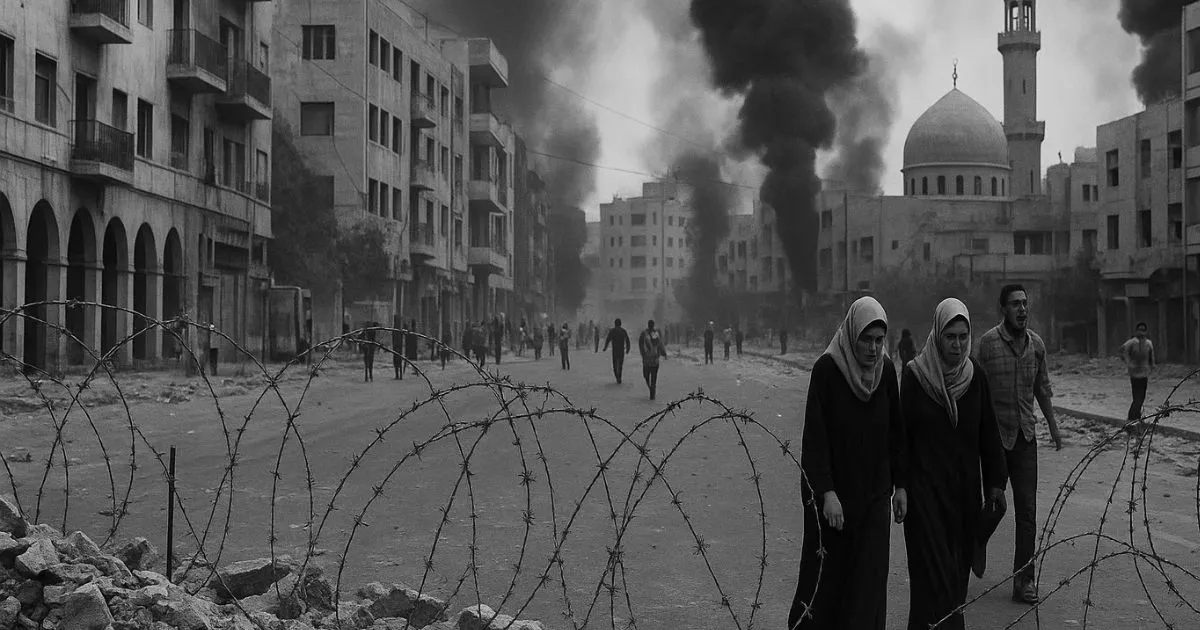
The Middle East, a region cradling some of the world’s oldest civilizations, has long been a crossroads of culture, religion, and power. Its story is one of triumph, tragedy, and unrelenting conflict, shaped by empires, ideologies, and the quest for control. This narrative traces the genesis of the Middle East crisis, weaving through centuries of history to uncover the roots of today’s turmoil. Through a factual lens, we’ll explore how ancient rivalries, colonial ambitions, and modern struggles have fueled a region in perpetual unrest.
Table of Contents
The Ancient Seeds of Conflict
The story begins in the fertile lands of Mesopotamia, around the 5th millennium BC, where the Sumerians built one of the world’s first civilizations. The Middle East, encompassing the Fertile Crescent, Levant, and Egypt, became a cradle of human progress. By 3150 BC, Egypt unified under its first pharaoh, while Mesopotamia saw the rise of powerful empires like Assyria, which dominated for 1,500 years. These early societies laid the groundwork for cultural and political rivalries, as empires vied for control over trade routes and fertile lands.
Fast forward to the 7th century BC, Persian powers like the Achaemenid Empire rose, unifying vast swathes of the region. By the 1st century BC, the Roman Empire conquered much of the Middle East, followed by the Byzantine Empire, which ruled until the 15th century. The rise of Islam in the 7th century AD, born in Arabia, reshaped the region. The Islamic Caliphate spread rapidly, uniting diverse peoples under a shared faith. However, internal divisions between Sunni and Shia Muslims, sparked by a succession dispute after the Prophet Muhammad’s death, sowed seeds of sectarian tension that persist today.
🗺️ Key Highlights of the Middle East Crisis
- Ancient Roots: Region of early civilizations like the Sumerians and Assyrians, marked by trade and territorial rivalries.
- Ottoman Decline: Post-WWI collapse led to the Sykes-Picot Agreement, dividing the region with artificial borders.
- 1948 Arab-Israeli Conflict: Israel’s independence triggered the Nakba, displacing 700,000+ Palestinians.
- Suez Crisis (1956): Egypt’s nationalization of the canal provoked conflict with Israel, Britain, and France.
- Six-Day War (1967): Israel captured Sinai, Gaza, West Bank, and Golan Heights—dramatically altering the map.
- Yom Kippur War (1973): Egypt and Syria’s offensive ended in a strategic stalemate.
- Camp David Accords (1978): Peace treaty between Egypt and Israel; Sinai returned to Egypt.
- Lebanon Invasion (1982): Israel’s move led to Hezbollah’s rise and the Sabra-Shatila massacre.
- Intifadas: Palestinian uprisings (1987–1993, 2000–2005) deepened the conflict with Israel.
- Hamas and Gaza: Since 2006, blockades and wars in 2008, 2012, 2014, and 2023.
- Arab Spring (2011): Popular uprisings led to regime changes and devastating civil wars.
- Rise of ISIS & Iran’s Role: ISIS insurgency and Iran’s support for militias escalated regional instability.
- 2023 Hamas Attack: Killed 1,200 Israelis. Israel’s response has killed over 55,000 Palestinians.
The Ottoman Era and the Sick Man of Europe
By the 13th century, the Ottoman Empire emerged as a dominant force, taking over the Islamic Caliphate in 1299. At its peak in the 1500s, it stretched across the Middle East, North Africa, and parts of Europe. The Ottomans ruled with a mix of religious and secular governance, but by the 19th century, their empire weakened. The failed siege of Vienna in 1683 marked the beginning of its decline, earning it the nickname “Sick Man of Europe.” By World War I, the Ottoman Empire could no longer enforce Islamic law uniformly, shifting toward a de facto secular state.
The war was the final blow. The Ottomans allied with Germany, hoping to reclaim lost glory, but their defeat in 1918 led to the empire’s collapse. The victorious Allies—Britain and France—carved up the Middle East under the Sykes-Picot Agreement of 1916, creating artificial borders that ignored ethnic, religious, and tribal realities. Modern states like Iraq, Syria, Lebanon, and Jordan were born, but their arbitrary boundaries fueled future conflicts.
The Birth of the Arab-Israeli Conflict
The most enduring Middle East crisis traces back to the late 19th century, when Zionism, a movement for Jewish self-determination, gained momentum. European Jews, facing persecution, sought a homeland in Palestine, their ancient biblical land. The British, who controlled Palestine after World War I, issued the Balfour Declaration in 1917, supporting a “national home for the Jewish people” while promising to protect Arab rights. This contradictory pledge set the stage for conflict.
Under the British Mandate, Jewish immigration surged, especially after the Holocaust. By the 1940s, the Jewish community (Yishuv) in Palestine had built robust institutions, including schools, a university, and the Haganah, an underground army. Tensions with Arabs escalated as both groups sought self-determination. In 1947, the United Nations proposed partitioning Palestine into Jewish and Arab states, with Jerusalem under international control. The plan allocated 57% of the land to Jews, despite their owning less than 7% of Palestine and comprising one-third of the population. Jewish leaders accepted the plan; Arab leaders rejected it, fearing loss of land and sovereignty.
On May 14, 1948, Israel declared independence. The next day, Egypt, Jordan, Syria, Lebanon, and Iraq attacked, launching the first Arab-Israeli War. Israel emerged victorious, capturing 78% of Palestine, far exceeding the UN plan. Over 700,000 Palestinians were displaced, an event known as the Nakba (“Catastrophe”). No Palestinian state was established, and Jerusalem was divided. This war set the tone for decades of hostility.
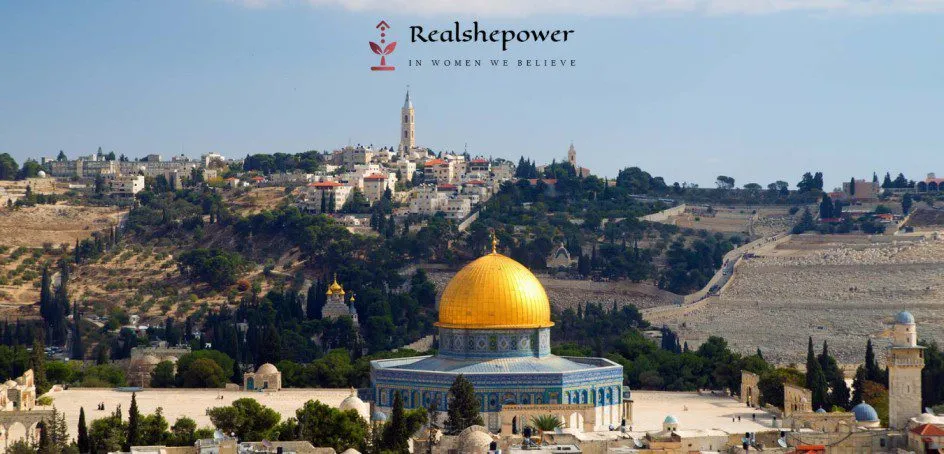
Jerusalem: The City of Peace or Conflict?
Uncover the complex history of Jerusalem—from holy reverence to violent disputes—in this compelling deep dive.
Read the Full StoryThe Suez Crisis and Rising Nationalism
In 1956, the Suez Crisis highlighted the region’s volatility. Egyptian President Gamal Abdel Nasser nationalized the Suez Canal, previously controlled by British and French interests, to fund the Aswan High Dam after the U.S. and Britain withdrew support due to Egypt’s ties with the Soviet Union. Israel, Britain, and France invaded Egypt to regain control, but international pressure, led by the U.S., forced their withdrawal. Nasser emerged as a hero of Arab nationalism, while Britain and France lost influence. Israel gained shipping rights in the Straits of Tiran but not the canal.
The crisis emboldened Arab states, but internal rivalries and Cold War alliances complicated the region. The U.S. and Soviet Union vied for influence, arming Israel and Arab states, respectively. Water disputes, particularly over the Jordan River, and Palestinian guerrilla attacks, supported by Syria, further destabilized the region.
The Six-Day War: A Turning Point
In June 1967, rising tensions culminated in the Six-Day War. Israel launched a pre-emptive strike against Egypt, Syria, and Jordan, fearing an imminent attack. In six days, Israel captured the Sinai Peninsula, Gaza Strip, West Bank, East Jerusalem, and Golan Heights, tripling its territory. The war was a humiliating defeat for Arab states, with 13,976 deaths compared to Israel’s 776. For Palestinians, it was the Naksa (“Setback”), as more were displaced and the occupation of the West Bank and Gaza began.
The war reshaped the Middle East. Israel’s occupation of Palestinian territories became a central issue, fueling Palestinian militancy. The Palestine Liberation Organization (PLO), formed in 1964, intensified its campaign, including high-profile attacks like the 1970 plane hijackings in Jordan. The war also shifted power dynamics, with Egypt and Syria seeking to regain lost territories.
Is Peace in the Middle East Possible?
After decades of war, displacement, and foreign meddling, is peace in the Middle East just a dream—or a possibility worth fighting for?
Read Full StoryThe Yom Kippur War and Camp David
In October 1973, Egypt and Syria launched a surprise attack on Israel during the Jewish holiday of Yom Kippur, aiming to reclaim the Sinai and Golan Heights. The war, costing 10,000–21,000 lives, ended in a stalemate but restored Arab confidence. It also drew the U.S. and Soviet Union deeper into the conflict, with the U.S. resupplying Israel and the Soviets backing Egypt.
The 1978 Camp David Accords, brokered by U.S. President Jimmy Carter, marked a breakthrough. Israel returned the Sinai to Egypt in exchange for peace, the first Arab-Israeli peace treaty. However, many Arabs viewed Egypt’s deal as a betrayal, isolating it in the region. The PLO, sidelined, shifted focus to guerrilla tactics.
Lebanon and the Rise of Non-State Actors
In 1982, Israel invaded Lebanon to expel the PLO, which had established a strong presence there. The invasion led to the PLO’s relocation to Tunisia and the Sabra and Shatila massacre, where 762–3,500 Palestinian civilians were killed by Lebanese militias allied with Israel. The conflict also saw the rise of Hezbollah, a Shia militia backed by Iran, marking the growing role of non-state actors in the region’s conflicts.
The First Intifada (1987–1993), a Palestinian uprising against Israeli occupation, further escalated tensions. Palestinians used stones and protests, while Israel responded with force, leading to over 1,000 Palestinian deaths. The Oslo Accords in 1993, facilitated by the U.S., promised limited Palestinian autonomy in Gaza and the West Bank. However, the assassination of Israeli Prime Minister Yitzhak Rabin in 1995 and ongoing violence stalled progress.
The Second Intifada and Hamas
The collapse of U.S.-led talks at Camp David in 2000 triggered the Second Intifada, a more violent uprising. Suicide bombings and Israeli military operations resulted in thousands of deaths. In 2005, Israel unilaterally withdrew from Gaza, but tensions persisted. In 2006, Hamas, a Sunni Islamist group, won Palestinian elections, seizing control of Gaza in 2007 after clashes with Fatah, the PLO’s dominant faction. Israel imposed a blockade on Gaza, deepening the humanitarian crisis.
Hamas-Israel conflicts flared in 2008, 2012, 2014, 2018, 2021, 2022, and 2023. The October 7, 2023, Hamas attack on Israel, killing 1,200 people and taking 250 hostages, was the deadliest in Israel’s history. Israel’s response, a bombing campaign and ground invasion of Gaza, killed over 55,000 Palestinians, displaced half of Gaza’s population, and leveled much of the territory. The war also escalated tensions with Hezbollah and the Houthis, part of Iran’s “Axis of Resistance.”
The Broader Middle East Crisis
The 21st century brought new layers to the crisis. The 2003 U.S. invasion of Iraq destabilized the region, toppling Saddam Hussein and creating a power vacuum. Sectarian violence between Sunni and Shia groups surged, and Iran expanded its influence in Iraq, Syria, Lebanon, and Yemen. The Arab Spring of 2011 sparked uprisings across the region, toppling regimes in Tunisia, Egypt, Libya, and Yemen. In Syria, a civil war began, killing over 500,000 and displacing millions by 2024.

I Was an ISIS Sex Slave
A haunting firsthand account of survival, resilience, and reclaiming identity after being held captive by ISIS. This is not just a story—it’s a voice that refuses to be silenced.
Read Her StoryThe rise of the Islamic State (ISIS) in 2014, exploiting chaos in Iraq and Syria, added another dimension. ISIS’s brutal campaign was eventually curtailed, but Iran-backed militias, including Hezbollah and the Houthis, grew stronger. The Syrian Civil War ended in 2024 with the fall of Bashar al-Assad’s regime, but instability persists. Yemen’s civil war, ongoing since 2014, has killed over 150,000 and caused a humanitarian disaster.
The Role of Global Powers
The Middle East crisis has been shaped by external powers. During the Cold War, the U.S. and Soviet Union fueled conflicts by arming rival sides. The U.S. supported Israel and conservative Arab states like Saudi Arabia, while the Soviets backed Egypt, Syria, and the PLO. The 2003 Iraq invasion, led by the U.S., and the 2011 Arab Spring shifted alliances, with Iran emerging as a regional power. The Abraham Accords (2020), normalizing ties between Israel and several Arab states, aimed for stability but sidelined the Palestinian issue, fueling resentment.
Iran’s support for Hezbollah, Hamas, and the Houthis has escalated tensions with Israel and the U.S. In 2024, Iran-backed militias attacked U.S. bases in Iraq and Syria, prompting U.S. retaliation. The Houthis’ attacks on Red Sea shipping further globalized the crisis.
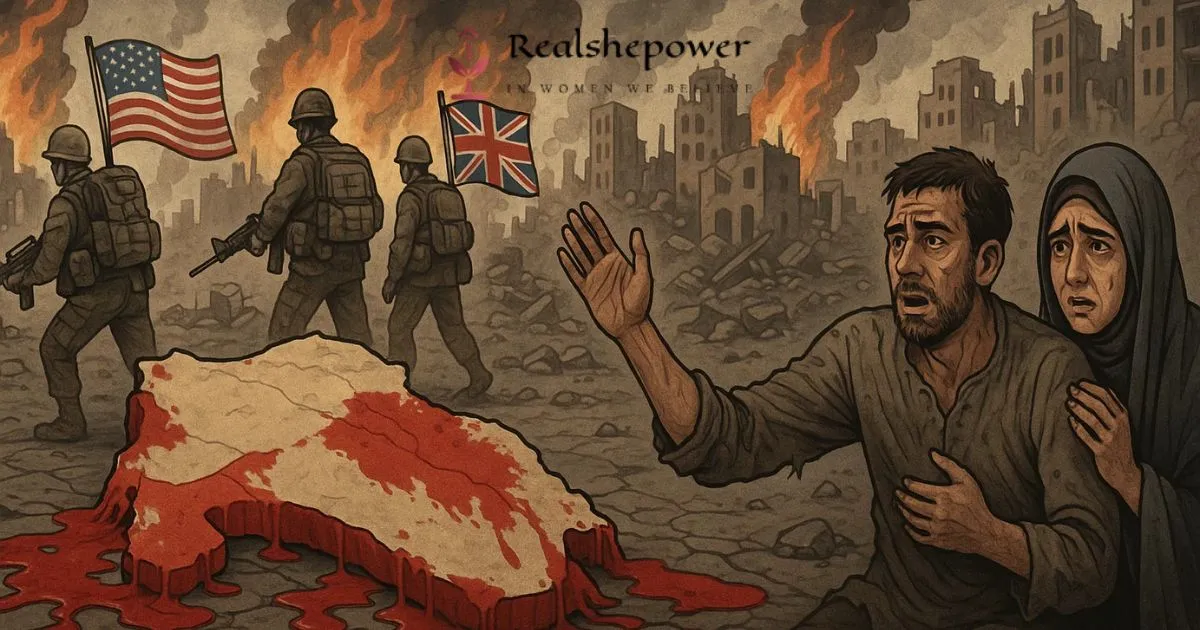
Foreign Interventions in the Middle East: History of Broken Promises
Explore how decades of foreign interference, proxy wars, and shifting alliances have shaped — and shattered — the Middle East’s path to peace.
Read the Full StoryThe Human Cost
The Middle East crisis has exacted a staggering toll. The Arab-Israeli conflict alone has caused tens of thousands of deaths and displaced millions. The Syrian Civil War killed over 500,000, while Yemen’s war has left 21 million people in need of aid. Sectarian violence, terrorism, and economic collapse have scarred the region, with no immediate end in sight.
A Region at a Crossroads
Today, the Middle East stands at a crossroads. The Israeli-Palestinian conflict remains unresolved, with no clear path to a two-state solution. Iran’s growing influence, coupled with the rise of non-state actors like Hezbollah and the Houthis, complicates peace efforts. External powers continue to shape the region’s fate, often prioritizing strategic interests over human lives. The story of the Middle East is one of resilience amid chaos, a region shaped by its past and struggling for a peaceful future.
Resources
- Global Issues: “The Middle East conflict—a brief background” (2000).
- Wilson Center: “Explainer: The Roots and Realities of 10 Conflicts in the Middle East” (2024).
- Wikipedia: “List of modern conflicts in the Middle East” (2025).
- Britannica: “Arab-Israeli wars” (2025).
- History.com: “Middle East: Countries and Current Events” (2018).
- Britannica: “Middle East Conflict: Background Resources” (2025).
- IEMed: “The Multiple Crises in the Middle East” (n.d.).
- Carnegie Endowment: “Arab Perspectives on the Middle East Crisis” (2023).
- Wikipedia: “Middle Eastern crisis (2023–present)” (2025).
- History News Network: “What Are the Origins of the Middle East Crisis?” (2002).
- VOA News: “Understanding the Mideast conflict: A historical primer” (2024).
- Britannica: “Suez Crisis” (2025).
- History Net: “The Middle East In Crisis” (2017).