The Villages Where Shiva Still Feels Alive: A Feminine Healing Journey to Triyuginarayan
The first thing I noticed was the silence.
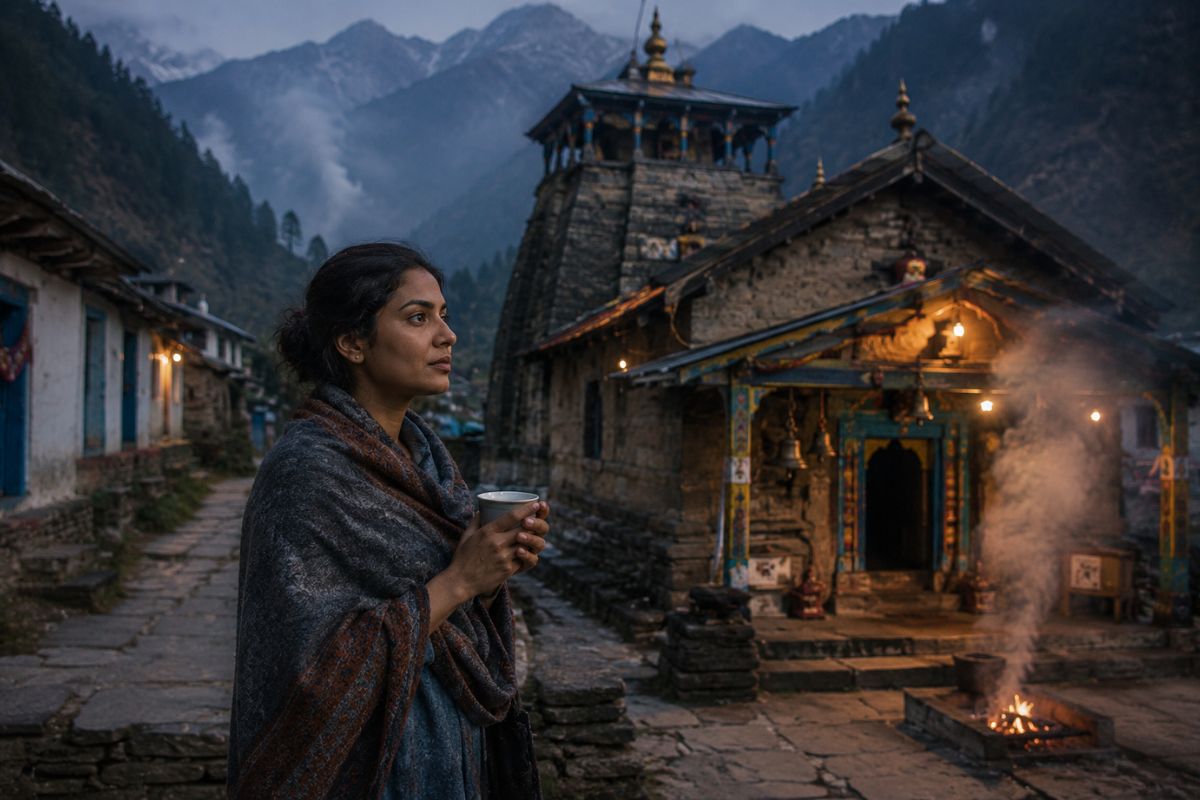
Not complete silence. The kind that mountain villages have. A soft living silence. Temple bells somewhere far away. A dog barking once and then giving up. The sound of slippers against stone paths. Smoke curling out of tiny kitchens where somebody was already making chai before sunrise.
I remember standing there with my backpack still hanging awkwardly from one shoulder, breathing air that felt almost cold enough to clean out my thoughts.
And for the first time in months, nobody wanted anything from me.
No notifications. No deadlines. No emotional labour disguised as “just one quick call.” No pressure to smile politely. No explaining why I was tired. No explaining why I needed space.
Triyuginarayan does something strange to you.
It slows your heartbeat before you even realise it was racing.
You don’t arrive here dramatically. There are no giant resort gates or fancy mountain cafés announcing themselves every ten feet. You reach slowly. Road after winding road through Uttarakhand’s hills. Pine forests. Sharp turns. Tiny tea stalls with faded biscuit packets hanging outside. Women carrying bundles of grass larger than themselves. Clouds drifting so low they look touchable.
And then suddenly, there it is.
A village where Shiva still feels close enough to whisper to.
Not metaphorically. Literally.
Because Triyuginarayan is believed to be the place where Shiva and Parvati got married. Not in some grand palace. Not in some mythical sky kingdom. Here. In this quiet mountain village where old stone houses still stand under changing skies and life still follows the rhythm of prayer bells and firewood.
Even the sacred fire from their wedding is said to still burn inside the temple courtyard.
I know how dramatic that sounds.
But when you stand there in the early morning cold watching smoke rise from the eternal flame while mountain women quietly fold their hands beside you, it does not feel like mythology anymore.
It feels strangely intimate.
Like faith remembered something modern life forgot.
And maybe that is why women should come here alone at least once.
Not because it is “trending.” Not because social media told you healing happens in the mountains. But because sometimes Indian women become so available to everybody else that we disappear from ourselves completely.
Triyuginarayan gives you pieces back.
Slowly.
Without demanding performance.
The Kind of Place That Doesn’t Ask You to Pretend
Most travel articles will tell you about the temple first.
But honestly, the village itself stayed with me more.
The women here have a certain calmness in their eyes. Not because life is easy. Mountain life is hard. You can see it in their hands. In the steep climbs they do daily without complaint. In the wood they carry. In the small shops they run while also raising families.
But there is a groundedness here that feels impossible to manufacture.
Nobody is rushing.
Nobody is curating themselves.
Nobody cares what your job title is.
And for urban Indian women constantly trapped inside timelines, beauty standards, expectations, and emotional exhaustion, that feeling becomes strangely emotional.
I met a woman making rotis near a guesthouse kitchen who asked me absolutely nothing impressive about myself. Not what I did. Not whether I was married. Not why I was travelling alone.
She simply smiled and said, “Thak gayi hongi. Chai peelo.”
You must be tired. Have some tea.
I nearly cried.
Because sometimes healing is not therapy language or expensive retreats.
Sometimes healing is somebody allowing you to exist without interrogation.
And Triyuginarayan is full of those moments.
You wake up early because mountain mornings naturally pull you out of bed. The light here is different. Softer. Cleaner. You walk toward the temple wrapped in a shawl while little shops slowly open around you. Somewhere somebody fries pakoras in mustard oil. Somewhere someone chants softly.
The temple itself is beautiful in a deeply unshowy way. Grey stone. Ancient energy. No overdesigned tourist spectacle.
Just devotion.
The eternal fire burns quietly inside the courtyard. Couples come here to pray for strong marriages. Families come seeking blessings. Solo travellers sit silently near the stone walls doing absolutely nothing.
And strangely, doing nothing here feels productive.
Because your nervous system finally stops fighting for survival.
✦ Real Shee Power Travel Genie
Go between September and November if you want crisp skies and peaceful mornings without heavy crowds. March and April are beautiful too when the hills begin turning green again. Reach via Rishikesh or Dehradun, then drive toward Sonprayag and onward to Triyuginarayan. Carry one warm shawl even if Delhi is melting because mountain evenings become cold very quickly. Eat the local mandua rotis with pahadi aloo and homemade white butter if you get the chance. And here is the secret nobody tells you: wake up before sunrise and sit alone near the temple courtyard before the tourists arrive. The mountains sound different at that hour. Almost like breathing.
Real Shee Power — World’s Best Women Empowerment Portal
The Stay That Made Me Want To Extend My Trip
I stayed in a small mountain homestay instead of a hotel.
And honestly, I think that changed everything.
The rooms were simple. Wooden furniture. Thick blankets. One tiny balcony facing layers and layers of mountains fading into blue distance. No luxury spa. No influencer corners.
Just honesty.
At night, the stars looked almost aggressive in their brightness because city skies had made me forget what darkness actually looks like.
The owner’s family treated me less like a customer and more like a slightly confused cousin visiting from the city. Dinner was simple pahadi food served hot and early because mountain people sleep early. Dal. Rice. Sabzi. Rotis puffed directly on flame.
Nothing tasted rushed.
That is the thing about food in these villages. It still tastes connected to the person making it.
If you stop at small local cafés around the route toward Sonprayag or Guptkashi, do not expect polished menus. Expect warmth instead. Tiny steel glasses of chai that somehow taste better in cold weather. Maggie eaten while watching clouds move across mountains. Fresh rajma rice after long drives.
And if you are emotionally exhausted, which many women quietly are, these small comforts hit differently.
You stop craving stimulation.
You start craving softness.
What Most People Miss About Spiritual Travel
Modern travel has become strangely loud.
Even peace is marketed aggressively now.
Everywhere you go, somebody is selling “transformational experiences” while filming reels.
Triyuginarayan feels untouched by that performance culture.
And maybe that is why it works.
You do not come here to become somebody new.
You come here to remember who you were before burnout swallowed you whole.
I spent one afternoon simply walking through the village lanes watching daily life happen around me. An old woman drying red chillies on a rooftop. Children racing each other downhill. Temple bells echoing through cold air. A man repairing something quietly outside his house.
Nothing cinematic.
Yet everything felt meaningful.
And maybe modern Indian women need more places that allow ordinary moments to matter again.
Because our lives have become exhausting productions.
We are expected to be successful but nurturing. Independent but agreeable. Beautiful but effortless. Available but mysterious. Ambitious but never intimidating.
It becomes tiring.
Triyuginarayan does not care about any of that.
The mountains simply watch you unravel slowly until you can breathe again.
The Morning I Finally Put My Phone Away
On my second morning there, I carried my phone toward the temple thinking I would take photographs.
I ended up putting it back inside my bag.
Not because the place was not beautiful. It was. But because for once I did not want to convert an experience into content immediately.
I just wanted to sit there.
And that feeling surprised me.
The temple priest was speaking softly to an elderly couple nearby. Smoke from the sacred fire drifted upward into freezing mountain air. Somewhere a woman laughed loudly enough for the sound to echo.
Life here felt grounded in ways difficult to explain.
Even spiritually, Triyuginarayan feels feminine to me.
Not soft feminine in the Instagram sense.
Ancient feminine.
The kind that survives.
Parvati is everywhere in this story. Her patience. Her devotion. Her strength. Her determination to choose her own path despite obstacles.
And I think many women quietly connect to that energy without even realising it.
This is not just Shiva’s village.
It feels like hers too.
A Journey That Changes Shape After You Return
The strange thing about healing trips is that you often do not realise they worked until you come back home.
I noticed it later.
Back in the noise.
Back in the endless scrolling and rushing and obligations.
Something inside me had become quieter.
Not permanently healed. Life is not a movie. But steadier somehow.
And I think that is what places like Triyuginarayan offer modern Indian women.
Not escape forever.
Just enough silence to hear ourselves again.
Enough mountain air to remember our bodies are not machines.
Enough distance from everybody else’s expectations to ask ourselves one terrifying question honestly:
“What do I actually want?”
The mountains will not answer for you.
But they create enough quiet for your own voice to finally return.
And maybe that is why Shiva still feels alive here.
Not because of mythology alone.
But because this village still protects something sacred that most modern places destroyed long ago.
Stillness.
The kind that changes women gently.
The kind you carry home in your chest long after the trip ends.