A historical overview of the five main phases of the Balochistan insurgency from 1948 to the present day
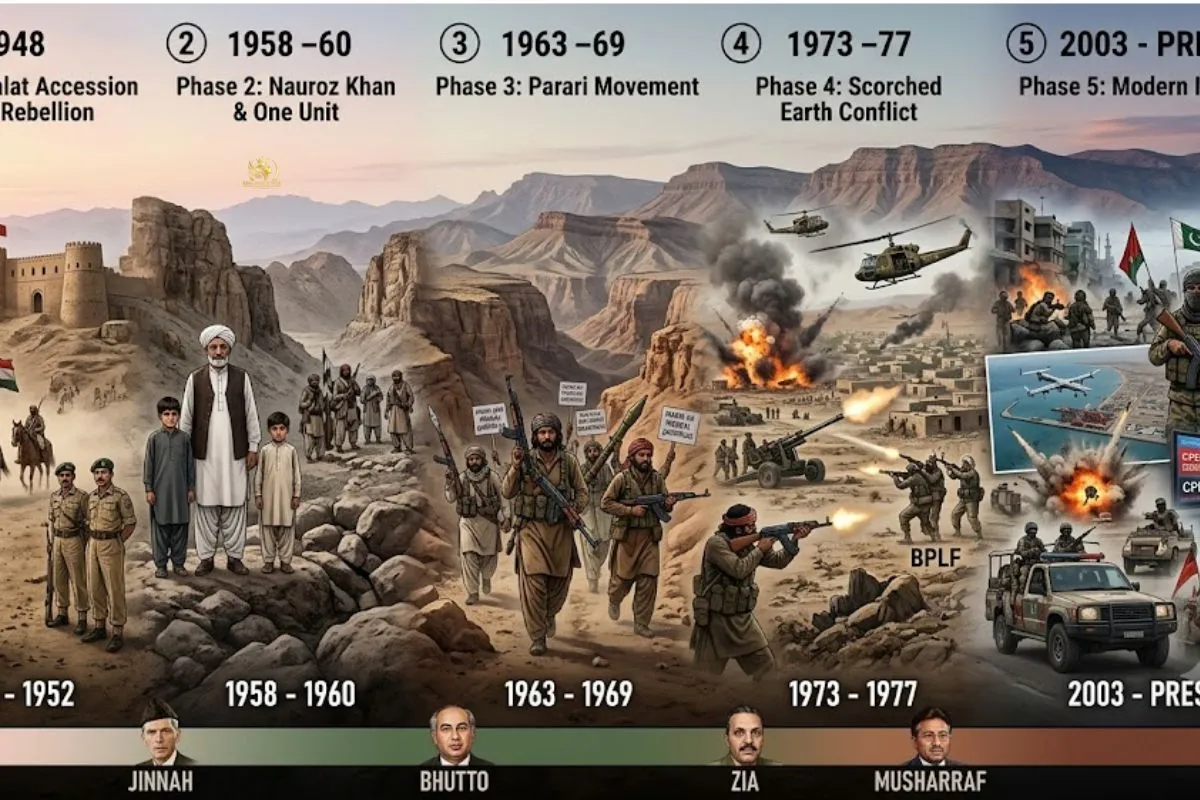
The conflict in Balochistan is Pakistan’s longest-running internal insurgency. Since the partition of the Indian subcontinent, the region has witnessed five distinct phases of armed rebellion, evolving from localized tribal resistance into a highly sophisticated, socio-economically driven nationalist movement.
Here is the chronological breakdown of the five main phases that have shaped the conflict.
The First Phase: The Accession Crisis
1948
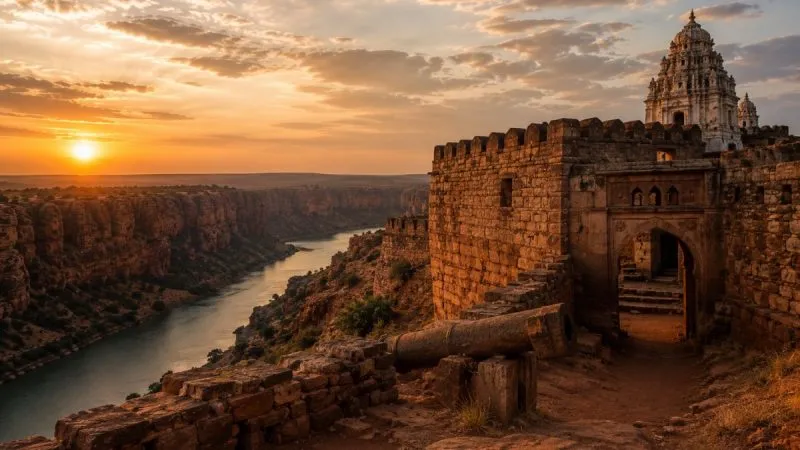
Following partition, the ruler of the princely state of Kalat, Mir Ahmed Yar Khan, declared independence. In March 1948, under intense pressure, he signed an instrument of accession to join Pakistan. Rejecting this agreement, his younger brother, Prince Abdul Karim, led a brief, localized armed revolt in the mountains. The rebellion was swiftly contained by the Pakistani military, and Karim was arrested.
The Second Phase: The ‘One Unit’ Rebellion
1958–1960
The flashpoint triggered when the Pakistani government introduced the “One Unit” policy, which merged the four provinces of West Pakistan into a single administrative block to offset the political weight of East Pakistan (now Bangladesh). Fearing the total erasure of their ethnic identity and autonomy, the elderly Baloch chief Nawab Nauroz Khan led a guerrilla campaign from the hills. The phase ended in tragedy when Nauroz descended for peace talks under a safe-passage guarantee, only for his sons to be executed by the state and Nauroz imprisoned.
The Third Phase: The Parari Movement
1963–1969
Sparked by the central government’s efforts to establish permanent military cantonments in strategic tribal areas, nationalist leader Sher Muhammad Marri formed the Parari guerrilla network. Insurgents targeted trains, convoys, and infrastructure. The conflict escalated into regular, low-level warfare until a ceasefire was achieved in 1969 following the ousting of President Ayub Khan and the dismantling of the One Unit policy.
The Fourth Phase: The Scorched Earth Conflict
1973–1977
This stands as the bloodiest historical phase before the modern era. In 1973, Prime Minister Zulfikar Ali Bhutto abruptly dismissed Balochistan’s democratically elected provincial government under allegations of treason. In response, tens of thousands of Marri and Mengal tribesmen took up arms, forming the Balochistan People’s Liberation Front (BPLF). Bhutto deployed over 80,000 troops, culminating in a brutal scorched-earth military campaign. The insurgency only halted in 1977 when General Zia-ul-Haq launched a coup, withdrew the army, and declared a general amnesty.
The Fifth Phase: The Modern Urbanized Insurgency
2003–Present
The current, ongoing phase is structurally different from past iterations. It was initially ignited by the expansion of the Chinese-backed Gwadar Port and the subsequent 2006 assassination of veteran tribal leader Nawab Akbar Bugti during a military airstrike.
Unlike the past, this phase has outgrown traditional tribal borders. It is highly organized under an umbrella alliance known as BRAS (which includes the Balochistan Liberation Army), features the heavy deployment of female suicide bombers, and is led by educated, middle-class urban youths rather than traditional tribal chiefs. The core grievances have shifted from simple political autonomy to intense anger over human rights abuses, widespread enforced disappearances, and the exploitation of local gas and mineral wealth by foreign entities.
To gain a more comprehensive visual understanding of the deep-rooted geopolitical factors driving this long-standing friction, you can watch The Hindu’s Balochistan Conflict Explainer, which provides an objective breakdown of how historical resource exploitation and poverty feed into the current instability.