
The Village That Disappeared Overnight: The Mystery of India’s Ghost Villages
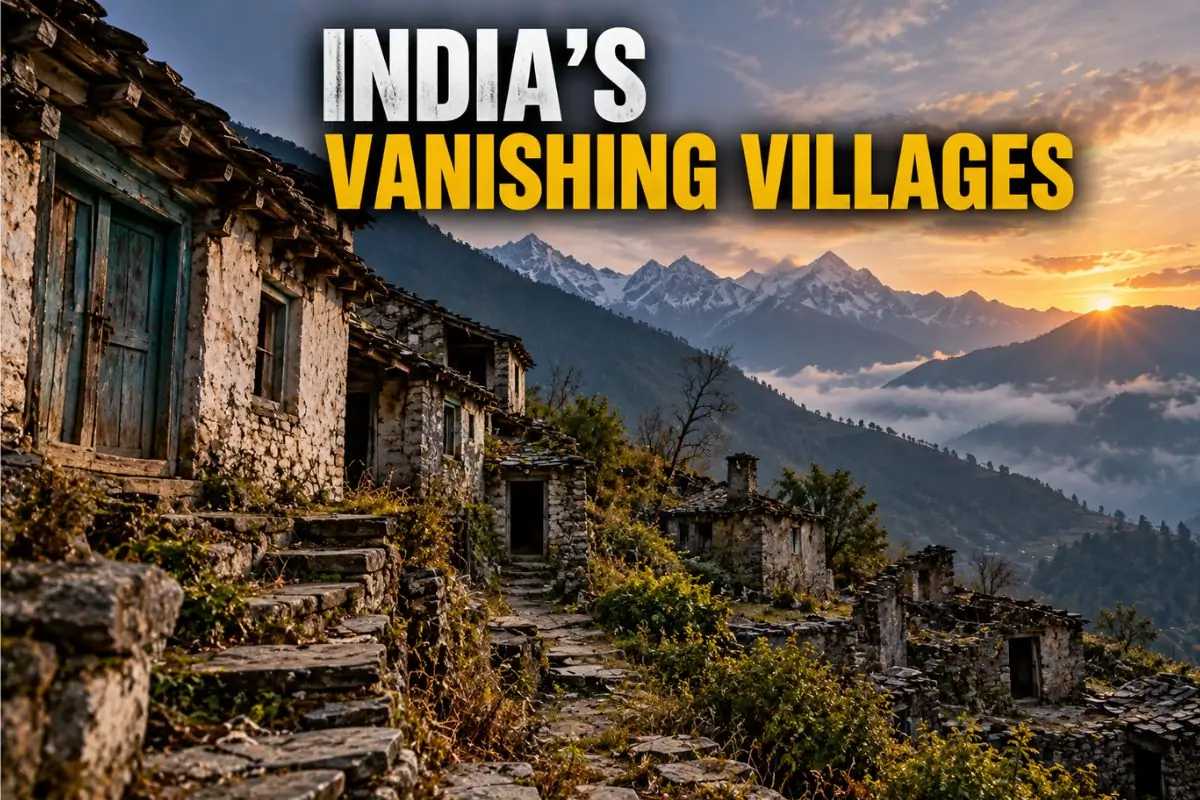
Imagine returning to your village and finding empty houses, locked doors and silent streets where children once played. Across India, villages are slowly emptying as families leave in search of work, education and a different future.
A village does not always disappear in a single night. Sometimes, it happens one family at a time. A young man leaves for a job in the city. His sister moves away for college. Parents follow their children years later. Eventually, the school closes, the local shop loses customers and houses that once held generations of memories stand empty.
India has many villages experiencing some form of depopulation, although the reasons differ from place to place. In parts of Uttarakhand, migration from remote Himalayan settlements has become a serious concern. Some villages are known locally asghost villages, a phrase used for settlements where many homes have been abandoned or only a small number of residents remain.
The reasons are rarely simple. Difficult terrain, limited employment, inadequate access to healthcare and education, and the search for better opportunities can all contribute. For younger residents, leaving may be the most practical way to build a secure future.
But when people leave, more than houses are lost. Traditional knowledge, local festivals, farming practices and community relationships can disappear with them. Older residents may find themselves living in places where neighbours have moved away and familiar services no longer exist.
Yet the story is not entirely one of disappearance. Some communities are trying to revive abandoned homes, promote rural tourism, improve connectivity and create opportunities for people who want to return. In some places, visitors are discovering the beauty of quiet mountain settlements, traditional architecture and landscapes far removed from crowded tourist centres.
However, tourism alone cannot solve rural depopulation. A village needs reliable services, sustainable livelihoods and opportunities for young people to stay by choice, not because they have no alternative.
The real question is not why people leave their villages. It is why so many feel they must leave to access the opportunities they deserve.
India’s ghost villages remind us that development is not measured only by expanding cities, new highways or rising skylines. It also depends on whether people can build a dignified life in the places their families have called home for generations.
Sometimes, the most haunting thing about an empty village is not the silence. It is knowing that the people who left may have wanted to stay.