Baramulla Broke Me: The Netflix Horror That Made Me Sob for Kashmir’s Forgotten Children
I just finished watching Baramulla on Netflix, and honestly, I’m sitting here in the dark with tears streaming down my face, my heart pounding like I’ve been running from ghosts that aren’t even there. This isn’t just a movie; it’s a wound ripped open, a scream from the valley that Kashmir has been holding in for decades. I went in expecting a supernatural thriller, something to give me chills on the weekend. What I got was a gut-punch to the soul that left me shattered, angry, and strangely hopeful all at once.
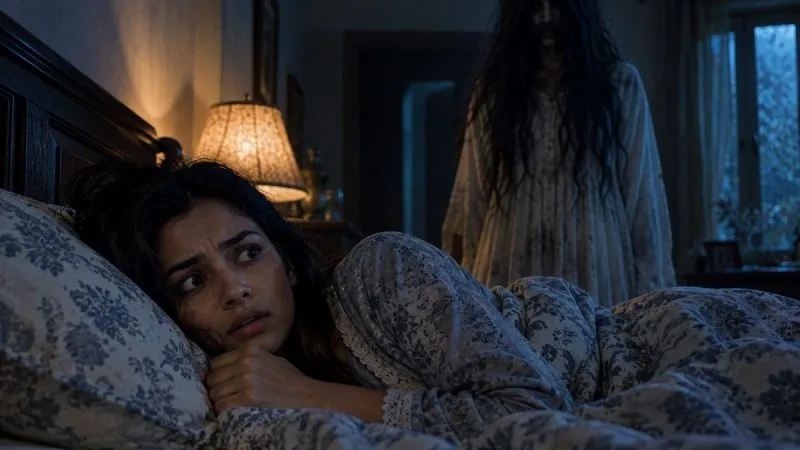
Manav Kaul as DSP Ridwaan Sayyed… God, where do I even start? This man doesn’t act; he bleeds. You see every crack in his armor; the PTSD from losing his parents, the quiet terror of watching his own daughter Noorie slip into the same abyss that’s swallowing Baramulla’s children. But it’s his wife Gulnaar (Bhasha Sumbli, heartbreakingly good) who sees the ghosts first. She’s the one who wakes him night after night, whispering in panic about the little boy standing over Noorie’s bed, about children crying inside the walls. And every time, Ridwaan shuts her down: “It’s just the wind, Gul.” “Stop scaring our daughter.” You’re not sure if the ghosts haunting their creaky old house are supernatural… or the ones living inside a husband who refuses to listen to his wife’s terror.
In that final scene, when he finally tears open the hidden room and the truth crashes over him like an avalanche, he doesn’t say a word. He just drops to his knees among the tiny blood-stained clothes and white tulips, shoulders shaking with silent, violent sobs. No “I’m sorry,” no cracked voice; just the sound of a man realising he let his family carry the horror alone. I had to pause the film because I was sobbing so hard I couldn’t see the screen.

And the ghosts; oh, they aren’t the cheap jump-scare kind. They’re the real ones. The ones that whisper in the wind through those snow-laden apple orchards. The ones left behind in 1990 when Kashmiri Pandits were forced to flee their homes, leaving behind blood-soaked memories and children who never came back. When the truth finally unraveled about those missing kids, about the white tulips and the scissors and the house that remembers everything… I felt physically sick. This film doesn’t exploit the Kashmiri Pandit exodus; it honors it. It forces you to look at the humanity on both sides; the Muslim family haunted by Hindu ghosts, the shared grief that transcends religion but gets buried under politics and pain.
The atmosphere is suffocating in the best way. Those long shots of Baramulla under perpetual winter, the fog rolling in like it’s hiding secrets older than time itself. The sound design; creaking wooden floors that sound like bones breaking, children’s laughter turning into screams; it’s masterful. Director Aditya Suhas Jambhale doesn’t rush; he lets the dread build slowly, like frost creeping across a window. Yes, the first half drags a bit, and some of the supernatural elements feel unnecessary when the real horror (grief, displacement, the way trauma eats families alive) is already so potent. But when that climax hits? When Ridwaan finally understands what his wife and daughter have been desperately trying to tell him? It’s devastating. Cathartic. The kind of ending that makes you believe in redemption even when everything feels hopeless.
I grew up hearing stories about Kashmir from my grandparents; the paradise that turned into hell overnight. Baramulla made me confront how those stories live in us, how they possess us more than any ghost ever could. This isn’t entertainment; it’s exorcism. Watch it alone. Watch it with someone you love. But watch it. Because some truths are too important to stay buried in the snow.