Bollywood and Sadism: Why We Keep Cheering for Cruelty
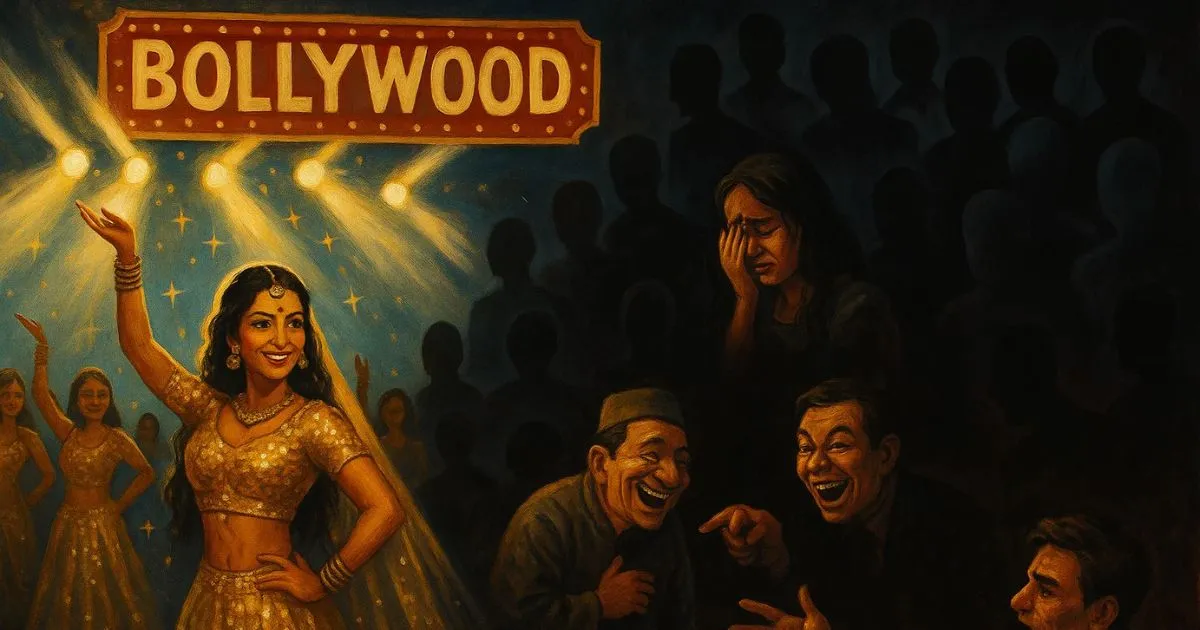
Bollywood has always sold us dreams—sparkling love stories, family reunions, heroic rescues. But if we peel off the glitter for just a moment, we’ll see something else hidden underneath: a disturbing obsession with pain, humiliation, and cruelty.
Let’s not pretend it’s accidental. Sadism has been Bollywood’s secret ingredient for decades. And worse—we, the audience, have been cheering for it the whole time.
Table of Contents
Pain as Entertainment: The Formula We Know Too Well
Picture this: a crowded cinema in the 80s or 90s. The villain storms into the scene, grabs the heroine by her hair, slaps her across the face, and laughs. The audience gasps, hisses, maybe even whistles. The director stretches the suffering until it feels unbearable. And then, finally, the hero bursts through the door.
The crowd erupts. The rescue feels grander because the humiliation was prolonged. But let’s be honest—the rescue wasn’t the real show. The cruelty was.
It wasn’t just in “villain scenes.” Remember the endless family dramas where the daughter-in-law was berated for hours, crying buckets, insulted at every turn, and forced to “prove her worth”? Or the comedies where a man’s wife was beaten for laughs, or where fat, dark-skinned, or disabled characters were the punchline?
We laughed. We cried. We applauded. But what were we really watching? Sadism dressed up as cinema.
When Tragedy Became a Spectacle
Bollywood has also perfected the art of tragedy porn.
Think of the mother who sacrifices endlessly until she dies on-screen. The sister whose rape is used only to trigger the hero’s revenge. The poor farmer beaten in a montage of slow-motion cruelty, just so the eventual rebellion feels more powerful.
These weren’t just plot points. They were indulgent, drawn-out displays of suffering. We were invited not just to empathize, but to revel in the pain, to let it squeeze tears out of us until we were emotionally drained.
Misery, in Bollywood, became currency.
Behind the Screen: The Industry’s Cruel Machinery
The sadism doesn’t stop when the cameras stop rolling. Bollywood’s industry structure itself thrives on cruelty.
- The Outsider’s Humiliation: Walk into a casting office without a famous surname, and you’re already at a disadvantage. Struggling actors are routinely mocked for their accents, looks, or skin tone. For some, rejection isn’t just professional—it’s deeply personal and demeaning.
- The Silent Punishments: Those who dare to question the system are often “punished” silently. Projects disappear. Roles suddenly go to someone else. Your phone stops ringing. It’s not rejection, it’s erasure.
- Media Trials as Entertainment: When an actor falters, faces personal struggles, or speaks out of turn, the industry doesn’t protect them. Instead, it lets tabloids and television channels rip them apart, while colleagues stay silent. It’s almost gladiatorial—one person thrown into the arena while everyone else watches from the sidelines.
This isn’t just business. This is cruelty normalized as part of the “struggle.”
The Audience: Bollywood’s Silent Partners in Cruelty
Here’s the part no one likes to admit: Bollywood’s sadism only works because we, the audience, keep rewarding it.
We’ve paid for tickets to see women humiliated, heroes tortured, and villains getting their “fun” before justice arrives. We’ve laughed at abusive jokes because we were told they were harmless. We’ve consumed gossip about breakdowns and scandals as if it were just another subplot.
Bollywood doesn’t operate in a vacuum. It serves what sells. And what has consistently sold is the spectacle of suffering.
Why Does Sadism Keep Thriving?
It’s easy to say “that’s just how Bollywood is,” but the truth is more layered.
- Shock Value Works: Pain shocks. It makes people react strongly, and strong reactions bring ticket sales.
- Tradition of Melodrama: From ancient Indian theatre to mythological plays, suffering was always central to storytelling. Bollywood simply inherited and exaggerated it.
- Power Politics: Sadism isn’t just artistic—it’s strategic. Keeping outsiders humiliated, keeping “stars” untouchable—it maintains hierarchies.
- Audience Conditioning: We grew up with these films. Abuse on screen looks normal because it’s always been there.
Haven’t Things Changed?
Yes and no. OTT platforms and younger filmmakers are starting to push stories where cruelty isn’t the core entertainment. There are now films where women don’t exist solely to cry or be rescued, where villains aren’t given ten minutes to humiliate someone before the hero appears.
But let’s be clear—sadism hasn’t disappeared. It’s just gotten subtler. Instead of outright slaps and humiliation, we now see psychological cruelty, manipulative power games, and suffering repackaged in “realistic” tones. The appetite hasn’t died—it has only evolved.
The Uncomfortable Truth
So, is Bollywood sadistic? Yes.
Is the industry complicit? Absolutely.
But are we, the audience, also to blame? Without a doubt.
Bollywood sells cruelty because we’ve been buying it for generations. And until we stop rewarding it, the streak of sadism will keep running through its veins, no matter how many glittery songs and happy endings try to cover it up.
The final question isn’t about Bollywood at all—it’s about us.
Do we want cinema that entertains us by breaking people down? Or do we finally want to demand better?
Because as long as suffering sells, Bollywood will keep serving it—packaged in slow motion, scored with dramatic music, and wrapped in a lie we’ve mistaken for “masala.”