From Mob to Money: How Bollywood Corporatized After the 90s
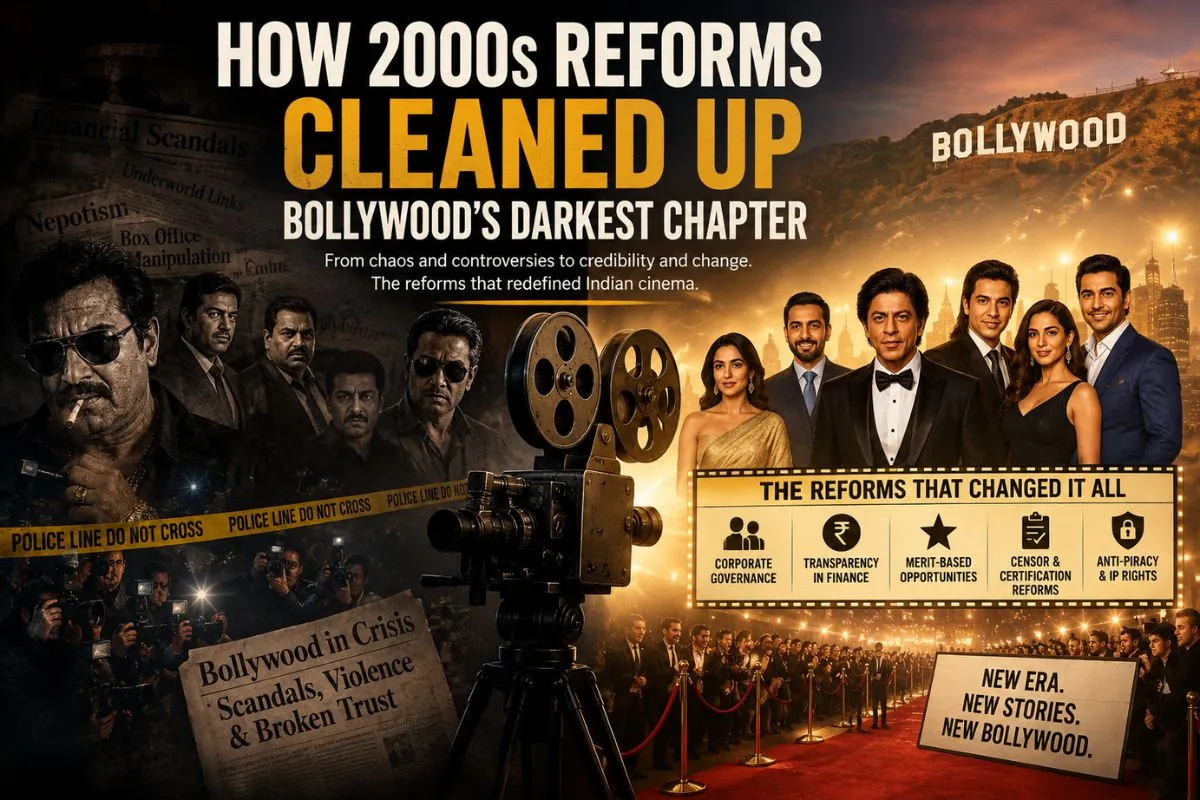
The fall of the underworld’s empire in Bollywood didn’t just transform crime statistics and production balance sheets; it fundamentally altered Indian cinema’s aesthetic, storytelling style, and global business model.
Here is how Bollywood rebuilt itself in the aftermath of the 1990s mafia era—transitioning from regional, cash-based local cinema into a multi-billion-dollar global corporate ecosystem.
1. The Corporatization of the Studio System
Before 2000, film budgets were frequently managed in physical cash, written on loose sheets of paper, and funded by high-risk private lenders charging predatory interest rates.
- The Arrival of Foreign & Domestic Studios:Once the government granted filmmaking “Industry Status” in 2000, corporate conglomerates stepped in to fill the financial vacuum left by mob financiers. Companies likeEros International,UTV Motion Pictures,Adlabs (Reliance Entertainment), and later global giants likeDisneyandFox Star Studiosentered the market.
- Completion Bond & Insurance Policies:For the first time, movies were insured against delays, production accidents, and financial default. Actors and directors signed formal multi-film contracts, eliminating the era when stars worked on 15–20 films simultaneously without clear schedules.
2. The Shift in Narrative: From Street Violence to NRI Romances
The trauma and scrutiny of the 1990s underworld era directly influenced the types of stories Bollywood chose to tell on screen during the late 1990s and early 2000s.
- Escapism & Aspirational Cinema:To distance the industry from gritty street violence and extortion themes, directors like Karan Johar and Aditya Chopra spearheaded a wave of glossy, family-centric, high-concept cinema (Dilwale Dulhania Le Jayenge,Kuch Kuch Hota Hai,Kabhi Khushi Kabhie Gham).
- Targeting the Diaspora (NRI Market):With overseas theatrical distribution officially wrested away from D-Company fronts, legitimate studios focused heavily on the Non-Resident Indian (NRI) audience in North America, Europe, and the Middle East, generating record-breaking box office revenues in foreign currencies.
                  POST-2000 STRUCTURAL SHIFT
┌────────────────────────────┐      ┌────────────────────────────┐
│      1990s MAFIA ERA       │      │   POST-2000 CORPORATE ERA  │
├────────────────────────────┤      ├────────────────────────────┤
│ • Unaccounted Cash Funding │      │ • Bank Loans & Equity      │
│ • Unofficial Overseas Rights│ ───> │ • Global Studio Contracts  │
│ • Single-Screen Mass Films │      │ • Multiplex Revenue Model  │
│ • Extortion & Safety Threats│      │ • Fully Insured Sets & Stars│
└────────────────────────────┘      └────────────────────────────┘
3. The Rise of the Multiplex Culture
In 1997, India’s first multiplex theater opened in New Delhi. Over the next decade, multi-screen cinema chains (PVR,INOX,Cinepolis) replaced the traditional single-screen picture halls across urban India.
- Higher Ticket Pricing:Multiplexes allowed studios to charge premium ticket prices in metro cities, significantly boosting opening-weekend collections.
- Diversification of Content:High ticket margins meant films no longer needed to appeal to a broad, single-screen “mass” demographic to be profitable. This paved the way for parallel, ground-level cinema (Dil Chahta Hai,Lagaan,Gangs of Wasseypur).
4. From Real Crime to “Mumbai Noir” as Nostalgia
Once the physical threat of the mafia was neutralized, directors began looking back at the 1980s and 1990s not with fear, but as rich historical material for storytelling.
- The Auteur Lens:Filmmakers like Ram Gopal Varma (Company), Anurag Kashyap (Gangs of Wasseypur), and Milan Luthria (Once Upon a Time in Mumbaai) transformed real-life underworld history into critically acclaimed cinematic sagas.
- OTT & Streaming Boom:In the modern streaming era, the underworld’s history found a new home in long-form digital series (such asSacred GamesandMirzapur), offering nuanced, unfiltered portrayals of the crime-politics-media nexus that once ruled the streets of Mumbai.